Three Terms, Three Distinct Concepts
Walk into any gym or scroll through fitness content online and you'll encounter flexibility, mobility, and stretching used almost interchangeably. They're related - but conflating them can leave gaps in how you train and recover. Understanding what each term actually means helps you make smarter decisions about your movement practice.
| What flexibility measures | Passive muscle lengthening ability |
| What mobility measures | Active joint control through full range of motion |
| What stretching is | A technique or practice - not an outcome |
| Best warm-up stretch type | Dynamic stretching (active, movement-based) (General guidance from exercise science literature) |
| Best post-exercise stretch type | Static or PNF stretching |
| Key difference: flexibility vs. mobility | Flexibility is passive; mobility requires active muscular control |
For a broader look at how fitness language works, see our plain-language fitness glossary, which covers terms from RPE to progressive overload.
Flexibility: Passive Range of Motion
Flexibility refers to the ability of a muscle - or group of muscles - to lengthen passively. When someone measures how far you can reach toward your toes without active effort from surrounding muscles, they're assessing flexibility. It's a property of the soft tissue itself: muscle fibers, connective tissue, and fascia.
High flexibility doesn't automatically translate to functional movement. A person can have very flexible hamstrings and still struggle with activities that require those muscles to work through a full range of motion under load. Flexibility is a capacity; what you do with it is a separate question.
Flexibility
The passive ability of a muscle or group of muscles to lengthen. It reflects how far a body part can be moved by an external force, not through the person's own active effort.
Mobility
The active ability to move a joint through its full range of motion with muscular control and stability. Mobility integrates flexibility with strength and neuromuscular coordination.
Static Stretching
A technique in which a muscle is held in a lengthened position for a set duration, typically 15-60 seconds, to gradually increase flexibility over time.
Dynamic Stretching
A warm-up technique using controlled, repetitive movements to take joints through their range of motion actively, preparing muscles for exercise without prolonged passive holds.
PNF Stretching
Proprioceptive Neuromuscular Facilitation - an advanced stretching method alternating muscle contraction and relaxation to achieve greater range of motion, often performed with a partner or therapist.
Range of Motion
The full arc of movement possible at a joint, from its most closed to its most open position. It can be measured passively (flexibility) or actively (mobility).
Factors that influence flexibility include age, temperature, genetics, and how consistently you train that tissue. It tends to decrease with sedentary behavior and can improve with regular, sustained stretching practice over time - though individual responses vary.
Mobility: Active Control Through Range of Motion
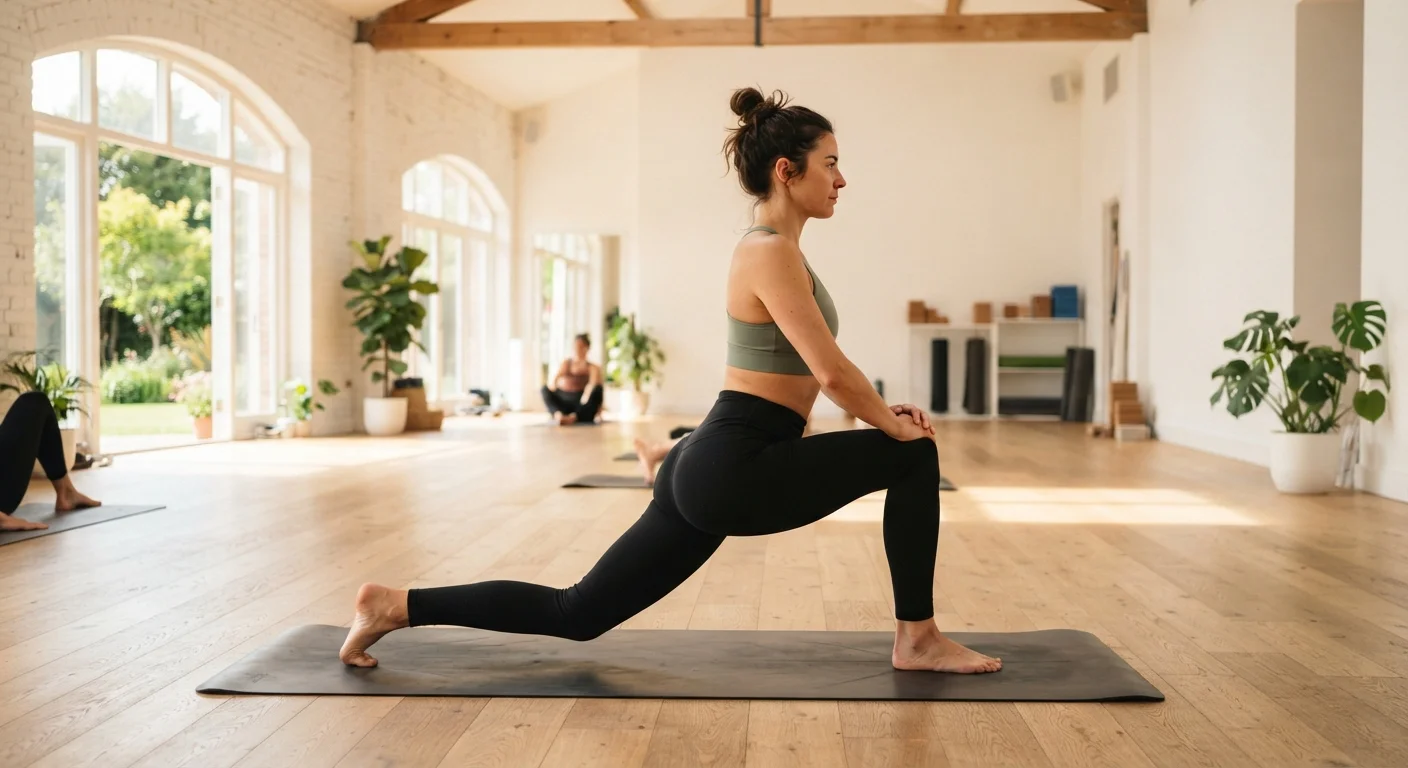
Mobility is the ability to actively move a joint through its full range of motion with control and stability. Where flexibility is passive, mobility is active - it requires the neuromuscular system to coordinate strength and range simultaneously.
A useful way to think about it: flexibility is the raw material; mobility is what you build with it. Someone who can passively pull their knee to their chest (flexibility) but cannot actively lift their leg to that same height without assistance (mobility) has a mobility gap worth addressing.
~25%
Decline in joint range of motion by age 70 vs. young adulthood
Research in exercise physiology suggests joints lose meaningful range of motion across the lifespan without regular movement training, though individual variation is significant.
2-3×/week
Minimum stretching frequency for flexibility gains
The American College of Sports Medicine has generally recommended stretching major muscle groups at least two to three days per week for flexibility development.
Mobility training often incorporates elements of strength, motor control, and proprioception - your body's sense of its own position in space. Because of this, mobility work tends to transfer more directly to everyday tasks like squatting, reaching overhead, or getting up from the floor.
Stretching: A Method, Not a Goal
Stretching is a practice - a set of techniques used to influence flexibility and, in some cases, mobility. It is the tool, not the outcome. Common stretching approaches include:
- Static stretching: Holding a lengthened position for 15-60 seconds. Commonly used post-exercise or during dedicated recovery sessions.
- Dynamic stretching: Controlled, repetitive movements through a range of motion. Often used as part of a warm-up because it activates muscles without reducing force output the way prolonged static holds can.
- PNF stretching (Proprioceptive Neuromuscular Facilitation): A technique alternating contraction and relaxation of a muscle to achieve deeper range. Typically performed with a partner or therapist.
Stretching can improve flexibility over time, and when combined with intentional movement, it supports mobility development. But stretching alone does not build the strength or control that mobility requires.
Timing Matters With Static Stretching
Research suggests that prolonged static stretching immediately before strength or power activities may temporarily reduce force output. For this reason, many exercise professionals recommend saving longer static holds for after your workout or for standalone flexibility sessions, while using dynamic movement in warm-ups. If you have questions about what's right for your specific routine, a certified fitness professional can help you structure your approach.
Why the Distinction Matters for Your Routine
If your goal is simply to feel less tight after long periods of sitting, a consistent static stretching routine may be sufficient. If your goal is to move better - squat deeper, lift more safely, reduce injury risk, or maintain independence as you age - you likely need dedicated mobility work that goes beyond passive stretching.
Physical therapists and certified strength and conditioning specialists generally recommend addressing both. A well-rounded approach might include dynamic movement during warm-ups, static or PNF stretching during cooldowns, and dedicated mobility drills several times per week. How much of each depends on your individual starting point and goals.
This article is for general informational purposes only and is not a substitute for advice from a qualified healthcare or fitness professional. If you have an injury, chronic condition, or specific movement concern, consult a licensed physical therapist or physician before beginning a new stretching or mobility program.