What Fabric Content Labels Are Actually Telling You
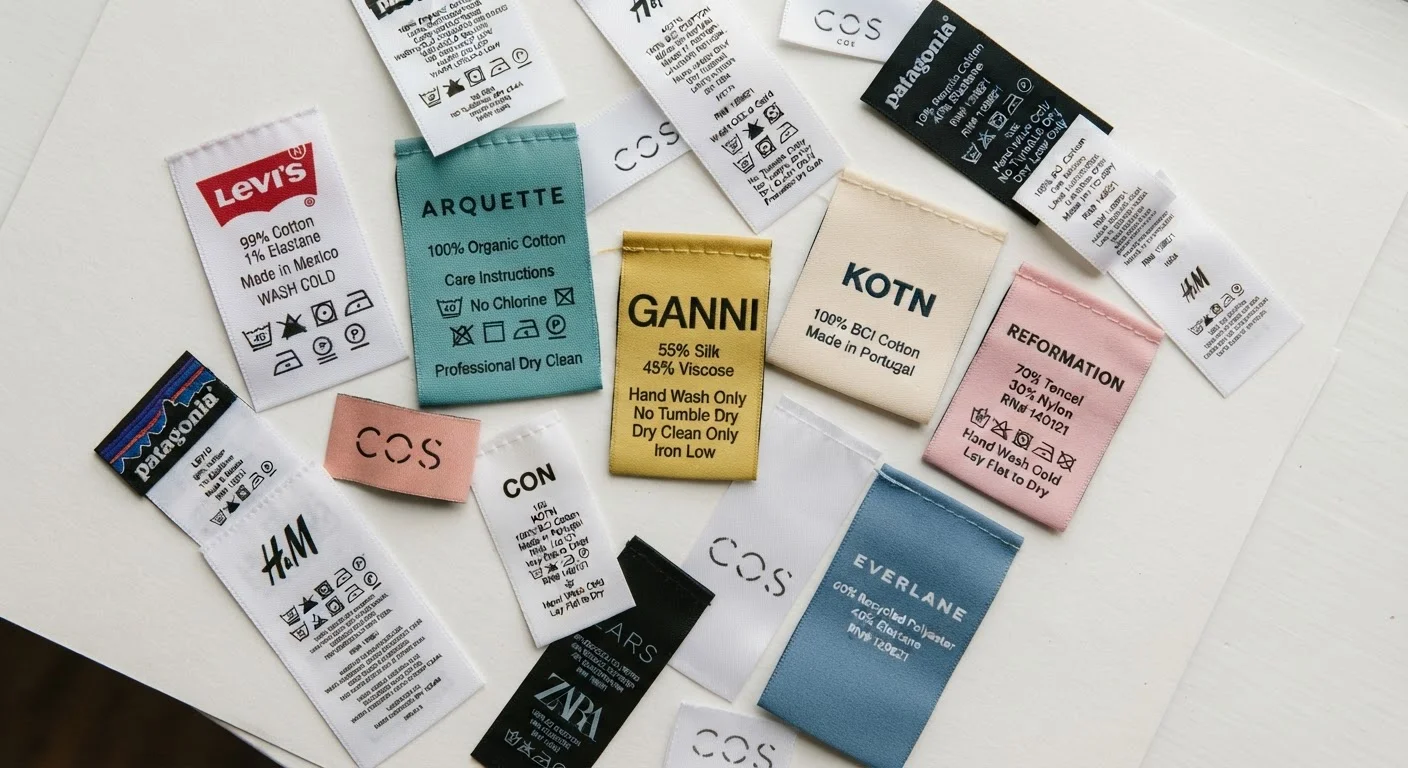
Every garment sold in the United States is required by the Federal Trade Commission (FTC) to carry a label disclosing its fiber content. Those percentages aren't marketing — they're regulated disclosures, and they directly affect how a piece of clothing wears, breathes, and holds up over time.
| FTC fiber disclosure requirement | Mandatory for all clothing sold in the US (Federal Trade Commission Textile Rules) |
| First fiber listed | Always the dominant fiber by weight (FTC Textile Fiber Products Identification Act) |
| Care symbol standard | ISO 3758 (international textile care labeling) (International Organization for Standardization) |
| Number of core care symbols | 5 (wash, bleach, dry, iron, dry clean) (ASTM D5489 US Standard) |
| Temperature dots on iron symbol | 1 dot = low, 2 dots = medium, 3 dots = high (Standard care label system) |
| "Dry clean" vs. "Dry clean only" | Only the word 'only' makes it a binding requirement (FTC Care Labeling Rule guidance) |
Natural fibers like cotton, linen, wool, and silk come from plants or animals. They tend to breathe well and feel comfortable against skin, though they often require more careful laundering. Synthetic fibers — polyester, nylon, spandex, acrylic — are manufactured from petrochemicals. They're generally more durable, moisture-wicking, and wrinkle-resistant, but they don't breathe as freely and can retain odor over time.
Blended fabrics combine both worlds. A cotton-polyester blend, for example, might give you the softness of cotton with reduced shrinkage and easier care. The fiber listed first on the label is always the dominant one by percentage weight. So "60% cotton, 40% polyester" is mostly cotton — that's the feel and behavior to expect.
Understanding fiber content also connects to durability and value. As explored in our guide on price vs. quality in clothing, a high price tag doesn't automatically mean better fabric — knowing what you're reading helps you judge for yourself.
Care Symbols: A Practical Decoder
International care symbols follow a standardized system developed by GINETEX and adopted widely across the US. Five basic symbols form the foundation:
Natural fiber
A textile fiber derived from plants (cotton, linen) or animals (wool, silk). Natural fibers generally breathe well and feel comfortable, but may require more careful washing or ironing.
Synthetic fiber
A man-made fiber produced from chemical processes, such as polyester, nylon, or acrylic. Synthetics tend to be durable, wrinkle-resistant, and moisture-wicking.
Blended fabric
A fabric made from two or more fiber types woven or knitted together. Blends combine the properties of each fiber — for example, softness from cotton and durability from polyester.
Felting
An irreversible matting of wool fibers caused by heat, moisture, and agitation. Felted wool shrinks significantly and loses its original texture and drape.
Gentle cycle
A washing machine setting that uses slower agitation and spin speeds. Used for delicate fabrics or loosely constructed garments to reduce stress on fibers.
Dry flat
A drying method where a garment is laid horizontally on a clean surface instead of hung or tumble-dried. Prevents stretching in knits and structured pieces.
Non-chlorine bleach
An oxygen-based bleach that is gentler than chlorine bleach. Suitable for colors and delicate fabrics where chlorine would cause damage or fading.
- Washtub (basin with water): Indicates washing instructions. A number inside the tub is the maximum temperature in Celsius. One line under the tub means gentle cycle; two lines mean very gentle. An X through it means do not wash.
- Triangle: Relates to bleaching. An empty triangle means any bleach is okay. Lines inside restrict you to non-chlorine bleach only. An X means no bleach at all.
- Square: Covers drying. A circle inside the square means tumble dry; dots indicate heat level (one dot = low, two = medium, three = high). Horizontal lines inside the square mean dry flat. An X through the square means do not tumble dry.
- Iron: Shows ironing guidance. Dots indicate temperature (one = low/synthetics, two = medium/wool, three = high/cotton and linen). An X means do not iron.
- Circle: Dry cleaning instructions. A letter inside (P, F, W) tells the dry cleaner which solvents to use. An X means do not dry clean.
When in doubt, the most conservative symbol wins. If a label says both "gentle cycle" and "low heat dry," treat the whole garment gently — not just one step. Following care instructions correctly is one of the simplest ways to extend garment life, a topic covered more fully in our guide to making clothes last longer.
Common Misreads and What They Cost You
Ignoring care labels is one of the most common — and costly — laundry mistakes. Here's where people frequently go wrong:
"Dry Clean" vs. "Dry Clean Only" — Not the Same
Many consumers treat any dry-clean mention as an absolute rule, but the FTC's Care Labeling Rule distinguishes between a recommendation and a requirement. "Dry clean only" means other methods risk damaging the garment. "Dry clean" without "only" may simply be the manufacturer's suggested method — gentle hand washing is sometimes a viable alternative. When unsure, test a small hidden area first or consult a professional cleaner.
- Hot water on delicates: Wool and silk can shrink or felt irreversibly at high temperatures. If your label shows a single dot or the word "cold," that's non-negotiable.
- Tumble-drying "dry flat" items: Some knits and structured fabrics will stretch or warp in a dryer. Lay them horizontally to dry and they'll hold their shape.
- Skipping the "do not wring" note: Wringing wet fabric stresses the fibers and distorts the shape, especially in loosely woven textiles.
- Assuming "dry clean" means "dry clean only": Some labels say "dry clean" as a recommendation, not a requirement. Check whether it says "dry clean only" — that's the binding instruction.
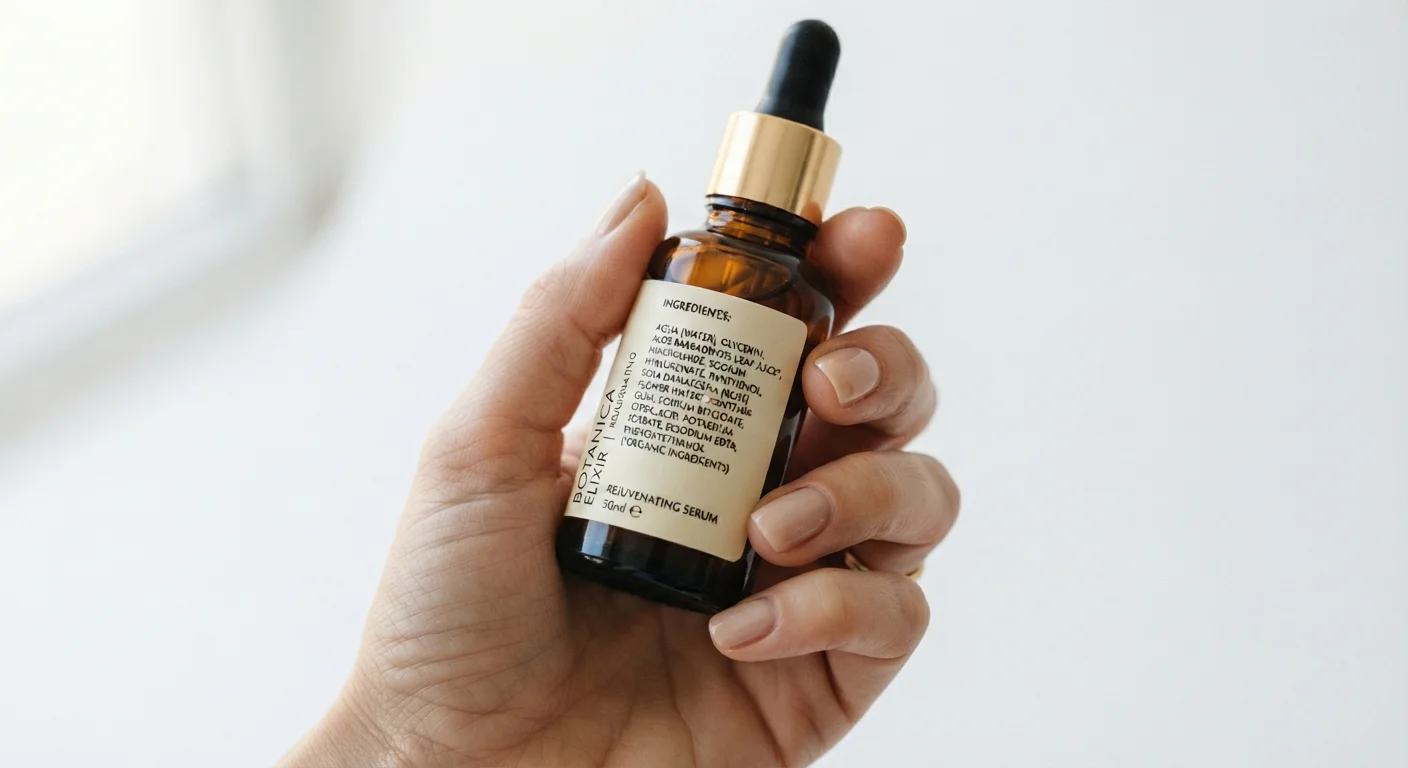
Label-reading is a skill that pays off in every closet. Just as you'd decode ingredient lists on other products — whether that's skincare labels or nutrition facts panels — the effort gives you real control over what you're putting on your body and how long it serves you.