The Price-Quality Myth in Fashion
Most of us grow up absorbing a simple idea: you get what you pay for. In some industries, that holds reasonably well. In fashion, it's far more complicated. A garment's retail price reflects a mix of factors — fabric sourcing, construction, labor, shipping, marketing spend, and brand positioning — and those last two can account for a surprisingly large share of what ends up on the tag.
That's not cynicism; it's just how fashion economics work. A label's heritage, celebrity associations, and advertising campaigns are genuine costs passed to the consumer, but they say nothing about how long the seams will hold or how the fabric will behave after ten washes. Understanding this split is the first step toward shopping smarter, regardless of your budget.
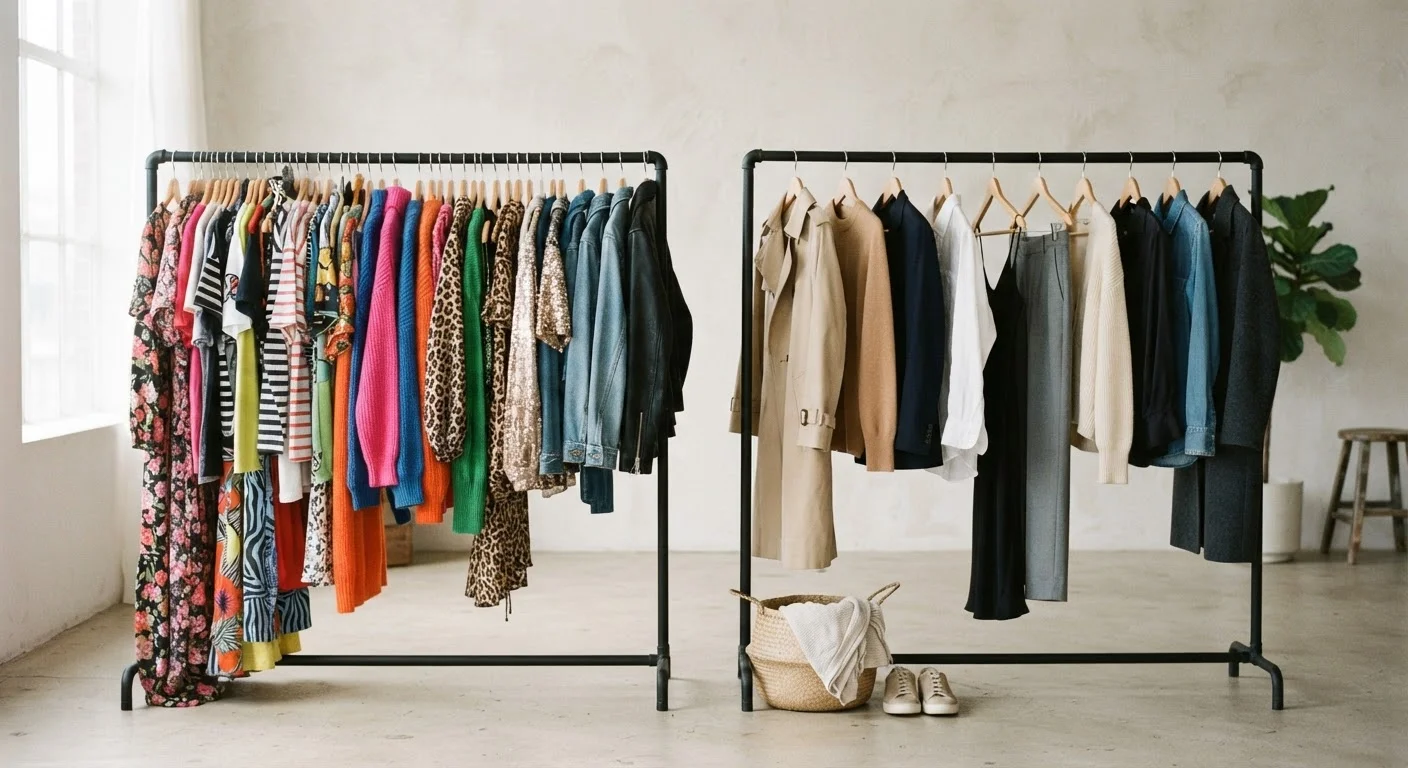
For a deeper look at how production models shape what lands in your closet, see our article on fast fashion vs. slow fashion.
Myth
If a piece of clothing costs more, it must be made from better materials.
Fact
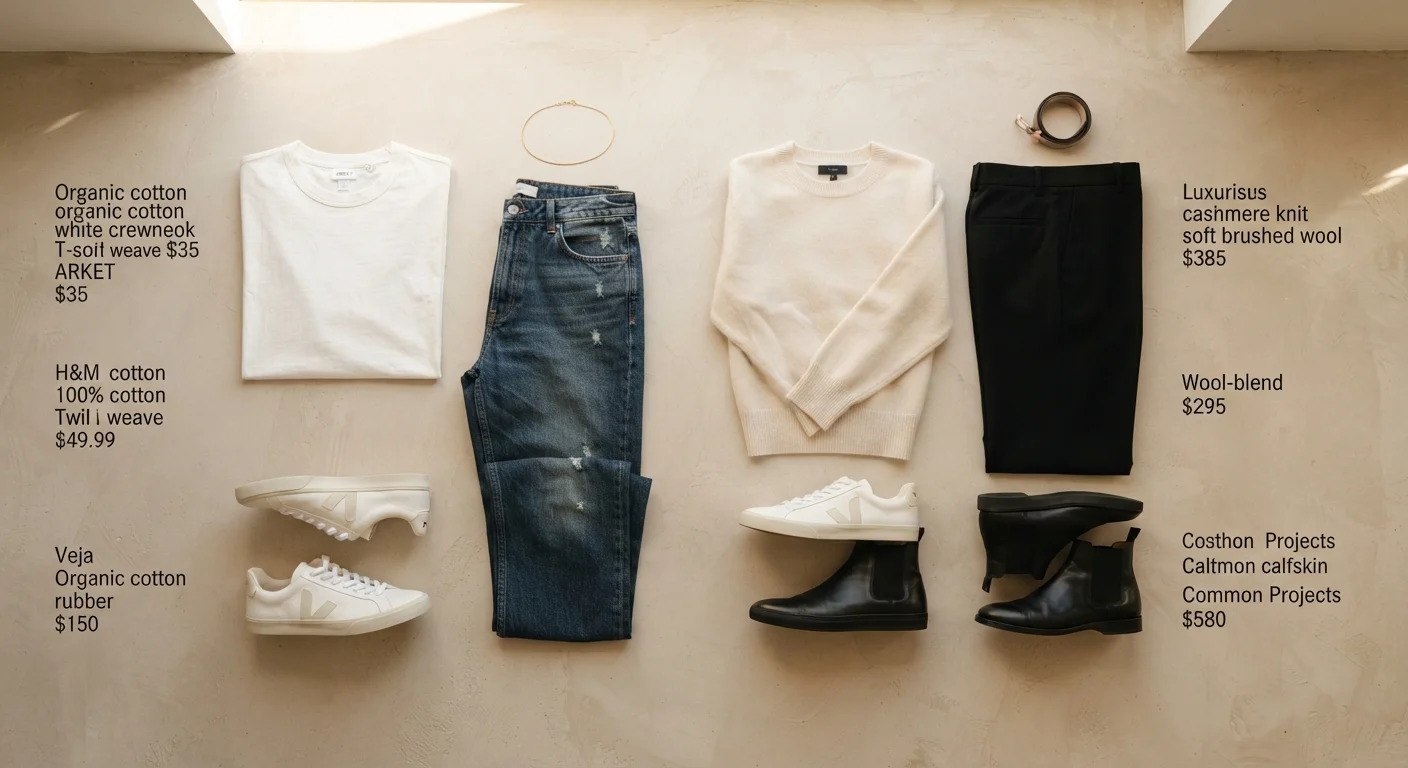
Price reflects many factors beyond materials — marketing, branding, and retail markup can dwarf the actual cost of fabric and construction.
A garment's retail price is built from a stack of costs: raw materials, labor, manufacturing overhead, logistics, and then a significant layer of brand investment. For some labels, marketing and licensing alone can represent the majority of the consumer price. That means two shirts made from nearly identical fabric and construction can carry vastly different price tags based purely on whose name is stitched inside.
A better approach is to look directly at the fabric composition label and examine the stitching and seam finish. Those details are harder to fake than a price tag.
Myth
Designer and luxury brands always use superior craftsmanship.
Fact
Some luxury items are exceptionally well-made, but many are produced in the same overseas factories as mid-range garments, with quality varying widely by item and category.
The fashion industry is genuinely globalized, and country of manufacture or factory of origin often matters more than the brand name on the label. Investigative reporting and industry research have consistently shown that high-end brands frequently source production from the same facilities as non-luxury competitors. The differences, when they exist, tend to be in fabric grade and finishing — not in some entirely separate tier of craftsmanship.
This doesn't mean luxury is never worth the cost — for certain categories like tailored suiting or heritage leather goods, the premium can be justified. But blanket assumptions about quality based on brand prestige alone are worth setting aside.
Myth
Cheap clothes are always low quality and won't last.
Fact
Some affordable garments are constructed and finished well enough to last years with proper care, while some expensive pieces fail quickly.
Construction quality exists at every price point — and so does poor quality. A straightforward cotton T-shirt from a modest price point, made with a tight knit and properly finished seams, can outlast a much pricier equivalent that was cut with thinner fabric to hit a margin target. The variable is the specific item, not the price bracket it came from.
The most reliable approach is to evaluate each garment on its own merits: feel the weight of the fabric, check the seams, look at how the hem is finished, and consider whether the item fits your actual lifestyle. Those observations will serve you better than the number on the tag.
Myth
Dry-clean-only labels mean a garment is high quality.
Fact
Dry-clean-only instructions are often about construction shortcuts or delicate embellishments, not an indicator of superior fabric or durability.
Care requirements are determined by fabric and construction choices — and some of those choices are made to cut costs rather than improve quality. An interfacing that isn't properly fused, beaded embellishment applied over a fragile base, or a lining stitched in a way that doesn't tolerate agitation can all result in dry-clean-only instructions. That recommendation protects the garment from its own structural limitations.
Truly high-quality natural fabrics — well-woven wool, properly treated linen, densely knit cotton — can often be hand-washed or gently machine-washed when the construction supports it. A dry-clean label tells you about care needs, not quality tier.
What Actually Signals Quality in a Garment
Once you move past price, a few concrete details become your most reliable guides. Fabric composition is the starting point — natural fibers like cotton, wool, and linen generally breathe better and tend to age more gracefully than many synthetics, though high-quality synthetics can be durable and appropriate for specific uses. Look for tightly woven fabrics with minimal pilling and consistent texture.
~$6
Average labor cost in a $100 garment
Research from fashion supply chain analysts has estimated that labor often represents a very small fraction of a garment's retail price, with most of the markup absorbed by brand, retail, and logistics costs.
8–12
Stitches per inch in quality woven fabric
Textile and tailoring references commonly cite stitch density as a key indicator of seam durability — lower counts are more likely to unravel with wear and washing.
Construction is equally telling. Flat, even seams with tight stitch counts (generally 8–12 stitches per inch for woven fabrics) indicate care in manufacturing. Check that patterns align at the seams on shirts and pants — misaligned stripes or plaids are a shortcut signal. Reinforced stress points, such as bartack stitching at pocket corners, matter on anything you'll wear hard.
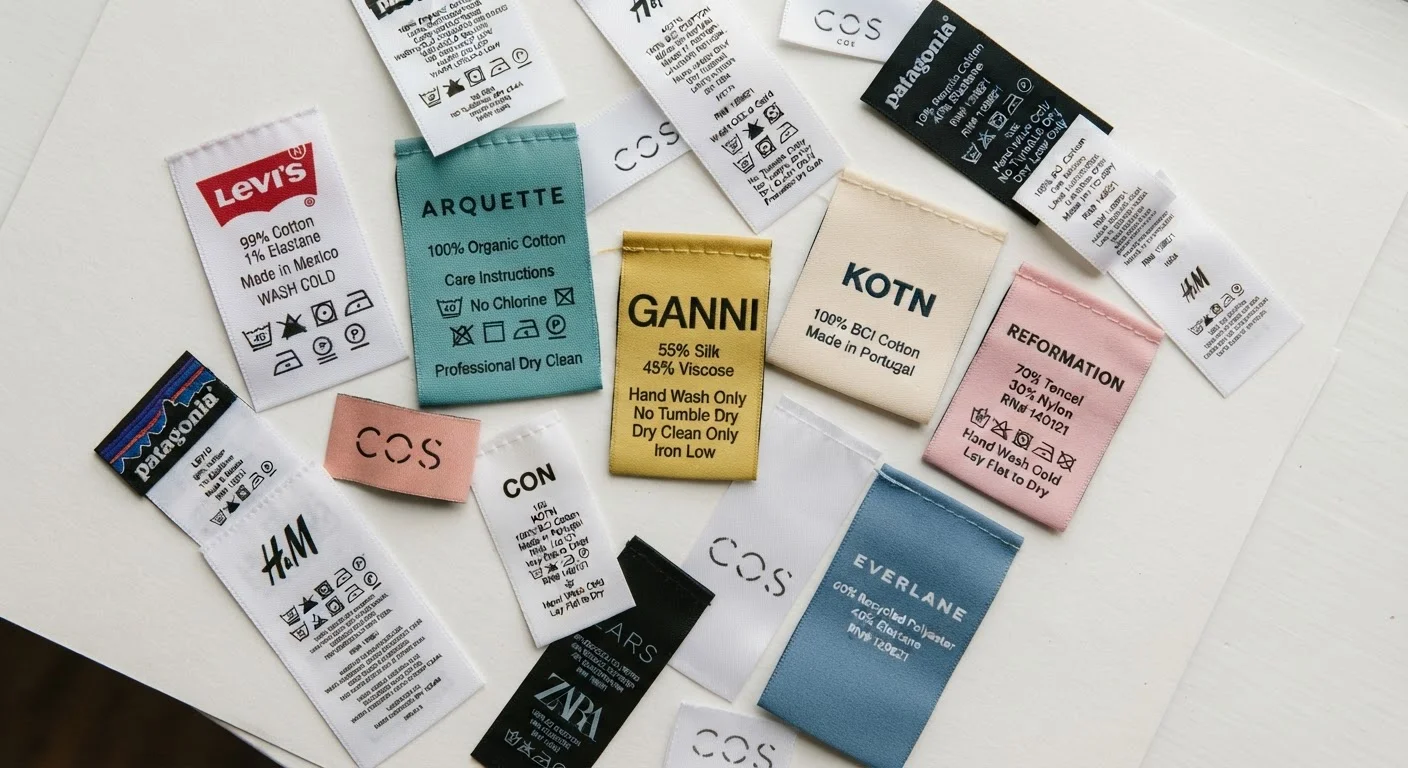
Our guide to reading clothing labels breaks down exactly what those tiny tags are telling you about fiber content and care requirements.
Don't Confuse Softness for Durability
Ultra-soft fabrics are appealing in the store, but extreme softness in knits can sometimes indicate a very loose weave or low fiber density — both of which affect how quickly a garment pills or loses shape. Run your fingers across the fabric surface firmly: if it pills immediately from that light friction, it's likely to look worn quickly. Softness and longevity aren't the same quality.
Finally, don't underestimate the role of care. Even a well-made garment degrades quickly with harsh washing and improper storage, while a modest piece can last years with the right habits. For practical guidance, see how to care for clothes so they last longer.
Dressing Well Without Overthinking It
None of this means expensive clothes are never worth it — sometimes they are, particularly for tailored items or specific performance needs. The point is that price alone is a poor proxy for value. Knowing what to look for lets you make that call based on evidence rather than assumption.
Building a wardrobe you actually wear and enjoy doesn't require a luxury budget. It requires attention: to fabric, fit, construction, and how a piece fits your real life. And it's worth questioning the broader myth that style is a product of spending. Our piece on common myths about personal style tackles that idea directly.
If you're thinking about editing down to a smaller, more intentional wardrobe, the case for owning fewer clothes offers an honest look at the real tradeoffs involved.