The Building Blocks of an Auto Policy
An auto insurance policy is not a single coverage — it is a bundle of separate protections that can be purchased together or individually. Each part pays for a different category of loss. Knowing what each one does (and does not) cover prevents the frustration of filing a claim only to learn it falls outside your coverage.
For a broader view of how auto fits alongside health, home, and life protection, see the major types of insurance coverage Americans actually need.
| Minimum required coverage | Liability (in nearly all U.S. states) (State DMV requirements vary; verify your state's minimums.) |
| What liability does NOT cover | Your own vehicle damage or your own medical bills |
| Collision deductible range (typical) | $250–$2,000 (Actual options vary by insurer and policy.) |
| States with mandatory PIP | Approximately 12 no-fault states (State laws change; check your state's insurance commissioner.) |
| Comprehensive claim examples | Theft, hail, flood, fire, deer strike |
| Lender requirement | Collision and comprehensive usually required on financed or leased vehicles (Confirm with your lender or lease agreement.) |
Liability: The Required Foundation
Liability coverage is the legal minimum in nearly every U.S. state. It pays for bodily injury and property damage that you cause to someone else in an accident where you are at fault. If you rear-end another vehicle and injure the driver, your liability coverage pays their medical bills and repair costs — up to your policy limits.
What liability does not do: it pays nothing toward your own vehicle damage or your own medical expenses. That is handled by other coverages. Policies typically express liability limits as three numbers, such as 25/50/25, representing thousands of dollars for per-person injury, per-accident injury, and property damage respectively.
For a deeper look at how liability works across auto, home, and business policies, see liability coverage explained.
Coverage Terms and Limits Vary by Policy
The descriptions here reflect common U.S. insurance structures, but exact coverage, exclusions, and limits depend on your specific policy and state regulations. Always read your policy documents carefully and speak with a licensed insurance agent if you have questions about what your coverage actually includes.
Collision and Comprehensive: Protecting Your Own Vehicle
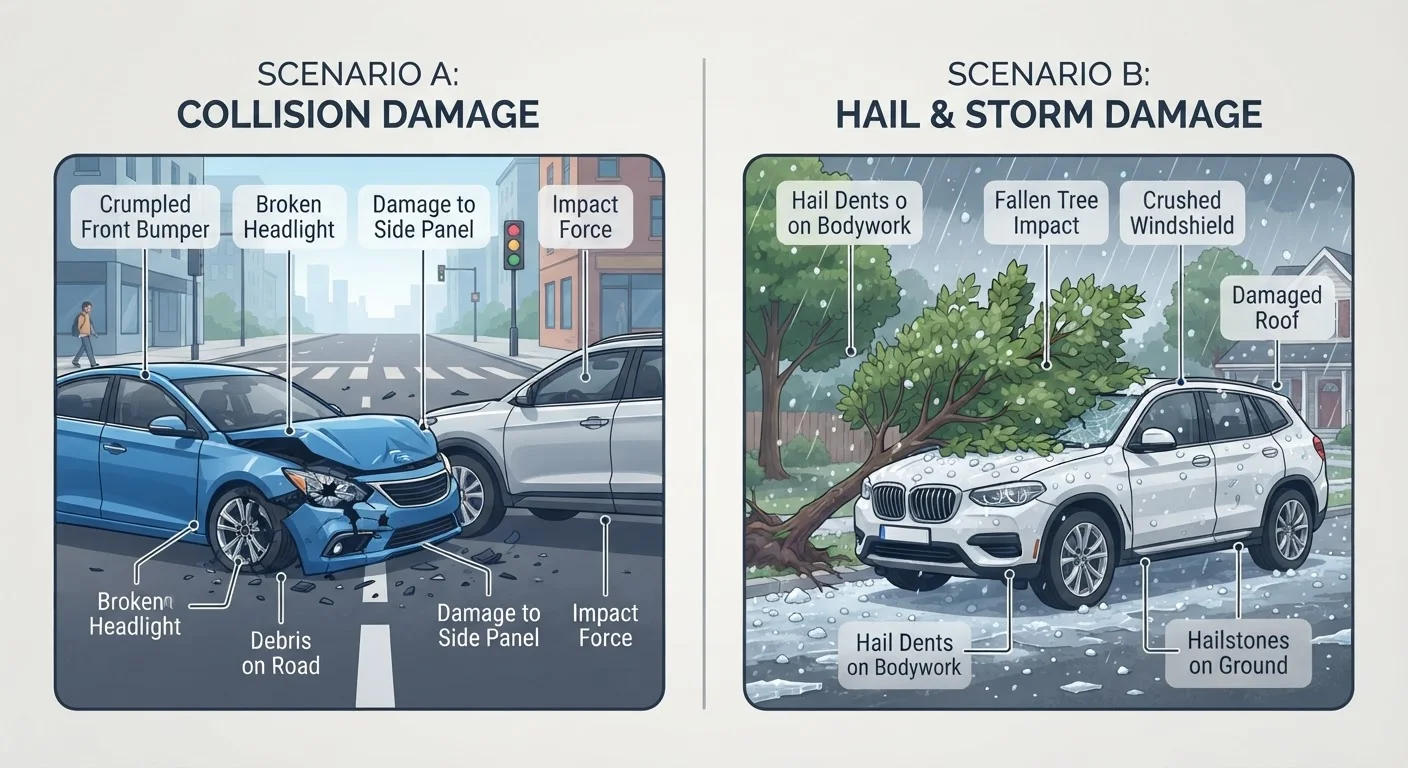
Collision coverage pays to repair or replace your car when it collides with another vehicle or a stationary object — a guardrail, a parking barrier, or another car. It applies regardless of fault, though your insurer may pursue reimbursement from the at-fault driver's insurer through a process called subrogation.
Comprehensive coverage handles vehicle damage from events that are not collisions: theft, vandalism, hail, flooding, fire, falling trees, and animal strikes. Think of it as covering everything the road itself did not cause.
Both coverages come with a deductible — the portion you pay before insurance covers the rest. Lenders and leasing companies typically require both on financed or leased vehicles. To understand exactly how these two coverages differ in practice, see collision vs. comprehensive auto coverage.
Liability Coverage
Pays for injuries and property damage you cause to others in an at-fault accident. It does not cover your own vehicle or injuries.
Collision Coverage
Pays to repair or replace your vehicle after it hits another car or object, regardless of who is at fault.
Comprehensive Coverage
Covers damage to your vehicle from non-collision events such as theft, weather, fire, falling objects, or animal strikes.
Uninsured/Underinsured Motorist
Covers your costs when the at-fault driver has no insurance or not enough insurance to pay for your damages or injuries.
Personal Injury Protection (PIP)
Pays medical expenses and sometimes lost wages for you and your passengers after an accident, regardless of fault. Required in some states.
Deductible
The amount you pay out of pocket before your insurance coverage kicks in on a claim. Higher deductibles typically lower your premium.
Uninsured Motorist, PIP, and Other Common Add-Ons
Uninsured/Underinsured Motorist (UM/UIM) coverage steps in when the driver who caused the accident carries no insurance — or not enough to cover your losses. Given that an estimated 1 in 8 U.S. drivers is uninsured, this protection is more relevant than many people expect.
~13%
U.S. drivers estimated to be uninsured
According to the Insurance Research Council, roughly 1 in 8 drivers on U.S. roads carries no auto insurance.
50 states
Require some form of auto insurance
Every U.S. state has financial responsibility laws, though minimum coverage requirements vary considerably.
Personal Injury Protection (PIP), sometimes called no-fault coverage, pays your medical bills and potentially lost wages after an accident regardless of who caused it. PIP is mandatory in no-fault states and optional in others.
Medical Payments (MedPay) is a simpler, narrower version of PIP — covering medical expenses for you and your passengers without the lost-wage component. It is available in most states.
Other optional add-ons include roadside assistance, rental reimbursement, and gap coverage (which pays the difference between your car's actual cash value and what you still owe on a loan if the vehicle is totaled). These do not replace core coverages — they supplement them.
Understanding how your deductible, premium, and limits interact across all these coverages is essential for evaluating whether your policy truly fits your needs. See how deductibles, premiums, and coverage limits work together for a plain-language breakdown.
This article provides general information about auto insurance coverage types for educational purposes only. It is not personalized insurance or legal advice. Coverage terms, exclusions, and requirements vary by insurer and by state. Consult a licensed insurance agent or your policy documents to understand exactly what your coverage includes.