
Why Pet Food Labels Are Regulated — and What That Means for You
Every bag or can of commercial pet food sold in the United States must meet labeling requirements that blend federal guidelines with state regulations, most of which follow AAFCO model rules. This means the label is a legal document, not just marketing copy — though it contains both.
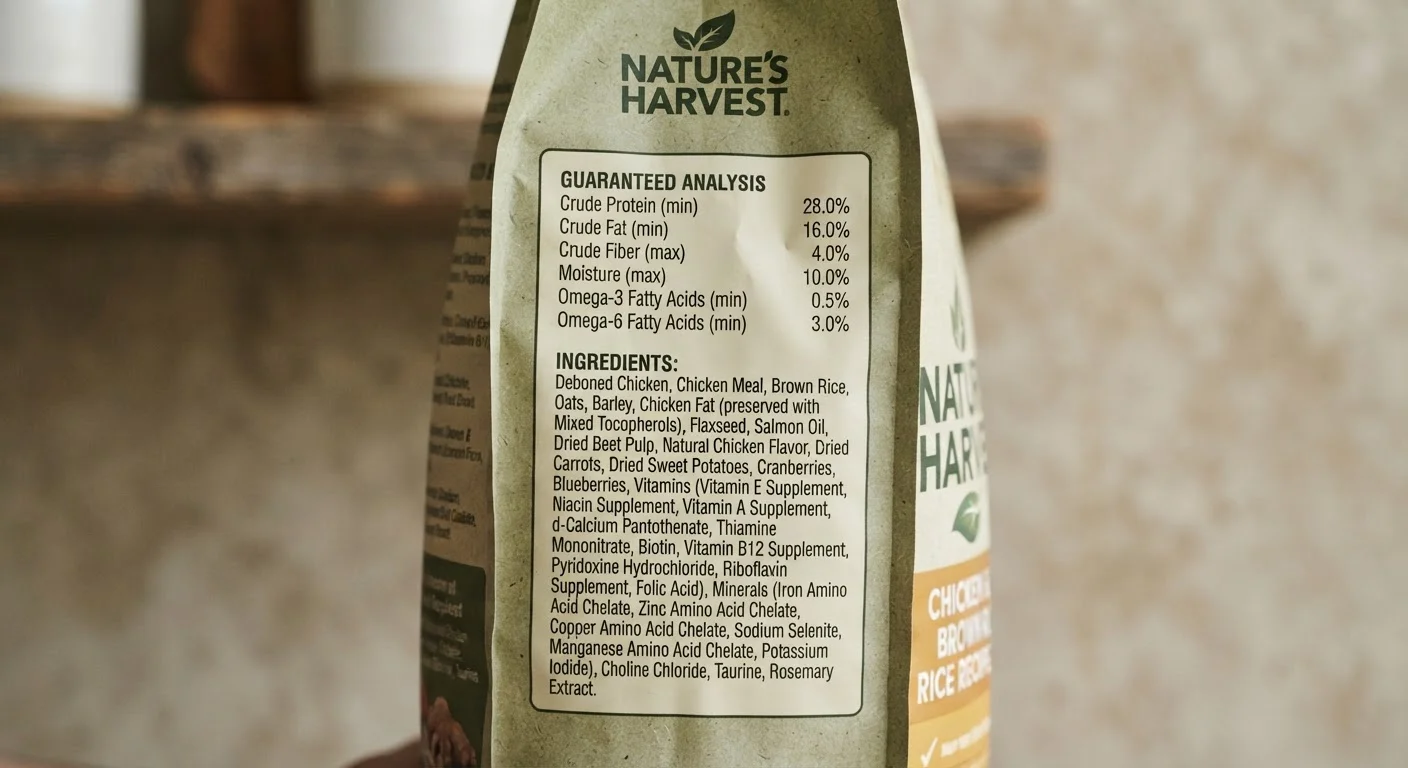
Understanding the difference matters. The front of a package is primarily marketing territory, where terms like "premium," "natural," or "holistic" have limited regulatory definition. The back panel, however, is where the regulated information lives: the ingredient list, the guaranteed analysis, and the nutritional adequacy statement. That's where to focus your attention.
For a broader look at how nutritional labeling works across product categories, our guide to pet food nutritional labels covers the full landscape in detail.
| Ingredient listing order | By weight before cooking, heaviest ingredient listed first (AAFCO regulations) |
| Minimum nutrients shown | Crude protein, crude fat, crude fiber, and moisture (Federal and state labeling requirements) |
| Life stages recognized by AAFCO | Growth (puppies/kittens), Adult Maintenance, All Life Stages, Gestation/Lactation (AAFCO Official Publication) |
| "Named" ingredient requirement | Ingredient must identify the species (e.g., 'chicken,' not just 'poultry') (AAFCO model regulations) |
| Feeding trial duration (dogs) | Minimum 26 weeks (AAFCO Dog Food Nutrient Profiles) |
| Moisture threshold for 'dry' food | 12% or less (AAFCO labeling definitions) |
The Ingredient List: What the Order Really Tells You
Ingredients are listed by pre-cooking weight — meaning water-heavy ingredients like whole chicken appear near the top even though they contribute less actual protein per gram than a concentrated ingredient like chicken meal listed lower down. This is not a flaw to exploit; it's simply how the system works, and knowing it prevents misreading a label as better or worse than it is.
A few key principles to apply when reading any ingredient list:
- Named sources are more informative. "Chicken" tells you more than "poultry." "Salmon meal" is more traceable than "fish meal." Named ingredients give you a clearer picture of what your pet is actually eating.
- By-products are not automatically inferior. Organ meats such as liver and kidney are nutrient-dense. The concern is with unnamed by-products — those listed without a species — since sourcing becomes untraceable.
- Ingredient splitting can obscure order. If a manufacturer lists several forms of the same ingredient separately (e.g., "ground corn," "corn gluten meal," "corn flour"), they each appear smaller individually than they would combined. This is legal but worth recognizing.
The Guaranteed Analysis and the Nutritional Adequacy Statement
The guaranteed analysis panel lists crude protein, crude fat, crude fiber, and moisture at minimum. Some manufacturers voluntarily add more nutrients. These figures are expressed "as-fed" — meaning they include moisture content — which makes direct comparison between wet and dry food misleading unless you convert both to a dry-matter basis first.
To convert to dry matter: subtract the moisture percentage from 100 to get the dry matter percentage, then divide the nutrient percentage by that number and multiply by 100. For example, a wet food with 78% moisture and 10% crude protein has roughly 45% protein on a dry-matter basis — considerably more than the as-fed number suggests.
The nutritional adequacy statement — often called the AAFCO statement — is arguably the most important single line on the label. It tells you two things: whether the food is "complete and balanced," and for which life stage. A food formulated for "All Life Stages" meets the highest nutrient thresholds; one labeled for "Adult Maintenance" may not supply adequate nutrients for a puppy or nursing mother.
Two routes exist to earn this claim: computer-formulated nutrient profiles, or a passing AAFCO feeding trial. Feeding trials involve real animals eating the food over time, which some veterinary nutritionists consider a higher bar — though both methods are legitimate under current regulations.
Label Reading Has Limits
Even a well-decoded label cannot tell you everything about a food's actual digestibility or ingredient sourcing practices. If your pet has a health condition, chronic digestive issues, or unusual dietary needs, consult a licensed veterinarian or board-certified veterinary nutritionist before making significant diet changes. This article provides general educational information only and is not veterinary advice.
Curious how pet food formats — dry kibble, wet canned, and raw — differ in ways a label alone can't show? See how dry, wet, and raw diets compare for a format-by-format breakdown.
AAFCO Pet Food Labeling Guide
The Association of American Feed Control Officials publishes consumer resources explaining how pet food is regulated and what label claims are legally required — useful for going deeper on any term you encounter.
Tufts University Clinical Nutrition Service
The Cummings School of Veterinary Medicine at Tufts University offers publicly available, evidence-based articles on pet nutrition that can help owners evaluate diet claims critically.