What Insulation Actually Does
Insulation's job is straightforward: slow the movement of heat from one place to another. In winter, it keeps warmth inside your living spaces. In summer, it resists the intrusion of outdoor heat. Without adequate insulation, your heating and cooling systems work harder than necessary, and comfort suffers regardless of how powerful those systems are.
Heat moves in three ways - conduction (through solid materials), convection (through air movement), and radiation (through electromagnetic waves). Insulation primarily addresses conduction and, when combined with air sealing, convection as well. A well-insulated home pairs insulation materials with careful attention to air leaks, because even thick insulation loses much of its effectiveness if drafts bypass it entirely.
As you plan any improvements, the pre-winter home walkthrough checklist is a useful companion - it covers weatherstripping and exterior prep that works alongside insulation upgrades.
R-value
A number that measures how well a material resists heat flow. Higher R-values mean stronger insulating performance.
Thermal envelope
The barrier of walls, roof, windows, and floor that separates your conditioned living space from the outdoors. Insulation is a key component of this boundary.
Vapor barrier
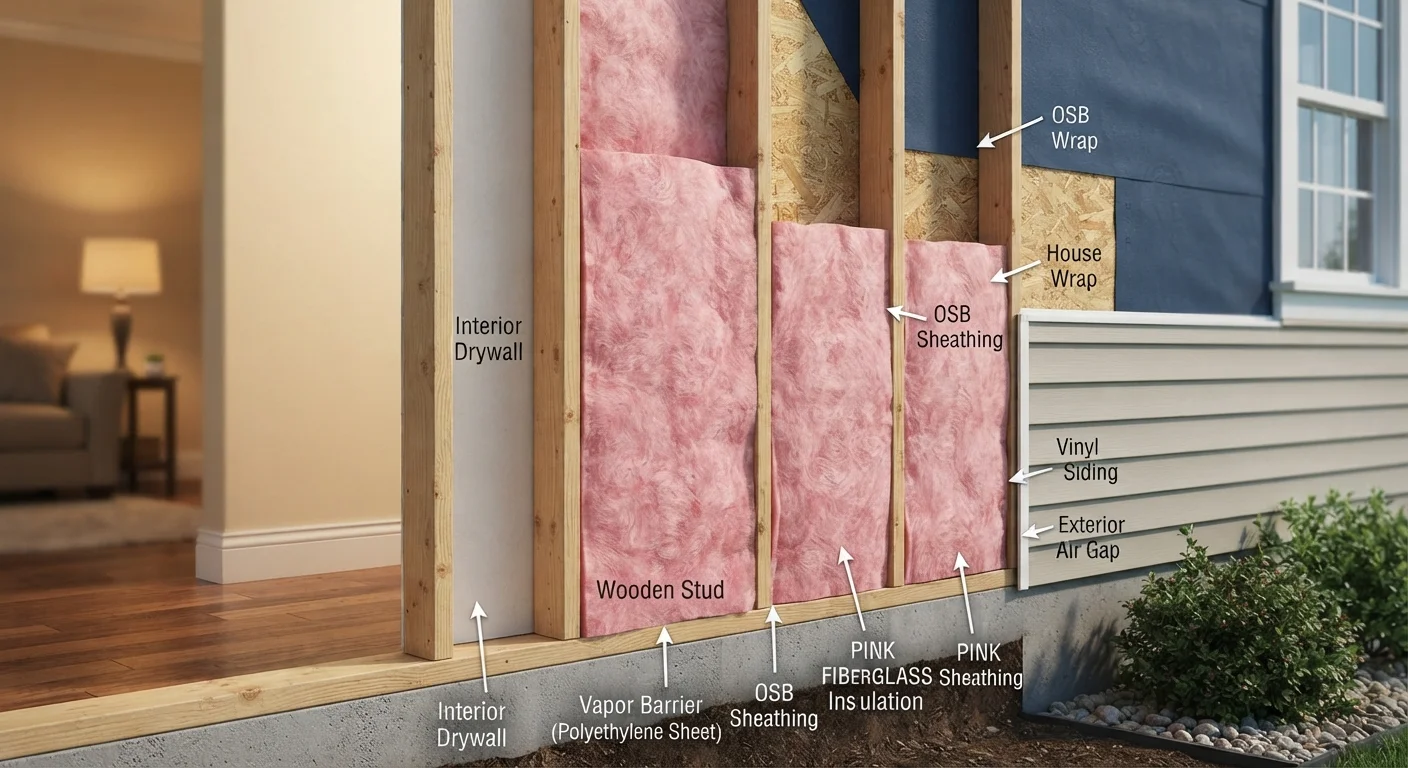
A material - usually plastic sheeting - installed to slow moisture from moving through walls or floors into insulation or structural materials where it could cause damage.
Air sealing
The process of closing gaps, cracks, and penetrations in a home's structure to stop uncontrolled air movement, which works alongside insulation to improve efficiency.
Loose-fill insulation
Insulation made of small particles - cellulose, fiberglass, or mineral wool - that is blown into place, making it well-suited for attics and hard-to-reach cavities.
Climate zone
A geographic classification used by the U.S. Department of Energy to group regions with similar weather patterns, which informs recommended R-values for that area.
Understanding R-Values
R-value is the standard measure of an insulation material's resistance to heat flow. The higher the R-value, the greater the material's insulating power per inch of thickness. R-values are additive - stacking two layers of R-19 batt insulation gives you roughly R-38.
The appropriate R-value for your home depends on two main factors: your climate zone and the location within the home. The U.S. Department of Energy divides the country into climate zones and publishes recommended R-value ranges for attics, walls, floors, and crawl spaces. Colder climates typically demand higher R-values. Meeting these recommendations is the goal - exceeding them significantly often delivers diminishing returns.
Match R-Value to Your Climate Zone
Before purchasing any insulation, look up your home's DOE climate zone (available on the energy.gov website). Targeting the recommended R-value for your specific zone avoids both under-insulating and spending more than necessary. Your local building department can also confirm current code minimums.
It's worth noting that R-value alone doesn't tell the whole story. Moisture infiltration, air gaps, compression of soft materials like fiberglass batts, and aging can all degrade effective performance below the labeled rating. Proper installation matters as much as the material itself.
Common Insulation Materials
Several insulation types are widely used in American homes, each with different characteristics suited to different applications.
- Fiberglass batts: Pre-cut panels of spun glass fibers that fit between standard stud and joist spacing. Widely available, relatively affordable, and suitable for walls, attics, and floors with open framing.
- Mineral wool (rock wool) batts: Similar in form to fiberglass but made from volcanic rock or recycled slag. Offers slightly better fire and moisture resistance.
- Blown-in (loose-fill) insulation: Fiberglass or cellulose material blown into place using special equipment. Ideal for attics and for retrofitting closed wall cavities where batts can't be inserted.
- Spray polyurethane foam (SPF): Applied as a liquid that expands into a solid foam. Excellent at sealing air gaps simultaneously - especially useful in rim joists, crawl spaces, and irregular spaces. Requires trained applicators; improper installation can create health and fire hazards.
- Rigid foam boards: Panels of polystyrene or polyisocyanurate used on exterior walls, under slabs, and in basement walls. High R-value per inch.
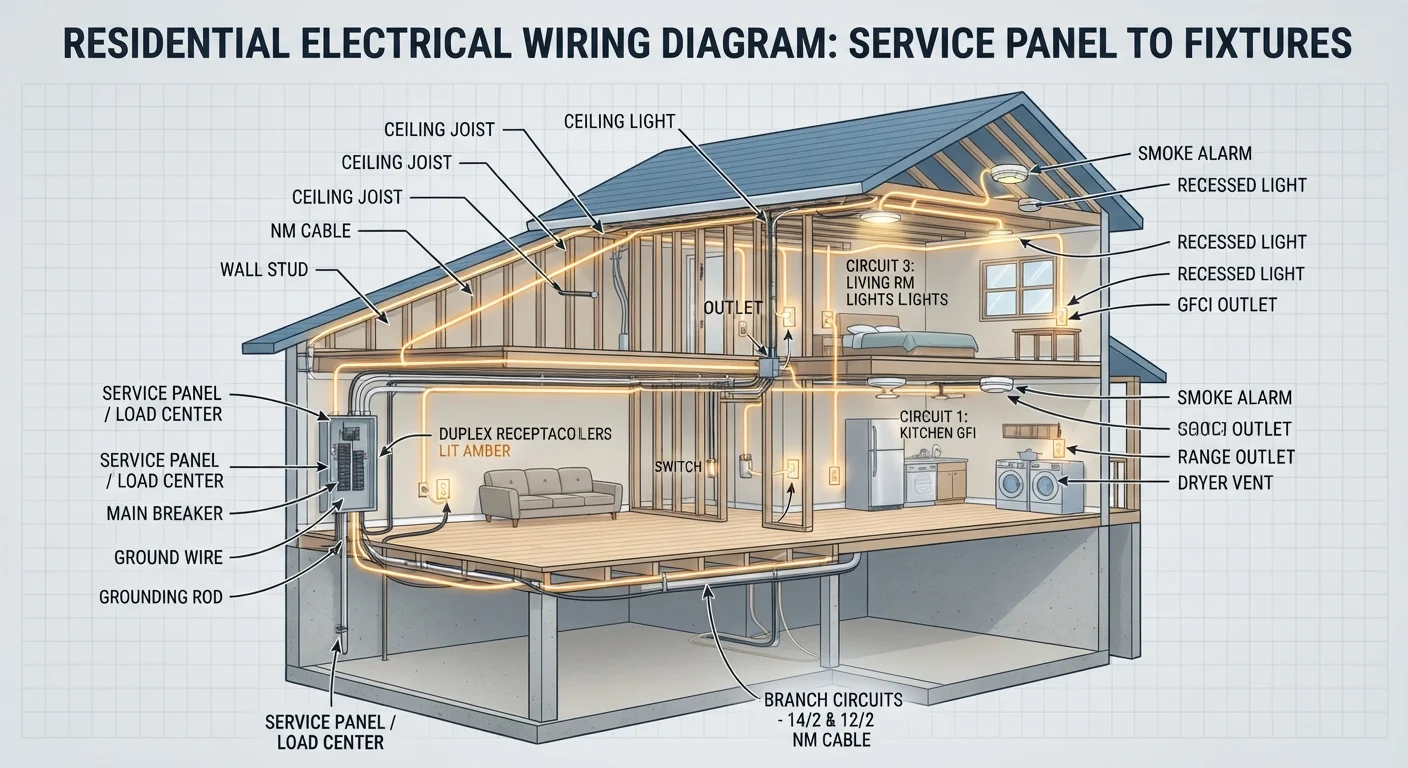
For context on how your home's systems interconnect, see our guide to your home's electrical system - insulation placement near wiring requires particular care.
Where Insulation Goes in a Home
Different parts of your home have different insulation priorities and constraints.
- Attic
- The single most impactful location in most homes. Heat escapes readily through the roof, so attic insulation - typically loose-fill or batts laid between joists - delivers significant energy savings. Ventilation must be maintained; blocking soffit vents is a common installation mistake.
- Exterior walls
- Walls are harder to insulate retroactively in finished homes. New construction uses batts in stud cavities; retrofits often rely on blown-in cellulose or foam injected through small holes.
- Crawl spaces and basement walls
- Moisture management is essential here. Rigid foam on basement walls or spray foam on crawl space rim joists is common. Vapor barriers typically accompany insulation in these locations.
- Floors over unconditioned spaces
- Floors above garages or vented crawl spaces benefit from batt insulation installed between floor joists, facing direction matters for moisture management.
Since the roof envelope and the attic are closely related, our roof maintenance guide covers the inspection steps that help you understand what's above your insulation layer.
Don't Block Attic Ventilation
A common and costly mistake is pushing insulation against the eaves and covering soffit vents. Blocking ventilation traps moisture and can lead to mold, wood rot, and reduced insulation effectiveness. Use insulation baffles (rafter vents) to maintain an airway from soffit to ridge before adding loose-fill or batts.
How to Evaluate What You Already Have
Before investing in new insulation, take stock of what's in place. Here's a practical approach for homeowners:
- Check the attic: If your attic is accessible, measure the depth of existing insulation with a ruler. Loose-fill fiberglass should be at least 10-14 inches for common R-value targets; cellulose is denser and achieves similar R-values in less depth. Compare what you find against DOE zone recommendations.
- Look for gaps and compression: Batts that are compressed, wet-stained, or have gaps around pipes and fixtures are not performing at rated levels.
- Feel your walls in winter: Interior wall surfaces that feel cold to the touch on exterior walls can indicate missing or insufficient insulation.
- Consider a professional energy audit: Certified energy auditors use blower-door tests and thermal imaging to locate air leaks and insulation deficiencies that visual inspection misses. This is particularly valuable before committing to a large insulation project.
Any significant insulation work - especially involving spray foam, vapor barriers, or enclosed cavities - should involve a licensed contractor. Verify whether local permits are required; many jurisdictions treat insulation upgrades as regulated work. Always confirm local code requirements before starting.
This article is for general informational purposes only and does not constitute professional construction, engineering, or financial advice. Consult a licensed contractor and verify local building codes before undertaking any insulation project.
DOE Energy Saver: Insulation
The U.S. Department of Energy's Energy Saver site provides climate-zone maps, recommended R-values by location, and material comparisons - a reliable starting point for any insulation project.
Home Energy Score (DOE)
A standardized assessment program offered through the DOE that evaluates your home's insulation, air sealing, and systems to produce an energy score and improvement recommendations.