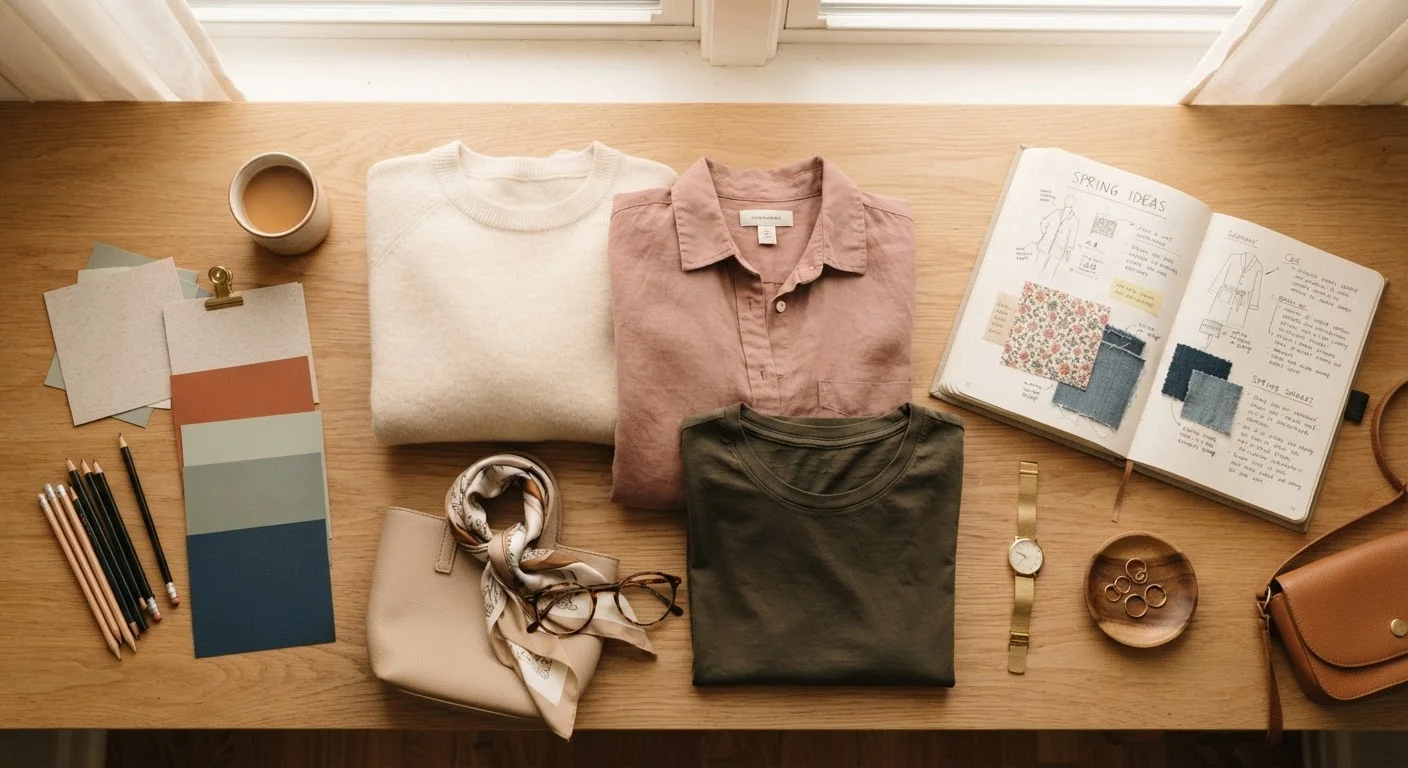

Start With a Clear Picture of Your Life
Before you buy a single thing, take stock of how you actually spend your days. A wardrobe that works is built around your real life — not the life you imagine or the one in your Pinterest boards. Ask yourself: How many days a week do I work, and what does that look like? Do I exercise, attend social events, run errands, travel? What's the climate where I live?
Your answers shape everything. Someone working from home needs a different starting point than someone commuting to an office five days a week. If you're not sure where to begin with this kind of self-assessment, the Finding Your Style guide offers a helpful framework for getting clear on who you're dressing for — you, in your actual life.
Wardrobe foundation
The small set of versatile, everyday pieces that form the core of a functional closet — things like basic tops, well-fitting pants, and a go-to layer.
Capsule wardrobe
A deliberately small clothing collection built around pieces that mix and match easily, designed to cover most situations with minimal items.
Neutral palette
A color scheme built around low-saturation, easily combined colors — such as navy, grey, white, black, and beige — that pair naturally with almost anything.
Versatility
The quality of a clothing item that allows it to work across multiple outfits, occasions, or seasons — a key measure of whether a piece earns its place in a starter wardrobe.
Layering piece
A garment worn over a base top to add warmth, polish, or style — such as a cardigan, blazer, or denim jacket.
The Foundational Pieces Every Wardrobe Needs
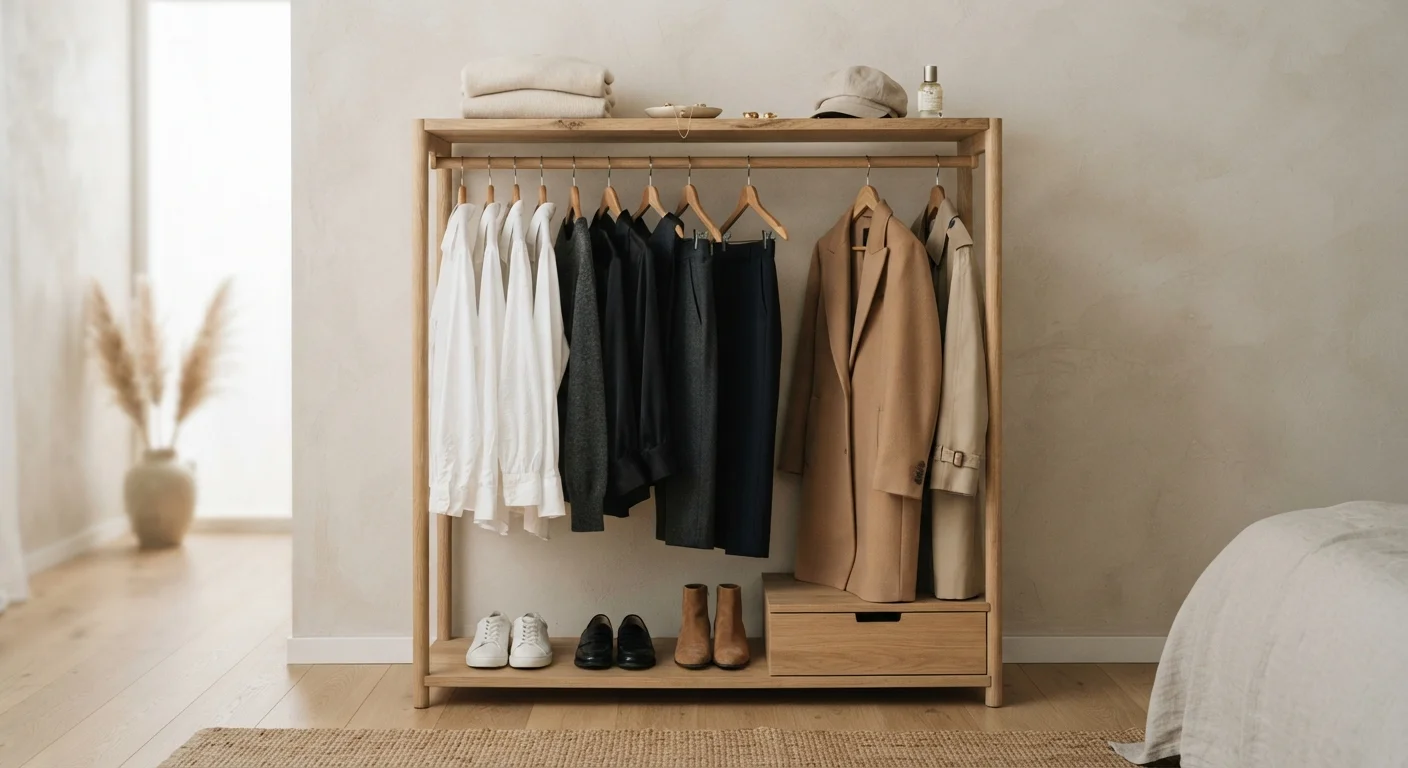
Every functional wardrobe, regardless of style or budget, rests on a core set of versatile basics. Think of these as your uniform-layer — the pieces you can combine in multiple ways without effort.
- Bottoms (2–3 pairs): A well-fitting pair of jeans, one pair of trousers or chinos, and optionally a casual alternative like joggers or a skirt that suits your lifestyle.
- Tops (4–5): A mix of short-sleeve and long-sleeve options in neutral or near-neutral colors. Solid colors and simple patterns are the most mix-friendly.
- A layering piece (1–2): A cardigan, lightweight jacket, or denim jacket that bridges casual and polished settings.
- A versatile outer layer: Depending on your climate, this might be a raincoat, a structured coat, or a fleece — something that protects you without limiting what it works over.
- Shoes (2–3 pairs): One everyday casual pair, one pair that reads more polished, and optionally an athletic or weather-specific pair.
If you want to understand how this concept scales into a longer-term strategy, the capsule wardrobe approach is worth exploring once your basics are in place.
The 'Three Outfit' Test
Before buying any new piece, ask yourself: can I think of at least three different outfits I already own that this item would work with? If you can't, it's likely to become a closet orphan — something that's worn once and then avoided because it only pairs with something else you don't have yet.
Building Smart: Order, Budget, and Strategy
The biggest mistake new wardrobe-builders make is trying to shop everything at once. That leads to impulse buys, mismatched pieces, and a closet that still feels incomplete. Instead, prioritize ruthlessly: what do you need this week? Start there, then layer in secondary pieces over the following weeks or months.
Set a realistic budget before you step into any store or open any browser tab. Thinking of your wardrobe as a series of intentional additions — similar to the way you might approach budgeting basics in your personal finances — helps you spend with purpose rather than impulse. Allocate more toward the pieces you'll wear most often, and less toward occasional-use items.
Secondhand options, clothing swaps, and end-of-season sales are all legitimate ways to stretch your budget without compromising quality. The goal isn't cheap — it's intentional.
Avoid Building a Wardrobe in One Day
Shopping for an entire wardrobe in a single trip almost always leads to buyer's remorse. Decision fatigue sets in quickly, and you're more likely to grab things that feel good in the moment but don't integrate well with the rest of your wardrobe. Spread purchases over several weeks and sleep on anything that feels uncertain.
Color, Fit, and the Mistakes to Avoid
Fit is non-negotiable. A perfectly fitting mid-range top will always look better than an expensive one that doesn't sit right on your body. When evaluating any piece, check the shoulders, the length, and how it falls when you move — not just how it looks standing still.
Start with a neutral palette. Navy, white, grey, black, camel, and olive are your workhorses. They combine easily and give you more outfit options from fewer pieces. Once your foundation is solid, you can add accent colors you genuinely love — but keep them limited to one or two so they play nicely across the whole wardrobe.
Two common traps to sidestep: buying pieces that only work with one other item you own, and keeping things that don't fit because you might wear them someday. A wardrobe that's full but non-functional is its own frustration — something the psychology behind a packed closet explores in depth.
What Comes Next
Once your foundation is in place, you're not done — but the work shifts. Now you move from survival mode into refinement. You'll start to notice which pieces you reach for constantly and which sit untouched. That information is gold.
A structured wardrobe audit is one of the most useful things you can do at this stage. The wardrobe audit checklist walks you through evaluating what's working, identifying gaps, and clearing out what's holding your outfits back. From there, the complete wardrobe-building guide covers how to evolve your collection with color strategy, care routines, and seasonal transitions.
Building a wardrobe is genuinely an ongoing process — not a one-time project. Give yourself permission to learn as you go. The confidence you gain from getting dressed in clothes that actually work for you is more than worth the patience it takes to get there.
Wardrobe Audit Checklist
Once your foundation is in place, a structured audit helps you evaluate what's working and what to add next. A great companion once you've worn your basics for a few weeks.
Capsule Wardrobe Explained
Understand the philosophy behind intentional, minimal wardrobes and whether a capsule approach makes sense for your lifestyle and goals.
Budgeting Basics Hub
Practical budgeting strategies that apply directly to wardrobe planning — helpful if you want to set spending limits and prioritize purchases with confidence.