What These Terms Actually Mean
"Fast fashion" and "slow fashion" are everywhere in style conversations right now — but they're often used as vague stand-ins for "cheap" and "expensive." The reality is more nuanced, and understanding what each term actually describes will help you shop more strategically.
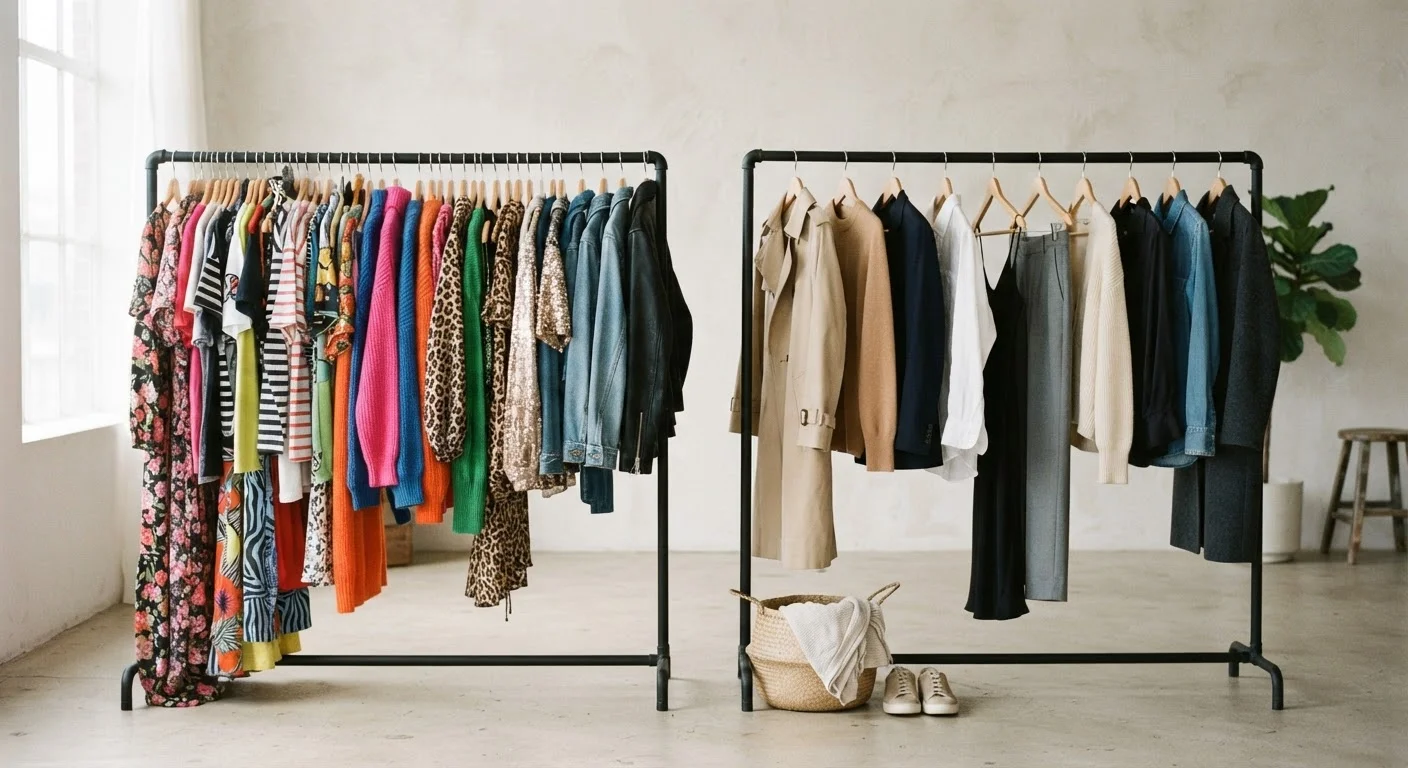
Fast fashion refers to a production model built around speed and volume. Retailers in this space translate runway and social-media trends into affordable garments very quickly, releasing new collections far more frequently than the traditional two-season calendar. The business model depends on low per-unit cost, high consumer turnover, and constant novelty.
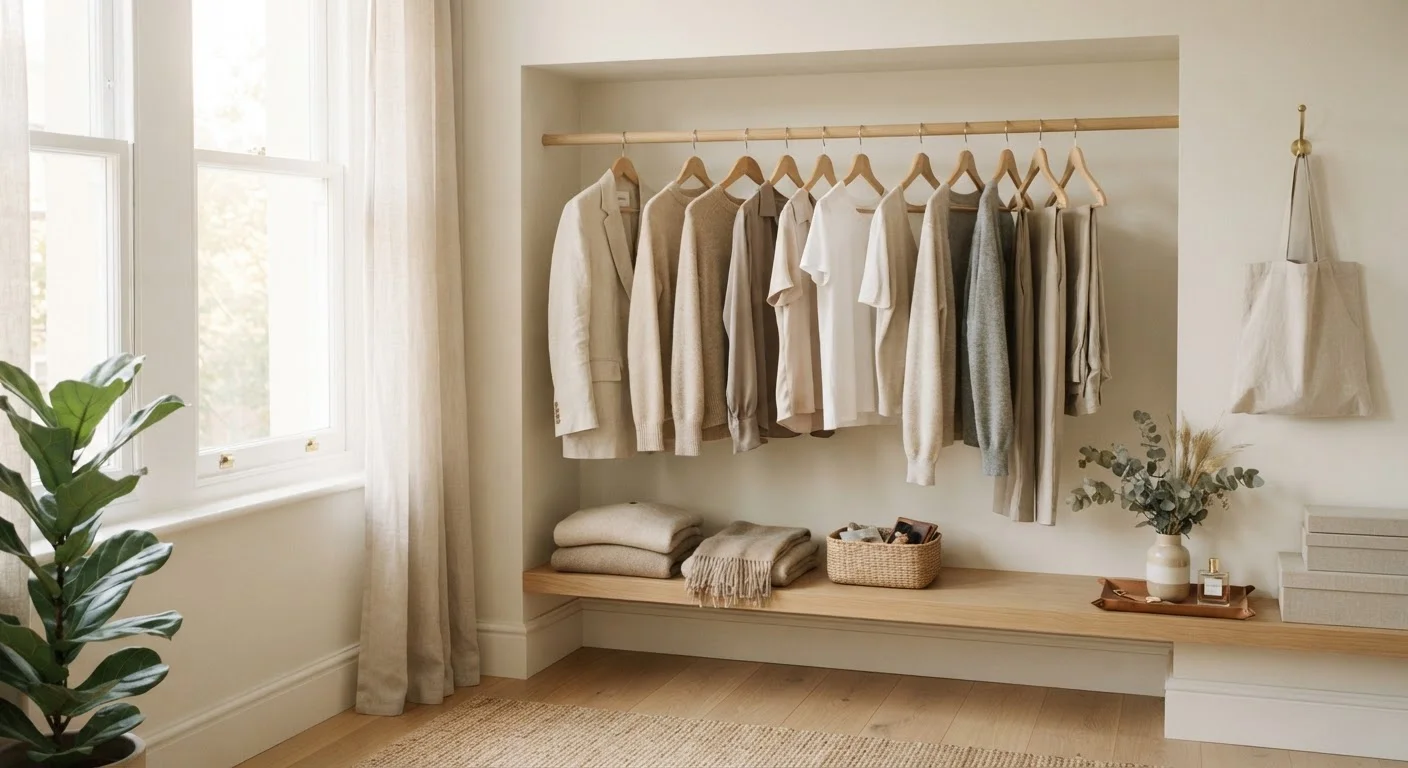
Slow fashion is a response to that model — a philosophy that emphasizes intentional design, durable materials, ethical production, and longer garment life. It's not defined by a price tag alone, though higher-quality construction usually costs more. The core idea is that fewer, better-made items are preferable to a high volume of disposable ones.
Neither label is trademarked or regulated, so both terms get stretched. A piece can be expensive and still poorly made. A fast fashion find can occasionally outlast expectations with proper care — see our guide to caring for clothes so they last longer for habits that make a real difference.
The Real Tradeoffs: Cost, Quality, and Longevity
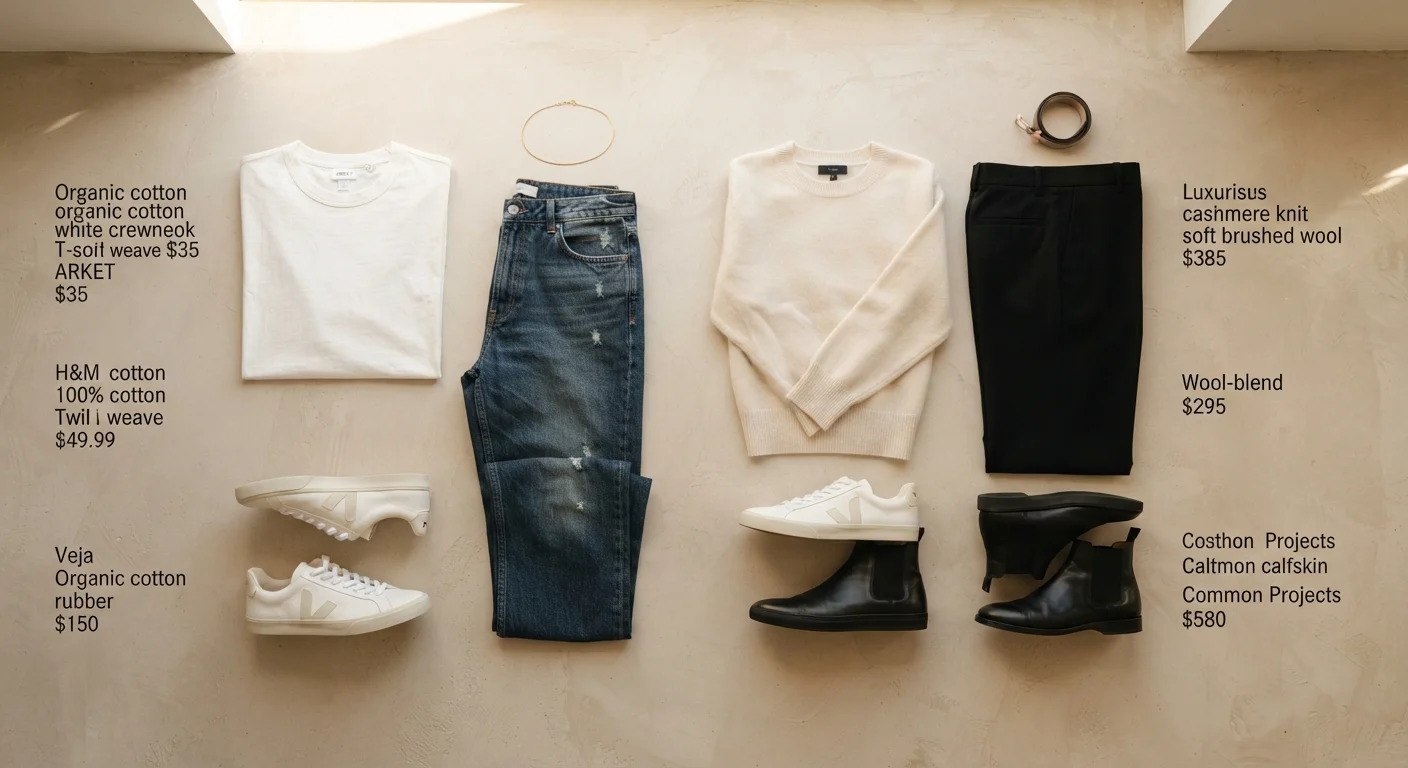
The most honest way to compare these two approaches is through cost-per-wear: divide what you paid by how many times you actually wore the item. A $15 top worn twice before it pills costs more per wear than a $60 shirt you reach for every other week for three years.
| Criterion | Fast Fashion | Slow Fashion |
|---|---|---|
| Upfront cost | Low to moderate | Moderate to high |
| Typical garment lifespan | Months to 1–2 years | 3–10+ years with care |
| Trend alignment | Very high — updates frequently | Lower — favors timeless styles |
| Construction quality | Variable, often lightweight | Generally more durable |
| Cost-per-wear over time | Can be high if worn rarely | Often lower for everyday pieces |
| Experimentation risk | Low — affordable to try | Higher — more commitment |
| Wardrobe volume | Tends to grow quickly | Supports smaller, curated closets |
Fast fashion's low entry price is genuinely useful. It lowers the risk of experimenting with a trend or a new silhouette — if it doesn't work for you, you haven't lost much. That flexibility has real value, especially for people whose style is still evolving or whose lifestyle demands change frequently.
Slow fashion's argument is durability and fit consistency. Well-constructed garments hold their shape, color, and structure through repeated washing. They're also more likely to be sized consistently and finished carefully, meaning fewer surprises once you get them home. As we explore in why expensive clothes don't always mean better quality, price alone isn't a reliable quality signal — but construction details like seam allowances, fabric weight, and stitching density are.
~60%
Increase in garments purchased globally since 2000
According to the Ellen MacArthur Foundation, clothing production roughly doubled between 2000 and 2015, while the number of times a garment is worn declined significantly.
~$500
Average American spends on apparel annually
The U.S. Bureau of Labor Statistics Consumer Expenditure Survey places average household apparel spending in the range of $1,700–$1,900 per year for a household of 2.5 people.
Less than 10 times
Average number of wears before a garment is discarded
The Ellen MacArthur Foundation's 2017 report on the circular economy in fashion estimated that many garments are worn fewer than 10 times before being discarded.
What This Means for How You Actually Shop
Most people's wardrobes are already a mix of both approaches — and that's completely reasonable. The goal isn't ideological purity; it's intentionality. A practical middle path looks something like this: invest in slow-fashion thinking for the items you wear most often (workwear, everyday basics, outerwear), and allow yourself more flexibility — including fast fashion — for trend-driven or occasion-specific pieces you won't reach for constantly.
If you're drawn to a more streamlined wardrobe overall, the case for owning fewer clothes is worth reading — it's an honest look at both the benefits and the tradeoffs of a smaller closet. Similarly, if seasonal transitions tempt you into a full shopping haul, seasonal wardrobe transitions without buying everything new offers a smarter approach.
Building a style that reflects who you actually are — rather than just what's currently trending — is its own kind of investment. Our hub on personal style is a good place to explore that further.
The "Ethical" Label Gets Complicated
Slow fashion is often associated with more ethical labor practices and lower environmental impact, and those associations have some basis — but they're not guaranteed. The term isn't regulated, and marketing can overstate a brand's actual practices. If ethical production matters to your purchasing decisions, looking for third-party certifications or transparent supply-chain disclosures is more reliable than taking a label at face value. Resale and secondhand shopping is another path that sidesteps some of these concerns entirely.
This article is for informational and educational purposes only. Fashion choices involve personal financial decisions; for significant budget planning, consider consulting a qualified financial adviser.