Why a New Pet Is a Health Event, Not Just a Lifestyle Change
Most pet owners focus on behavioral compatibility when adding a second animal — will they get along? But the health dimension is equally significant. A new animal introduces unfamiliar microorganisms into your home environment, and the social disruption of its arrival activates stress responses in your resident pet that can affect immune function, digestion, and sleep patterns.
Veterinary behaviorists recognize that chronic social stress can manifest physically: changes in appetite, coat condition, litter box habits, and activity level are all common indicators that a resident animal is struggling to adjust. Identifying these signals early — before they become clinical problems — is one of the most important things an owner can do. Our article on habits that quietly undermine pet health covers additional stress-related patterns worth knowing.
The good news is that a structured, gradual introduction substantially reduces these risks for both animals. The steps below reflect the approach recommended by veterinary behaviorists and animal welfare organizations.
What you will need
What You'll Need Before You Start
Having the right setup in place before the new animal arrives is what separates a smooth introduction from a chaotic one. Review the tools below and confirm you have separation infrastructure ready — attempting introductions without it is one of the most common mistakes new multi-pet owners make.
Baby gate or exercise pen
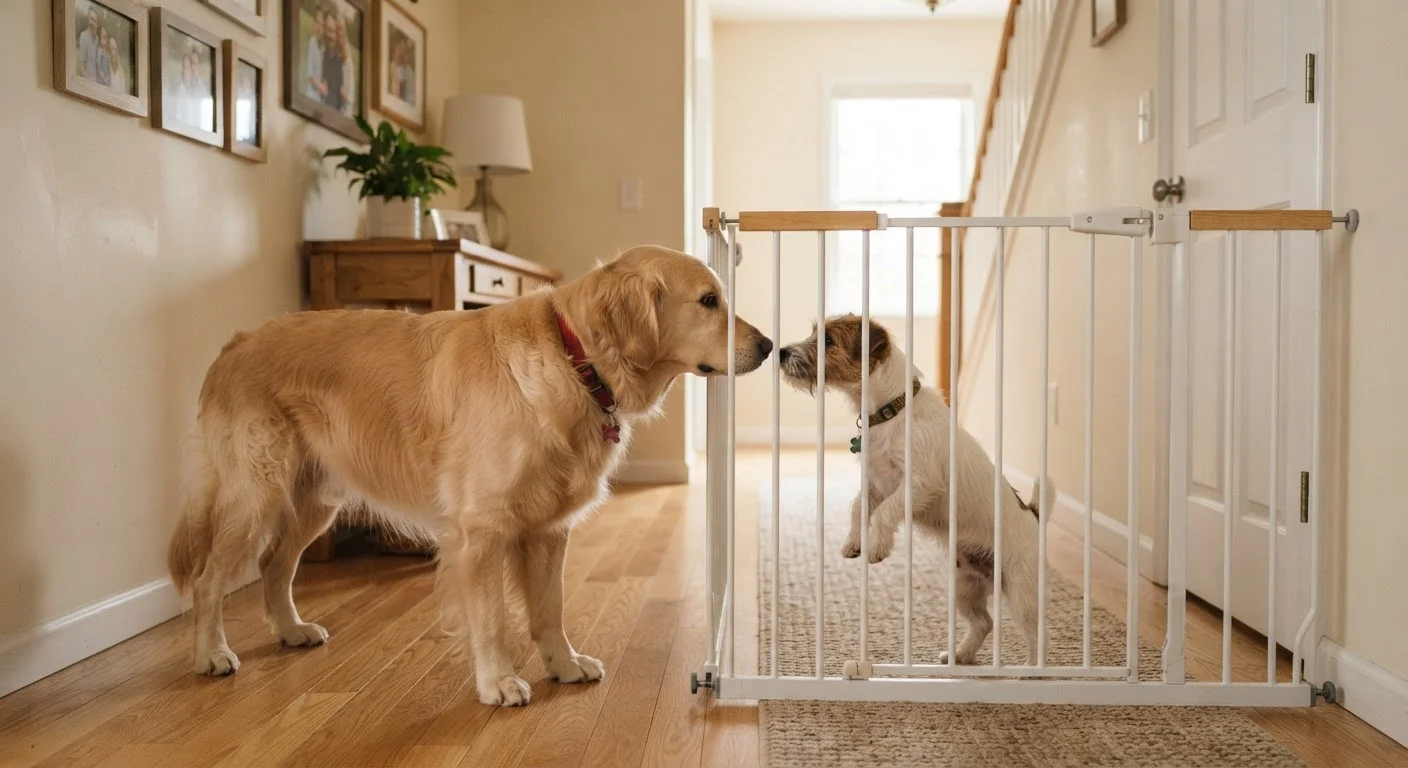
Creates a physical barrier that allows animals to see and smell each other without direct contact during early introductions.
Crate (appropriately sized)
Provides a safe retreat for the new animal and enables supervised visual exposure to the resident pet.
Separate food and water bowls
Prevents resource guarding conflicts that can derail introductions and cause physical injury.
Synthetic pheromone diffuser
Species-specific diffusers (such as feline facial pheromone or dog-appeasing pheromone analogs) may help reduce ambient stress during transitions.
Notepad or phone notes app
Track behavioral observations daily so you can share an accurate picture with your veterinarian if concerns arise.
Use Scent Swapping Early
Place a blanket or toy from the new animal in the resident pet's space a week before arrival. This allows your resident pet to investigate the newcomer's scent in a low-stakes context, which many behaviorists associate with smoother face-to-face introductions. Rotate the items daily for best effect.
Step-by-Step Introduction Plan
Follow these steps in sequence. Skipping or compressing stages — especially the scent introduction phase — is the most frequent reason introductions fail. Each animal moves at its own pace; let behavioral cues, not a calendar, drive your timing.
Vet Clearance Is Non-Negotiable
Before any new animal enters your home, it should be examined by a veterinarian, dewormed, and current on core vaccines. Even apparently healthy animals can carry contagious pathogens such as kennel cough, ringworm, or feline upper respiratory viruses. Your resident pet's immune status should also be confirmed current before the introduction begins.
Schedule pre-arrival vet visits for both animals
Book a veterinary appointment for the new animal before it comes home — ideally at least a week out. Confirm it is free of internal and external parasites, current on core vaccines, and not harboring any contagious illness. At the same visit, ask your vet to review your resident pet's health record and confirm all preventive care is up to date. This step protects both animals from preventable disease transmission.
Set up a dedicated space for the newcomer
Before the new animal arrives, designate one room — ideally one your resident pet doesn't heavily use — as the newcomer's initial territory. Equip it with food, water, a resting area, and appropriate waste facilities. This separation prevents immediate face-to-face conflict and gives the new animal time to decompress from the stress of transport and rehoming. Refer to our home preparation checklist for setup details.
Begin scent introduction
Exchange bedding or a soft toy between the two animals' spaces once or twice daily. Allow each animal to investigate the scent item in its own territory without the other animal present. Offer calm verbal praise or a small treat when your resident pet investigates calmly. Continue for at least five to seven days before attempting any visual contact.
Introduce visual contact through a barrier
Once both animals appear relaxed during scent swapping, allow brief visual contact through a baby gate or cracked door. Keep sessions short — two to five minutes initially — and end each one on a calm note. Feed both animals near the barrier during these sessions; positive associations with eating help reduce threat perception. Gradually increase session length over several days as both animals display relaxed body language.
Allow supervised, shared-space time
Only after both animals consistently display relaxed body language at the barrier should you allow them in the same room simultaneously — always under direct supervision. Keep initial sessions brief and distraction-free. Have a second person present if possible. Interrupt any escalating tension by calmly redirecting attention, not by shouting or physically separating animals forcefully unless safety requires it.
Maintain separate resources long-term
Even after successful integration, keep feeding stations, water bowls, and sleeping areas separate and out of sight of each other where possible. Resource guarding — competition over food, resting spots, or owner attention — is a common trigger for aggression in multi-pet households and can re-emerge months after introduction. For ongoing guidance on managing life with multiple species, see our multi-pet household guide.
Monitoring Both Animals After Introduction
Even a successful introduction requires ongoing monitoring. Watch your resident pet for subtle health changes during the first four to eight weeks: any shift in eating, elimination habits, energy, or social behavior toward you may signal lingering stress. The new animal should also be observed for signs of illness that may not have been apparent at the initial vet visit.
Stress Can Suppress Immune Function
Chronic social stress in pets is associated with reduced immune resilience and increased susceptibility to illness, according to veterinary behavioral research. If your resident animal shows persistent signs of stress — such as hiding, refusing food, or repetitive behaviors — consult your veterinarian before continuing the introduction process.
If you notice persistent behavioral or physical changes in either animal, contact your veterinarian rather than waiting to see if things resolve on their own. For households navigating different species — dogs and cats, for example — the complexity increases further; our multi-species household guide addresses those dynamics in detail.
This article is for general informational purposes only and does not constitute veterinary medical advice. Always consult a licensed veterinarian for guidance specific to your pets' health and behavior.