
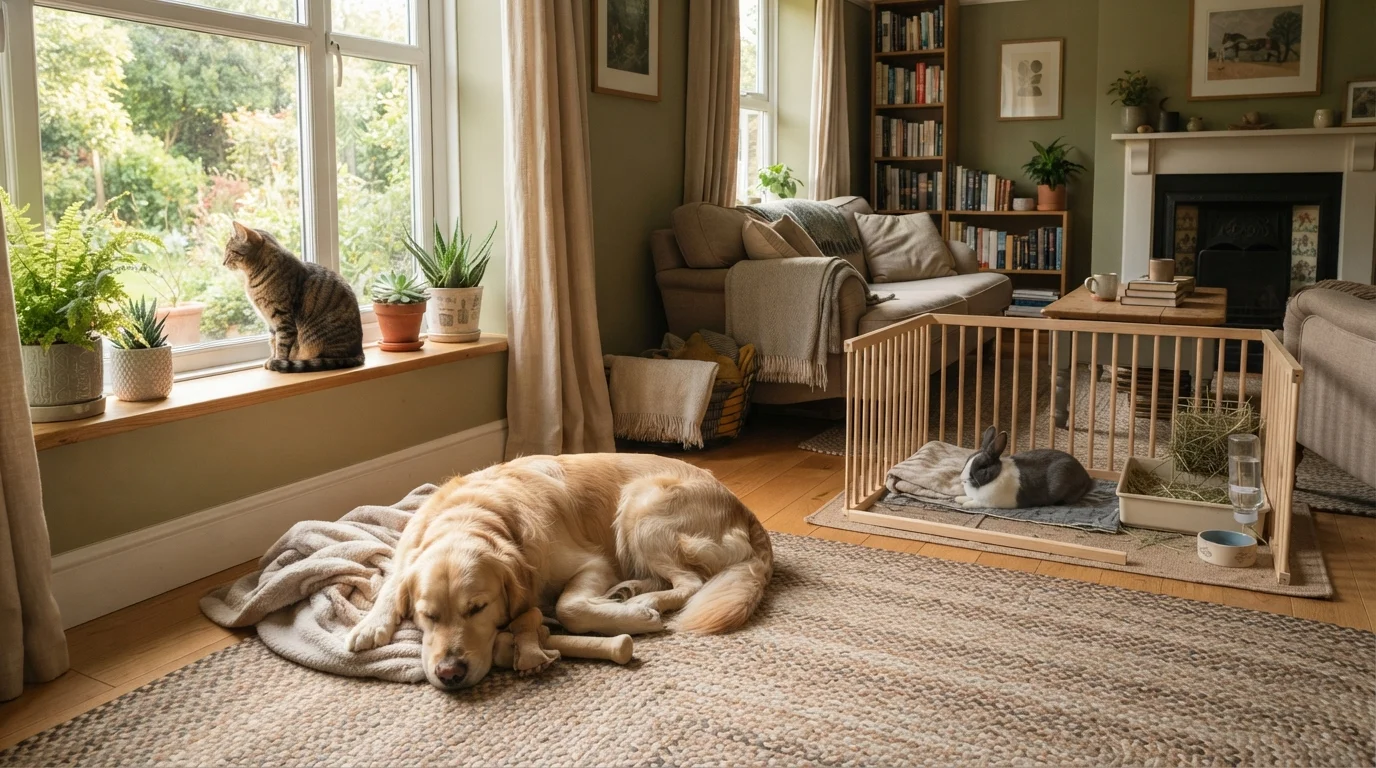
Why Multi-Species Homes Require a Different Mindset
Sharing a home with one dog or one cat is challenging enough. Add a second species — a rabbit, a bird, a guinea pig, or a reptile — and the dynamics shift considerably. Animals that evolved as predators and prey do not automatically set those instincts aside because they live under the same roof.
The good news is that many multi-species households do work well, but not by accident. They work because owners invest in structure: dedicated spaces, deliberate introductions, and routines that give every animal a sense of security. Before your first introduction happens, review how to prepare your home before a new pet arrives to lay the physical groundwork.
Core Practices for a Stable Multi-Species Home
The following practices form the backbone of responsible multi-species management. They apply broadly across species combinations, though individual animals and circumstances will always require adjustments based on veterinary and behavioral guidance.
Establish species-specific safe zones before animals ever meet.
Every animal needs a retreat where it feels fully secure. Without designated spaces, prey animals like rabbits or birds can experience chronic stress from the constant proximity of predators like dogs or cats — even well-behaved ones. Safe zones reduce baseline anxiety for all animals involved.
Introduce animals across a barrier first, then progress gradually.
Forcing immediate face-to-face contact can trigger fear or predatory responses that are difficult to walk back. A scent-first approach — swapping bedding or feeding animals on opposite sides of a closed door — builds neutral associations before visual contact begins.
Feed all animals in separate, species-appropriate locations simultaneously.
Food is a primary source of inter-pet tension. Different species often have very different nutritional needs, and some foods safe for one animal are toxic to another. Separate feeding also prevents resource guarding from spilling into aggression.
Provide species-specific enrichment daily to prevent frustration-based behavior.
Bored animals in mixed-species homes often redirect energy toward other pets, increasing conflict. Enrichment matched to each animal's natural behaviors — foraging, climbing, chewing, scent-tracking — keeps them mentally occupied and less reactive. See enrichment ideas for indoor pets for species-by-species guidance.
Supervise all inter-species interactions until a consistent pattern of calm is established.
Even animals that appear compatible can have unpredictable moments. Ongoing supervision — particularly in the first weeks or months — allows owners to interrupt stress signals before they escalate. Reading body language accurately is central to this practice.
Health and Hygiene Across Species
Zoonotic Risks in Multi-Species Homes
Some diseases can pass between animal species — and occasionally to humans — in shared living spaces. For example, salmonella can be carried by reptiles and spread to mammals. Always consult your veterinarian about health screening and hygiene protocols when adding a new species to your household.
Beyond behavior, multi-species households carry specific pet health considerations. Each animal should be seen by a veterinarian who is familiar with that species — a dog's general practitioner may not be current on rabbit or avian care. Make sure each pet is up to date on species-appropriate preventive care before they share space with others.
Parasite prevention is another area requiring attention. Some treatments safe for dogs are toxic to cats; products formulated for mammals should never contact reptiles or birds. Always confirm with your veterinarian before applying any topical treatment in a shared household.
Building Routines That Work for Everyone
Consistency matters enormously in multi-pet homes. Animals — regardless of species — are more relaxed when they can predict what happens next. A daily schedule that includes fixed feeding times, supervised interaction windows, and individual attention for each pet reduces the unpredictability that fuels stress and conflict.
If you're introducing a new species to an existing pet, the foundational advice in bringing a new pet home for the first time applies here — slow integration, safe spaces, and patience are non-negotiable regardless of which animals are involved.
“The single biggest mistake people make when introducing animals is rushing it. Animals don't understand our timelines. They need enough repetition at a safe distance to build genuine neutral associations — not just tolerance.”
— Dr. Meghan Herron, Board-certified veterinary behaviorist and researcher in companion animal behavior
This article provides general information for educational purposes and is not a substitute for professional veterinary or behavioral advice. Consult a qualified veterinarian or certified animal behaviorist for guidance specific to your pets and household.