
The Real Reason 'Nothing to Wear' Happens
A full closet that delivers daily frustration isn't a storage problem — it's a cohesion problem. The clothes exist; the connections between them don't. Understanding why that disconnect happens is the first step toward a wardrobe that genuinely works for you.
The culprit is rarely a shortage of items. More often, it's a mix of shopping habits, identity shifts, and missing foundations that quietly accumulated over time. Each piece made sense when you bought it, but the collection as a whole never quite came together. Sound familiar?
The good news: this is fixable without necessarily buying anything new. The fashion basics hub is a useful starting point for understanding the foundational principles behind a wardrobe that actually functions day to day.
Shopping for aspirational versions of yourself rather than your actual life.
Why it happens: It's easy to buy for the life you imagine — the weeknight dinners, the gallery openings — rather than the one you're actually living day to day.
Chasing trends without knowing your personal style foundation.
Why it happens: Trend pieces are visually exciting and widely marketed, making them easy impulse buys — but they rarely integrate well with a wardrobe that hasn't been intentionally built.
Holding onto items that no longer fit your body or your identity.
Why it happens: Letting go of clothes can feel like letting go of money spent, memories attached, or a version of yourself you're not ready to close the door on.
Missing foundational pieces that make everything else work together.
Why it happens: Foundations — well-fitting basics, versatile layering pieces, shoes that go with multiple outfits — are less exciting to buy than statement items, so they often get skipped.
Organizing by category instead of by outfit logic.
Why it happens: Most people sort clothes by type — all tops together, all pants together — which hides natural outfit pairings and makes daily decisions harder.
How to Start Turning It Around
Once you recognize the specific mistakes at play in your own closet, the path forward gets much clearer. For most people, the most powerful next move is a structured audit — going through what you own with honest eyes before adding or removing anything.
Shopping Won't Fix a Clarity Problem
If you don't yet know what your style actually is, buying more clothes tends to deepen the confusion rather than resolve it. Adding new pieces to an already-disconnected wardrobe is like adding puzzle pieces from different boxes — more pieces, still no picture. Pause before purchasing and do the diagnostic work first.
A wardrobe audit helps you see what you actually wear, what no longer fits your identity, and which real gaps are worth filling. It's often surprising how much clarity comes from simply laying everything out and asking hard questions.
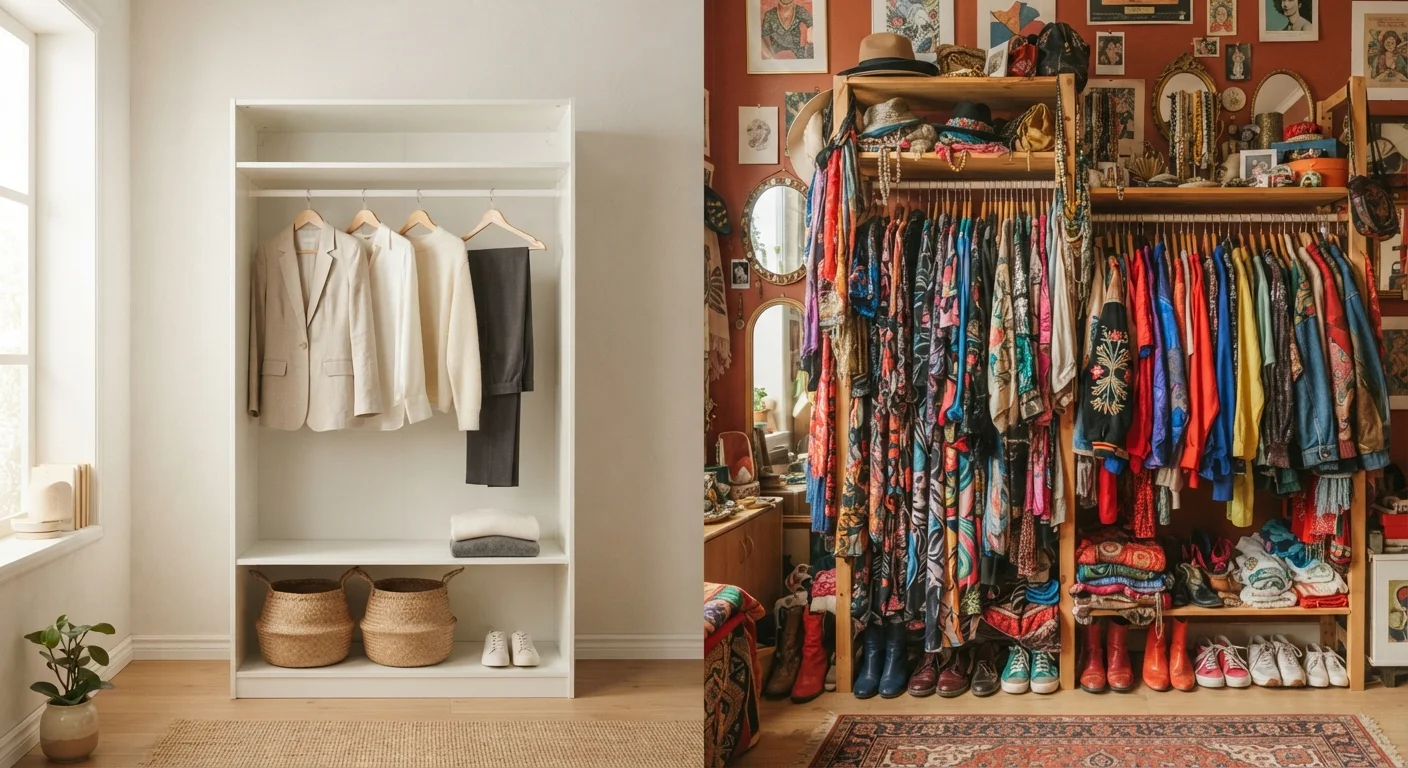
If you're also weighing whether a smaller, more curated wardrobe or a larger, more expressive one suits your life better, both paths have genuine merit — the key is choosing intentionally rather than defaulting by accident.
Volume Is Not the Same as Versatility
Having fifty items does not mean having fifty outfit options. Versatility comes from pieces that connect and layer with each other — not from sheer quantity. Before adding anything new to your closet, it's worth understanding why what you already own isn't getting worn.
~80%
Of clothes rarely or never worn
Research into consumer behavior consistently suggests most people wear a small fraction of their wardrobe regularly, leaving the majority of items largely untouched.
3–5 outfits
Default rotation most people fall back on
Style professionals frequently observe that even people with large wardrobes default to a handful of reliable combinations in daily life.
A wardrobe that feels right isn't about having more or less — it's about having the right things for the life you're actually living, arranged in a way that makes them easy to use. That shift starts with honesty, not a shopping trip.