The Core Philosophy Behind Each Approach
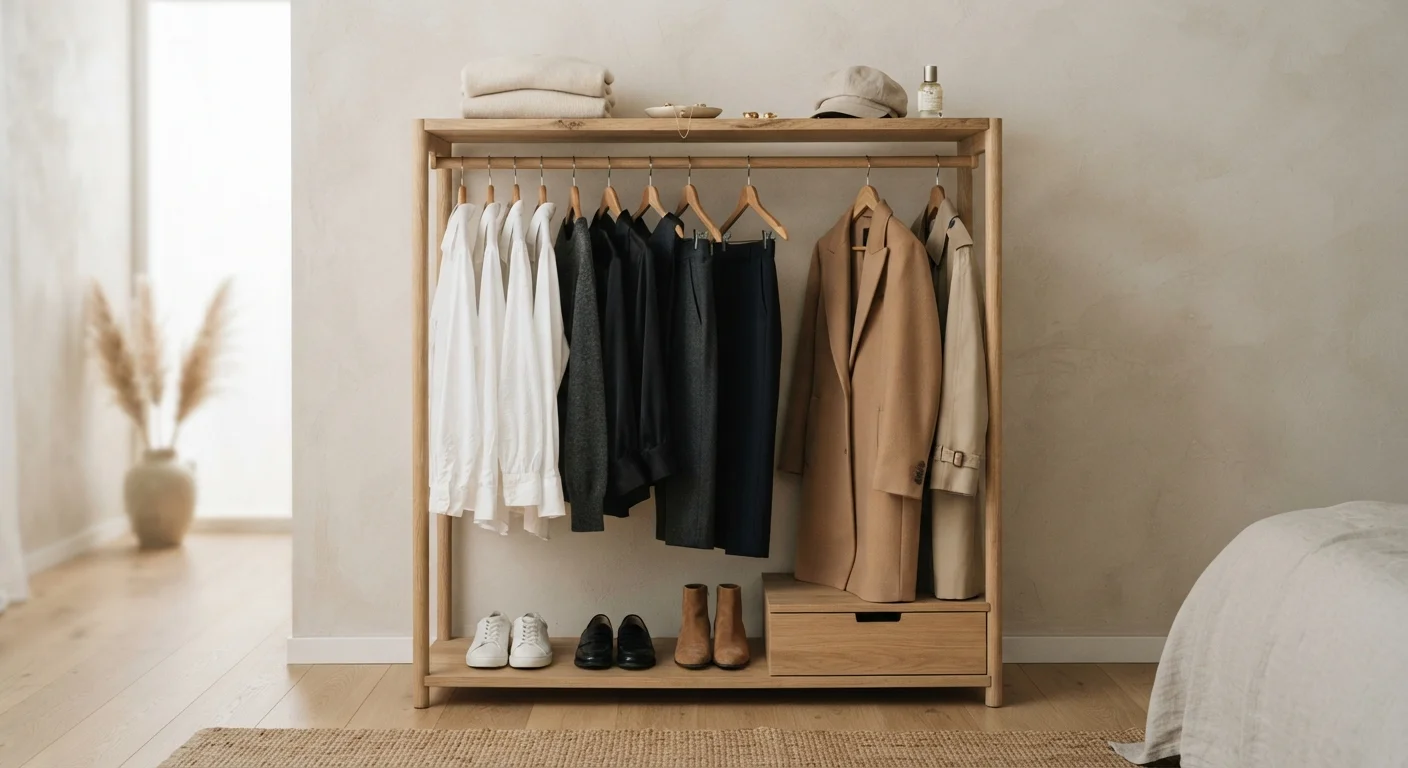
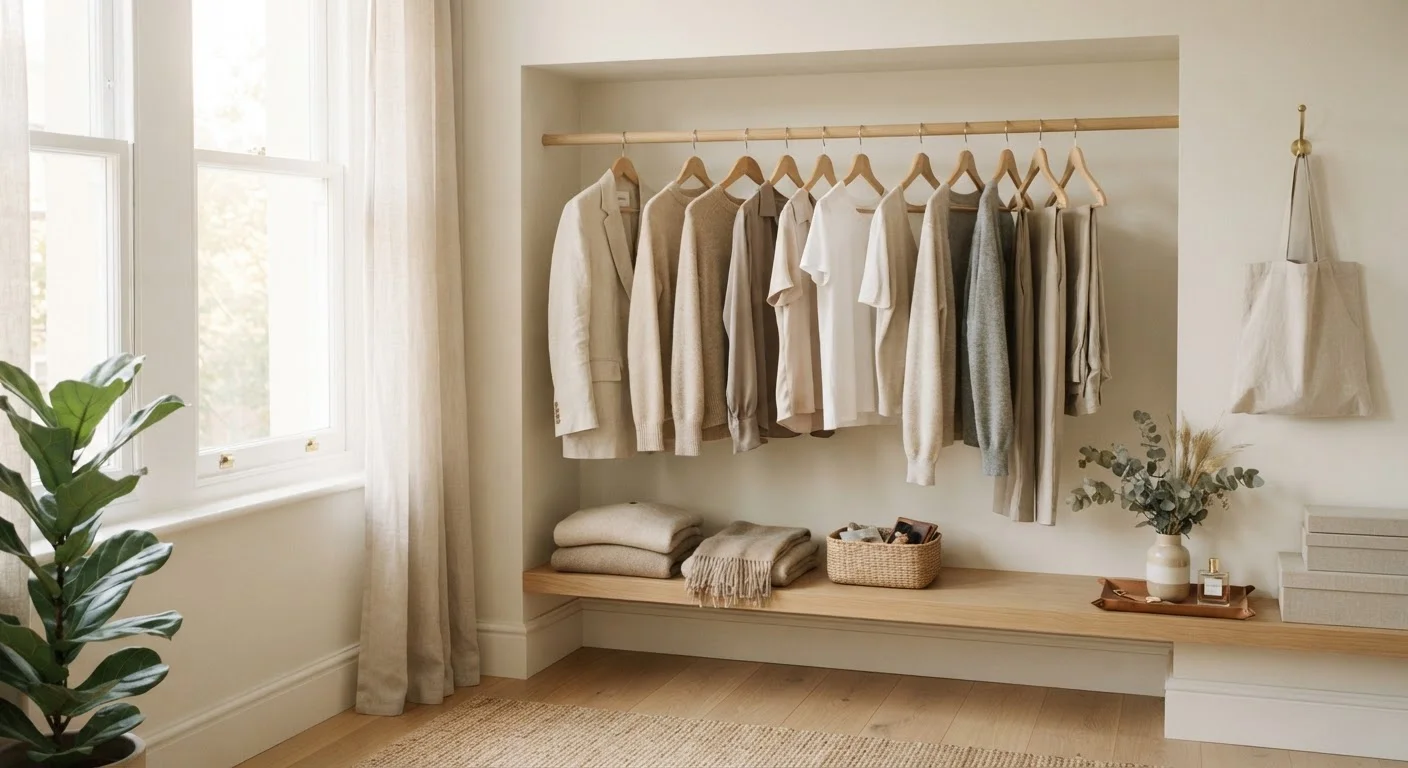
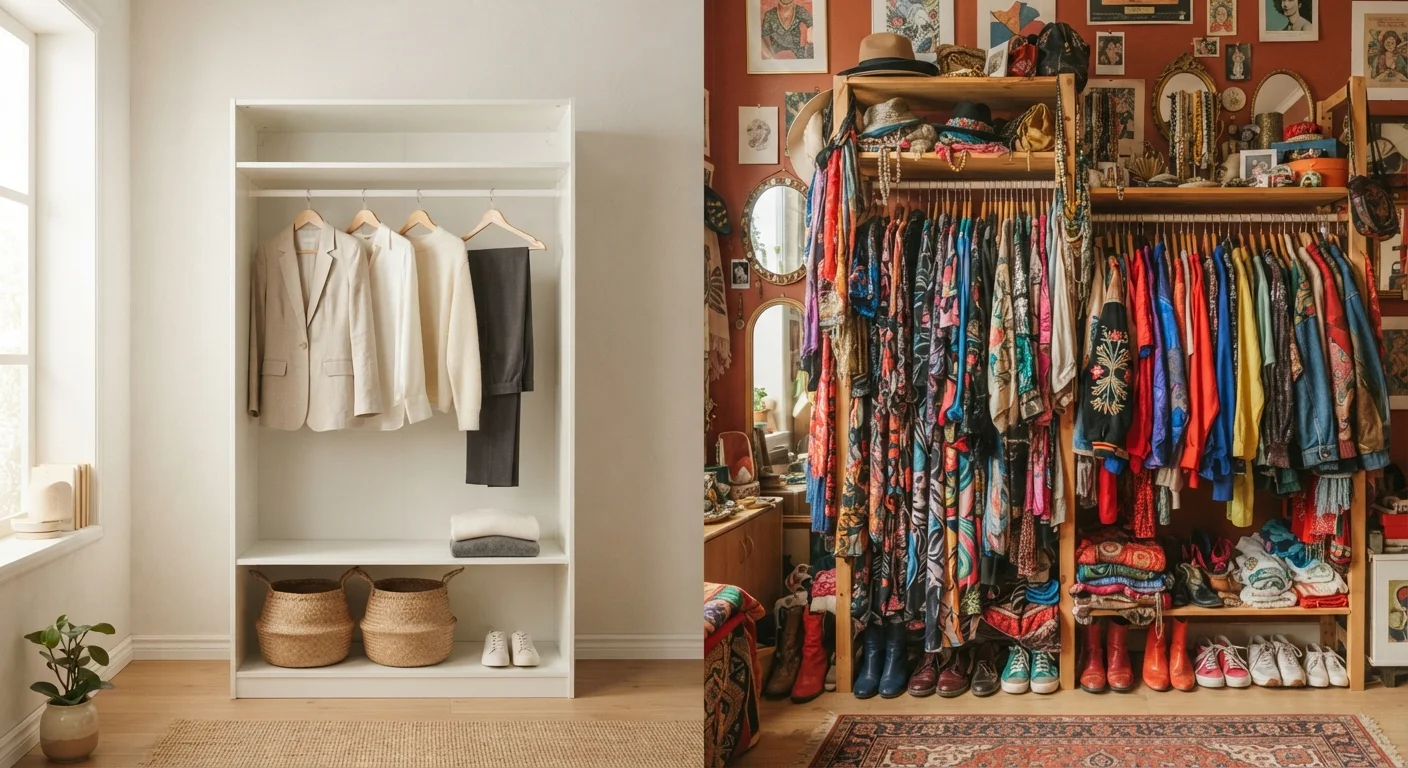
At its heart, the capsule wardrobe is about deliberate reduction. The idea — popularized in the 1970s by London boutique owner Susie Faux — is to build a small collection of versatile, well-fitting pieces that work together seamlessly. Think neutral foundations, adaptable silhouettes, and zero filler. The goal isn't deprivation; it's clarity. For a deeper look at how this system works in practice, see The Capsule Wardrobe Explained.
The maximalist closet operates from an entirely different premise: abundance is the point. Maximalism in fashion embraces color, pattern, texture, and volume as valid forms of self-expression. A maximalist wardrobe isn't simply a disorganized one — at its best, it's a curated collection that happens to be large, reflecting a person's full range of moods, references, and aesthetic interests.
Both approaches answer the same underlying question — how do I dress in a way that feels like me? — they just arrive at very different answers.
| Criterion | Capsule Wardrobe | Maximalist Closet |
|---|---|---|
| Typical size | 20–40 core pieces | No defined limit |
| Decision fatigue | Low — fewer variables | Higher — more options to navigate |
| Style expression range | Focused, cohesive | Wide, varied, experimental |
| Organization demand | Low — less to manage | High — needs strong systems |
| Upfront cost tendency | Higher per piece, fewer items | Varies; volume can accumulate cost |
| Adaptability to life changes | Requires deliberate re-editing | More naturally accommodating |
| Best entry point | Wardrobe audit and clear style vision | Strong organizational framework first |
Practical Trade-Offs Worth Knowing
Capsule wardrobes tend to reduce what's sometimes called decision fatigue — the mental drain of making too many choices. Fewer items means fewer variables, which can genuinely streamline mornings. They also encourage investment in quality over quantity, which often means lower long-term spending even if individual pieces cost more upfront. The honest trade-off: capsule dressing requires real self-knowledge. If you edit aggressively before you've clarified your style, you risk owning a closet that feels correct on paper but wrong in practice. The Case for Owning Fewer Clothes explores this tension with useful nuance.
Maximalist wardrobes offer genuine freedom — freedom to experiment, to shift aesthetics seasonally, to dress for your mood rather than a pre-planned formula. The practical challenge is organization. Without thoughtful storage systems, a large wardrobe can become the closet-full-of-clothes-but-nothing-to-wear problem many people know all too well. If that frustration sounds familiar, Why Your Wardrobe Feels Wrong Even When It's Full digs into exactly why it happens.
~80%
Clothes worn only 20% of the time
The often-cited 80/20 rule suggests most people regularly wear only a small fraction of what they own, regardless of closet size.
35,000+
Daily decisions the average adult makes
Psychologists studying decision fatigue suggest that reducing low-stakes choices — like what to wear — can preserve mental energy for higher-priority decisions.
From a budgeting perspective, maximalism carries higher ongoing risk if purchasing is driven by trend-chasing rather than genuine desire. That's worth thinking through alongside your broader financial habits — Budgeting Basics offers a practical framework if spending is a real concern.
Which Mindset Actually Fits You?
Personality and lifestyle matter more than aesthetic preference when choosing a wardrobe philosophy. Ask yourself a few honest questions: Do you feel energized or overwhelmed when you open your closet? Do you dress similarly most days, or does your style shift significantly by mood, occasion, or season? Do you enjoy the process of getting dressed, or do you want it resolved quickly?
People who thrive with capsule wardrobes tend to value consistency, find comfort in simplicity, and prefer spending their creative energy elsewhere. People who thrive with maximalist closets tend to treat dressing as a daily ritual, draw identity from visual variety, and genuinely enjoy managing a larger collection.
It's also worth noting that most real wardrobes don't sit neatly at either extreme. Many people benefit from borrowing the capsule approach for core everyday pieces — the workhorse basics — while keeping a more generous, expressive section for weekends, special occasions, or personal statement items. If you're unsure where you fall, a wardrobe audit is a grounding first step before making any big changes.
Style Is Personal, Not Prescriptive
Neither capsule nor maximalist dressing is the 'correct' approach — both are frameworks, not rules. What matters is whether your wardrobe supports the life you're actually living. If you're feeling disconnected from your clothes, bridging the gap between inspiration and real outfits can help clarify what's missing before you restructure anything.
Whatever direction you lean, the underlying goal of building a functional wardrobe stays constant: clothes that fit your real life, reflect who you actually are, and make getting dressed feel like less of a chore and more of an extension of yourself. For a comprehensive guide to that process from the ground up, Personal Style in Full is worth bookmarking.