
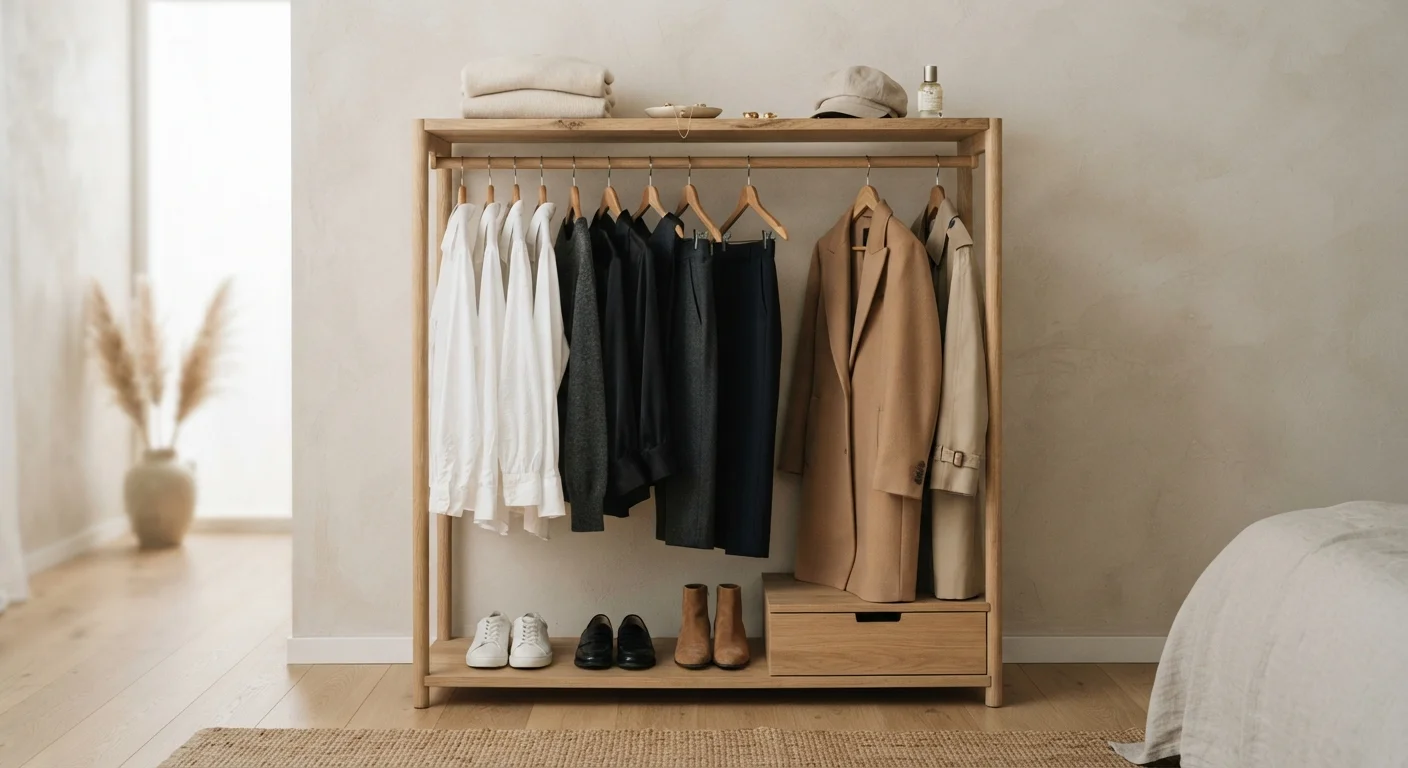
The Core Idea Behind a Capsule Wardrobe
At its heart, a capsule wardrobe is about intentionality. Instead of a closet jammed with pieces you rarely touch, you keep a smaller, cohesive collection where everything earns its spot. Each item should pair easily with several others, covering the range of situations your actual life involves — work, errands, social plans, whatever that looks like for you.
The wardrobe functions like a well-edited playlist: every track belongs, nothing feels out of place, and the whole thing flows. That sense of coherence is what makes getting dressed feel easier rather than overwhelming.
If your closet currently feels like the opposite — packed but purposeless — you're not alone. Understanding why a full wardrobe can still feel like nothing to wear is often the first step toward changing it.
Style, Not Sacrifice
A capsule wardrobe doesn't mean dressing boringly or giving up self-expression. Many people find the opposite is true — with less clutter, their actual aesthetic becomes clearer and more consistent. Personal style can absolutely thrive within a smaller, more intentional closet.
What Goes Into One (and What Doesn't)
A typical capsule wardrobe leans on neutral, versatile colors — think navy, white, cream, grey, black, and earthy tones — because they mix effortlessly. Classic silhouettes that don't date quickly form the structure: a well-fitted trouser, a crisp button-down, a simple knit, a tailored layer. These anchor pieces get supplemented with a handful of items that reflect your personal style.
What doesn't belong: duplicates of things you never really liked, trend pieces with no staying power, and anything that only works as part of one specific outfit. The test is simple — does this item work with at least three other things in your closet? If not, it may not earn a place.
The Three-Outfit Test
Before adding any new piece to your wardrobe, try pairing it mentally (or physically) with at least three items you already own. If you can't build three distinct outfits around it, it's worth reconsidering whether it truly fits your collection — or whether it'll end up ignored on a hanger.
For those starting completely fresh, building your first wardrobe from scratch lays out the foundational pieces most worth prioritizing early on.
Why It Actually Works
The practical benefits of a capsule wardrobe go beyond aesthetics. Decision fatigue is a real cognitive cost — the small choices we make each morning add up. A wardrobe where every combination works reduces that mental load significantly. Many people report that getting dressed becomes genuinely faster and less stressful.
~30%
Clothes worn regularly by average person
Research frequently cited in wardrobe studies suggests most people wear only around 20–30% of the clothes they own on a regular basis.
35+
Daily decisions made before noon
Behavioral research has documented that trivial early-morning decisions, including what to wear, draw on the same mental resources as more significant choices throughout the day.
There's also a financial logic to the approach. When you buy fewer, more versatile pieces, impulse purchases driven by the feeling that you "have nothing to wear" tend to decrease. That said, some capsule-friendly items — better construction, more durable fabrics — may carry a higher upfront price. The economics depend entirely on your current habits and spending patterns.
Perhaps most importantly, a capsule wardrobe tends to surface your actual personal style rather than bury it. When the closet noise is cleared away, what remains says something real about who you are and how you want to move through the world.
How to Know If It's Right for You
A capsule wardrobe isn't a one-size-fits-all solution. It works best for people whose lifestyles have some consistency — a reasonably predictable mix of daily occasions. If your life swings dramatically between, say, formal professional settings and outdoor adventure weekends, you may need more range than a strict capsule allows. The framework is flexible, though: you can build two smaller capsules for different contexts rather than forcing everything into one.
A good first move is a wardrobe audit — going through what you own, identifying what you actually wear, and spotting the gaps. A structured wardrobe audit can make this process much more actionable than a general sort-through.
From there, if you want a comprehensive roadmap for putting a versatile closet together, this end-to-end guide to building a versatile everyday wardrobe covers color strategy, foundational pieces, and care routines in one place. The capsule concept is simply the philosophy behind it all — the practical steps are where it comes to life.
“A capsule wardrobe is not about wearing the same thing every day. It's about having exactly what you need and nothing that gets in the way.”
— Susie Faux, London boutique owner and originator of the capsule wardrobe concept