Start With a Wardrobe Audit
Before adding a single new item, take stock of what you already have. Pull everything out, sort it into three piles — keep, donate, and repair — and be honest with yourself about what you actually reach for. If you haven't worn something in a year and can't envision three outfits around it, it's probably not earning its closet space.
A wardrobe audit also reveals patterns: maybe you own twelve tops but only two pairs of bottoms that fit, or you gravitate toward navy and grey without realizing it. These insights are the foundation of every smart wardrobe decision you'll make going forward. If you're still figuring out your personal aesthetic, the beginner's guide to finding your style is a great companion to this process.
The One-Year Rule Worth Keeping
If you haven't worn a piece in a full year — through all seasons — that's a strong signal it doesn't belong in your closet. Donating or selling it clears mental clutter and makes space for what you'll actually wear. Exceptions: genuine occasion pieces like formalwear or items with real sentimental value.
The Foundational Pieces Every Wardrobe Needs
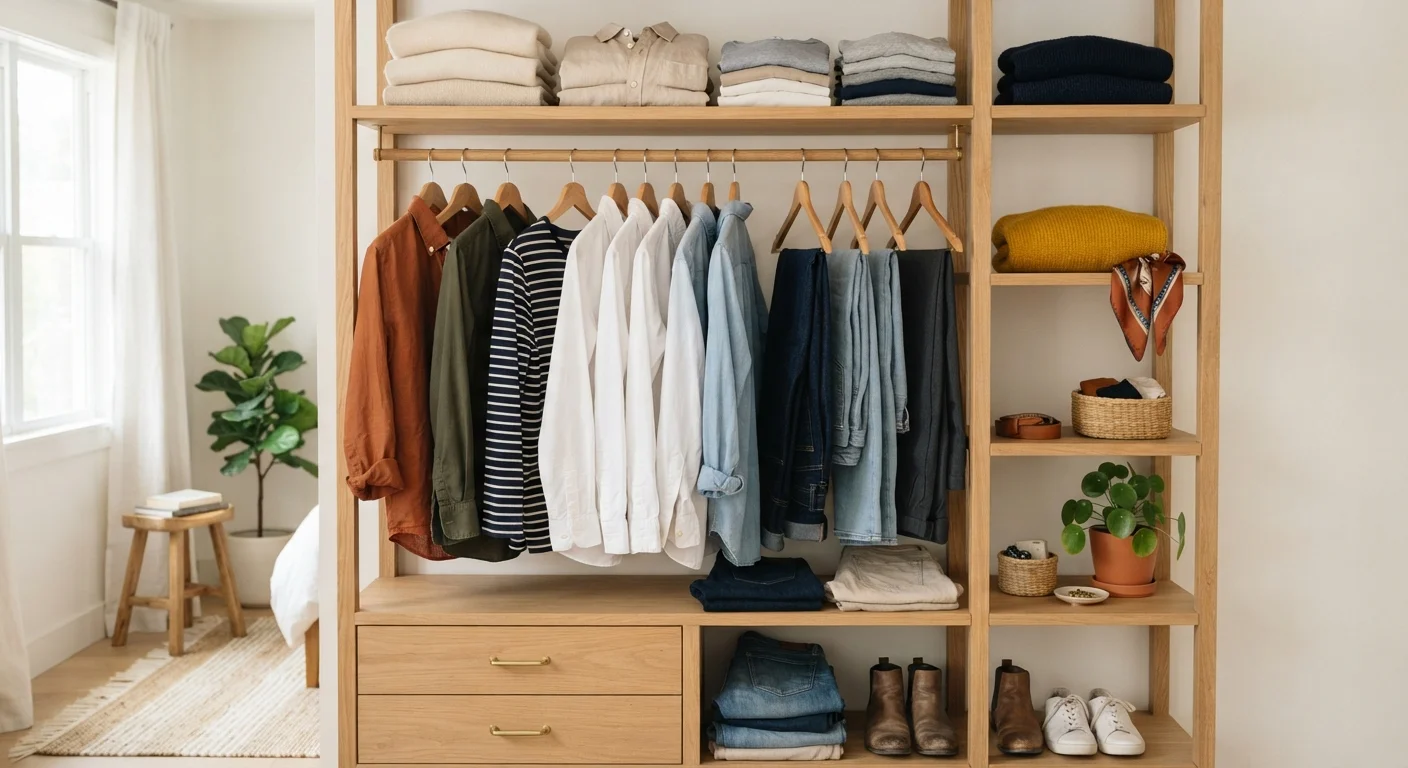
Versatile everyday dressing is built on a handful of hardworking pieces that pair easily with each other and with more expressive items. Think of these as your wardrobe's backbone:
- Well-fitting dark or medium-wash jeans — they transition from casual to smart-casual with a simple shoe swap.
- Neutral-toned trousers or chinos — tan, navy, or grey work across nearly every context.
- A white or light blue button-down shirt — tucked, untucked, open over a tee: endlessly adaptable.
- Plain crew-neck and V-neck tees in two or three neutral colors — the ultimate layering tools.
- A tailored blazer or structured jacket — it elevates almost anything underneath it.
- A versatile dress or jumpsuit — one piece that reads as a complete outfit immediately.
- Clean, simple sneakers and one pair of leather-look flats or loafers — shoes shift the register of an entire look.
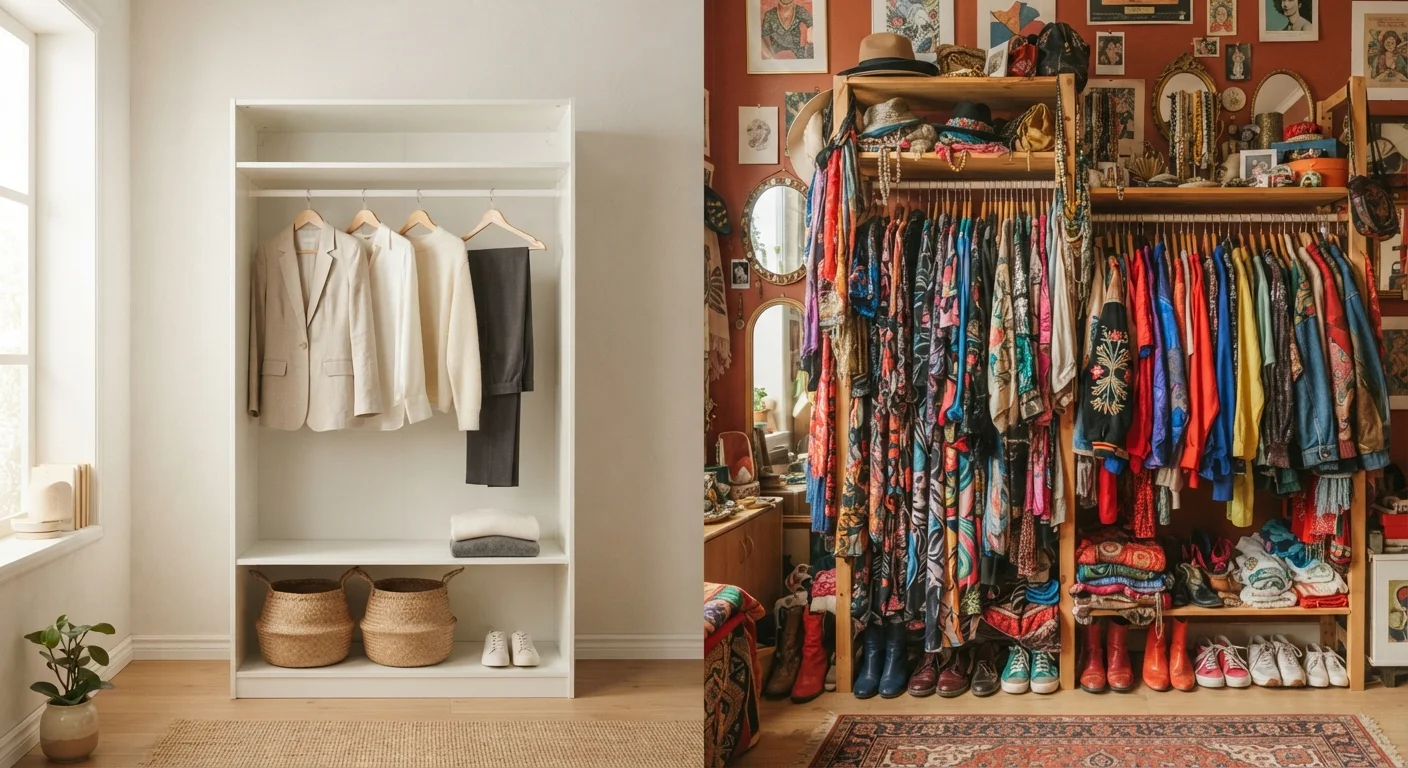
This isn't a prescriptive checklist — your lifestyle shapes the exact list. For a deeper look at how a minimalist set of essentials compares to a more expressive approach, see our piece on the capsule wardrobe vs. maximalist closet.
80%
Of clothes worn only 20% of the time
The widely cited 80/20 principle applied to wardrobes suggests most people regularly wear only a small fraction of what they own.
~$1,700
Average annual US clothing spend per person
According to the U.S. Bureau of Labor Statistics Consumer Expenditure Survey, American consumers spend roughly this amount on apparel and related services annually.
Building a Color Strategy That Works for You
One of the quietest saboteurs of a functional wardrobe is color chaos — beautiful individual pieces that simply don't talk to each other. A simple color strategy fixes this without making your wardrobe feel boring.
Choose two or three neutral anchor colors (black, white, navy, camel, grey, tan) that you genuinely like wearing. Then pick one or two accent colors that feel like you — a warm terracotta, a soft sage, a classic red. When most of your wardrobe speaks the same color language, getting dressed feels fluid rather than frustrating.
“Style is a way to say who you are without having to speak.”
— Rachel Zoe, Fashion designer and stylist
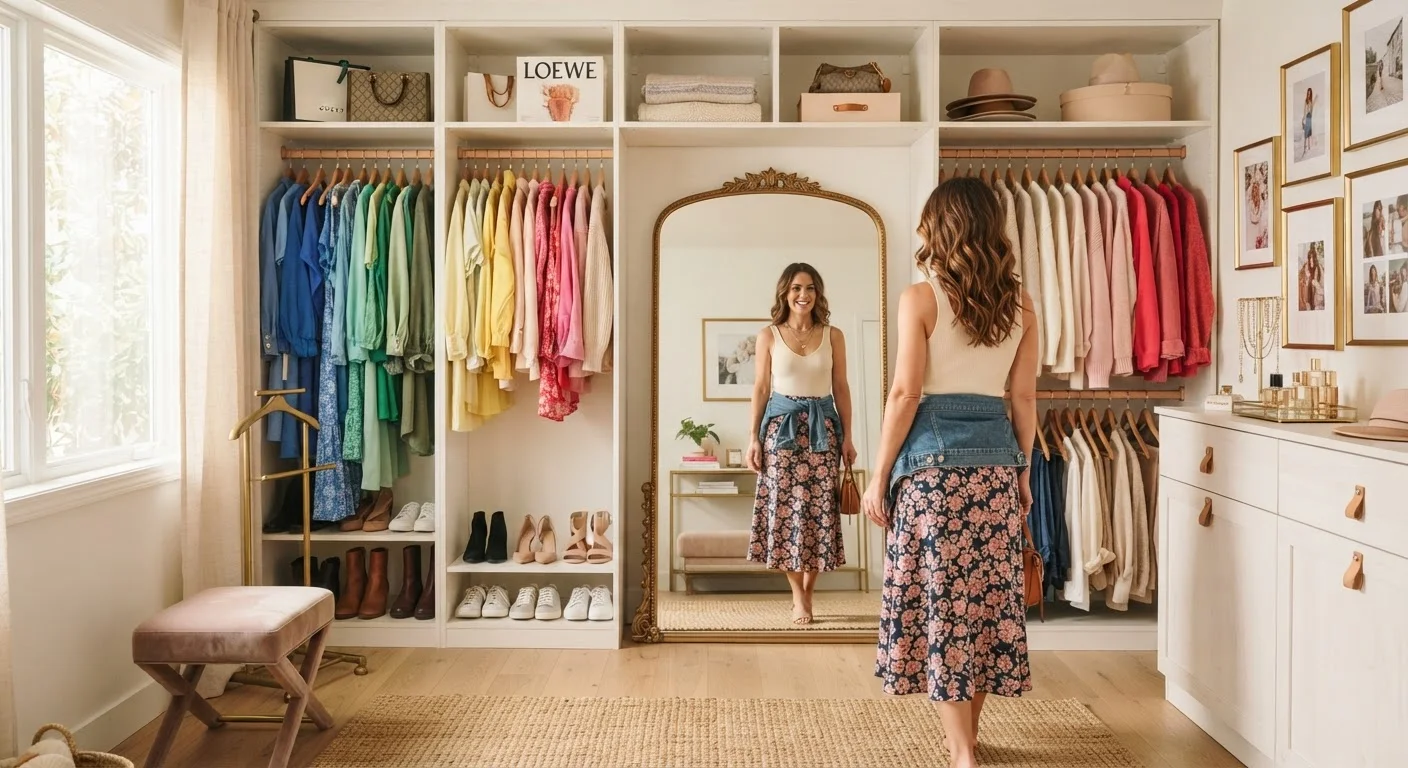
This doesn't mean eliminating prints or bold pieces — it means anchoring them. A vibrant printed skirt pairs effortlessly when the rest of your wardrobe already speaks neutral. For a comprehensive look at how color, fit, and identity tie together, the guide Personal Style in Full walks through every dimension.
Fit Is Everything
No styling tip closes the gap between a well-fitting garment and a poorly fitting one. Clothes that skim your body — not too tight, not swamped — communicate polish and intention regardless of price tag. Two easy adjustments that make the biggest difference: sleeve length and trouser hem. Both can be altered inexpensively at most dry cleaners or tailor shops.
When shopping, focus first on how something fits through the shoulders (for tops and jackets) or the seat and thighs (for bottoms) — these are the hardest areas to alter. Length and waist can almost always be fixed; the core structure usually cannot.
When trying on a blazer or structured jacket, lift both arms above your head — if the back hem rises dramatically or the shoulders pull, the fit across the back is too small and can't be altered easily.
The shoulder and upper back are the most structurally complex areas of any tailored garment; poor fit there is nearly impossible to correct without expensive reconstruction.
Keep a small sewing kit with a needle, thread in your two most common garment colors, and a few spare buttons — fixing a loose button takes under three minutes and saves an otherwise great piece.
Minor repairs left unaddressed almost always escalate into damage that renders a garment unwearable, turning a small stitch into a much larger loss.
Wardrobe Budgeting Without Sacrifice
Building a versatile wardrobe doesn't require a large budget — it requires a strategic one. Rather than shopping impulsively, decide upfront how much you're comfortable spending on clothing over a month or season, then allocate more to the foundational pieces you'll wear constantly and less to trend-driven additions.
A useful mental model: cost-per-wear. A $60 pair of trousers worn 80 times costs $0.75 per wear; a $15 impulse buy worn twice costs $7.50. Foundational pieces that you wear weekly almost always deliver better value over time. For practical frameworks on allocating money across life priorities, the Complete Guide to Personal Budgeting offers grounded, actionable guidance.
If building a complete wardrobe feels overwhelming financially, start with the two or three pieces you're most missing, then add over several months. Gradual, intentional shopping consistently outperforms single-session hauls.
Avoid Shopping as a Stress Response
Impulse purchases made during stressful or emotional moments rarely integrate well into a wardrobe — they reflect a mood rather than a need. Building in a simple 48-hour pause before non-essential clothing purchases is a practical tool many financial wellness experts recommend. If the item still feels right two days later, it's likely a genuine addition.
Caring for Your Clothes So They Last
The most sustainable wardrobe isn't one built from expensive materials — it's one that's properly cared for. A few habits extend garment life dramatically:
- Wash less frequently — most garments (except underwear and workout wear) don't need washing after every single wear. Airing them out overnight is often enough.
- Wash in cold water on a gentle cycle — heat is the primary cause of fabric breakdown and color fade.
- Turn dark garments inside out before washing to preserve color.
- Air-dry when possible — tumble dryers are hard on fibers, elastic, and structural stitching.
- Store knitwear folded, not hung — hanging stretches the shoulders and distorts the shape over time.
- Address small repairs quickly — a loose button or minor seam split takes minutes to fix and can prevent a much larger problem.
A wardrobe that lasts longer is also a wardrobe that costs less to maintain over time — which means more room in your budget for pieces you truly love. For a broader look at how everyday financial habits support goals like these, the Budgeting Basics hub is a helpful resource. And when your closet is sorted, don't overlook the small details: check out our five-minute makeup guide for weekday mornings to round out your everyday look efficiently.