What Sets Each Format Apart
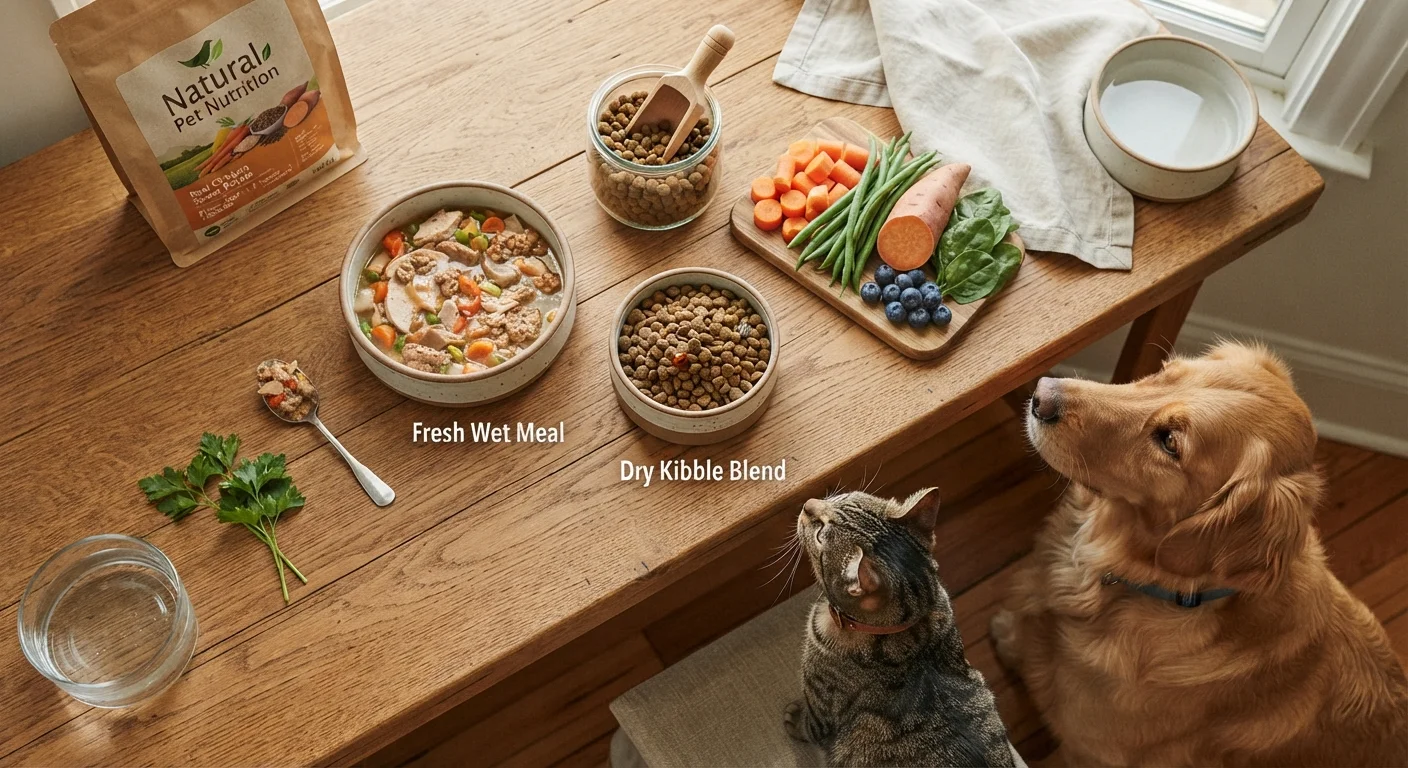
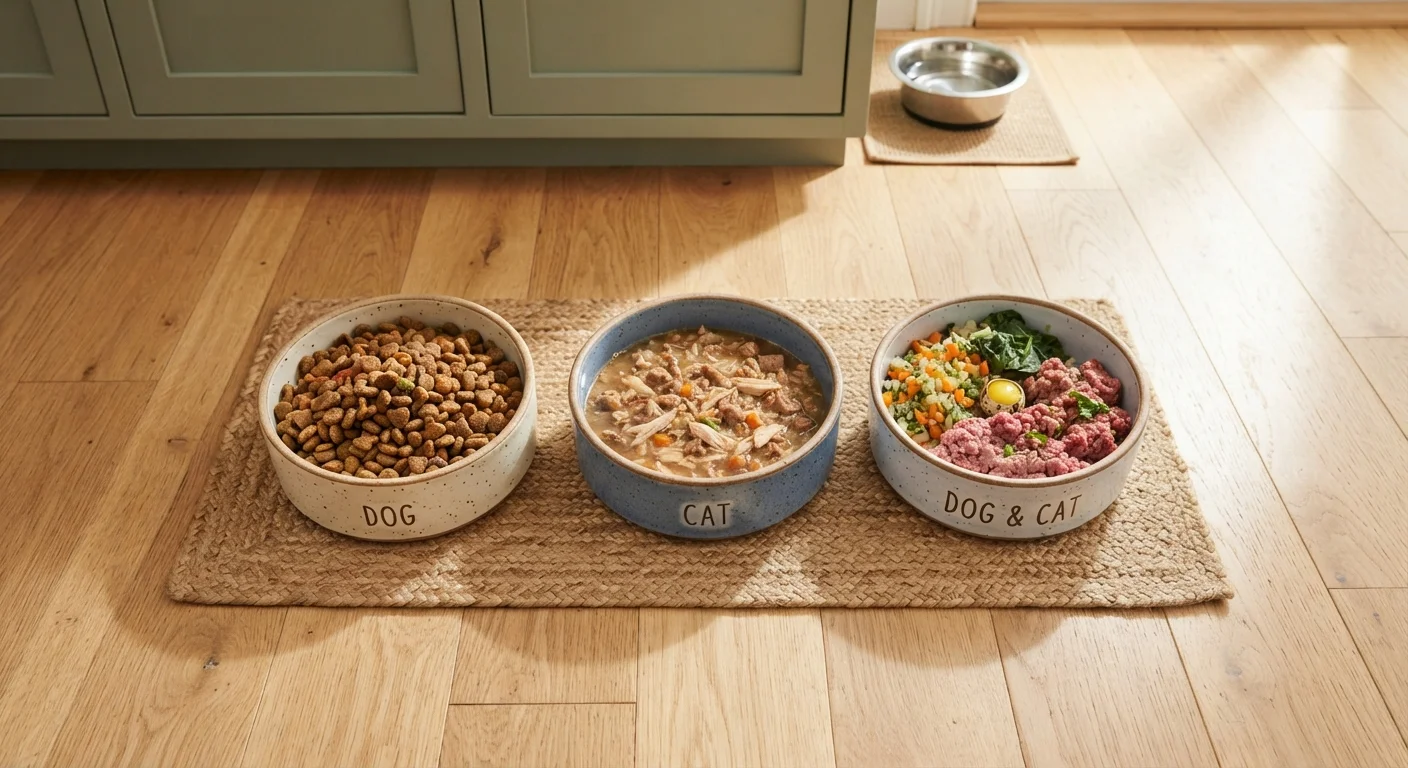
Pet food falls into three main formats: dry (kibble), wet (canned or pouched), and raw. Each is defined by how it is processed, its moisture level, and how ingredients are preserved. Understanding these structural differences is a useful starting point before weighing any particular pet's needs.
Dry food is produced by extruding a mixture of ingredients under heat and pressure, then dehydrating the result. Moisture content is typically 6–10%. It is energy-dense, easy to store, and often the most economical option per calorie.
Wet food is cooked within a sealed container, which both sterilizes the product and retains moisture — usually 70–82%. This higher water content means pets get dietary hydration alongside nutrition, which matters especially for cats, who have a relatively low natural drive to drink water.
Raw diets consist of uncooked animal proteins (muscle meat, organs, and sometimes bone), often supplemented with vegetables, eggs, or dairy. They may be commercially prepared and frozen or freeze-dried, or home-prepared. Unlike the other two formats, raw food is not heat-processed, which has implications for both nutrient retention arguments and pathogen risk. See our breakdown of common pet nutrition myths for context on claims made about each format.
Nutritional Profiles: What Each Format Delivers
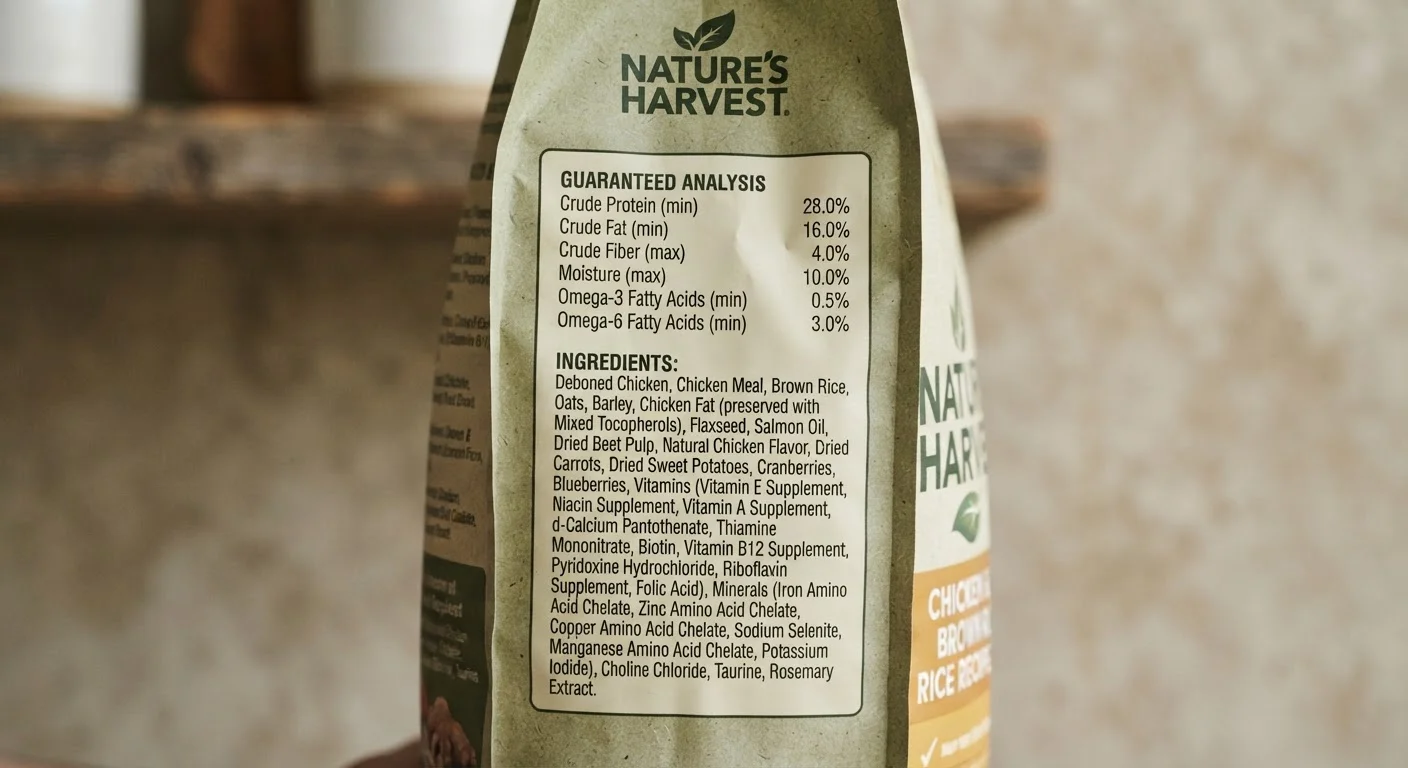
All three formats can be nutritionally complete when properly formulated — meaning they contain all essential vitamins, minerals, amino acids, and fatty acids an animal requires. The key phrase is properly formulated. In the U.S., the Association of American Feed Control Officials (AAFCO) sets nutritional standards, and manufacturers can indicate compliance through an AAFCO nutritional adequacy statement on packaging. Decoding a pet food label is a skill worth building for any format you choose.
| Dry Kibble | Wet Food | Raw Diet | |
|---|---|---|---|
| Moisture content | 6–10% | 70–82% | 60–70% (varies by product) |
| Heat processing | Yes (extrusion) | Yes (in-can cooking) | No |
| AAFCO-compliant options available | Widely available | Widely available | Some commercial products; rare for home-prep |
| Pathogen risk | Low | Low | Higher — Salmonella, Listeria possible |
| Shelf life / storage | 12–18 months; no refrigeration | Refrigerate after opening; use within 1–2 days | Freezer required; shorter usable window |
| Relative cost per meal | Generally lower | Moderate | Generally higher |
| Prep time required | Minimal | Minimal | Significant for home-prep; moderate for commercial |
One important distinction: cats are obligate carnivores and have specific amino acid requirements — taurine and arginine in particular — that must be met regardless of food format. Dogs are more omnivorous and tolerate a broader nutritional range, though they still require animal-derived nutrients that a purely plant-based diet may not deliver without supplementation.
Home-prepared raw diets are frequently found to be nutritionally incomplete or imbalanced in peer-reviewed analyses, which is one reason veterinary nutritionists generally recommend either commercially prepared raw products that carry an AAFCO statement or professional formulation of home recipes. Managing your pet's weight is also intertwined with diet format — caloric density varies considerably across formats.
Food Safety Considerations
Food safety is where raw diets diverge most sharply from kibble and canned food. The absence of a heat-treatment step means raw products — commercial or home-prepared — may harbor bacteria such as Salmonella, Listeria monocytogenes, and E. coli. Both the U.S. Food and Drug Administration (FDA) and the Centers for Disease Control and Prevention (CDC) have documented these risks in raw pet food studies, noting potential transmission to both pets and household members, including immunocompromised individuals, children, and the elderly.
Raw Diets and Household Health Risk
The FDA and CDC have both identified raw pet food as a source of household Salmonella and Listeria contamination. Pets fed raw diets can shed these bacteria in their feces and saliva even without appearing ill. This poses a heightened risk for households with infants, pregnant individuals, elderly people, or anyone who is immunocompromised. If any of these apply to your household, discuss the implications with your veterinarian before choosing a raw diet.
Dry and wet commercial foods undergo heat processing that substantially reduces pathogen risk. Both formats are subject to recall processes when contamination is detected, but their baseline safety profile is more consistently controlled than uncooked alternatives.
Handling raw food safely — using dedicated utensils, sanitizing surfaces, and washing hands thoroughly — reduces but does not eliminate risk. Households with vulnerable members should discuss this carefully with a veterinarian before choosing a raw diet for their pet.
Practical Factors: Cost, Storage, and Lifestyle
Beyond nutrition and safety, the day-to-day logistics of each format are worth honest consideration.
- Dry kibble has the longest shelf life (typically 12–18 months unopened), requires no refrigeration, and is easy to portion. It suits multi-pet households and busy schedules.
- Wet food must be refrigerated after opening and used within a day or two. It costs more per calorie than dry food and produces more waste packaging, but the higher moisture content can reduce the need for additional water consumption.
- Raw diets — especially home-prepared ones — demand significant time for sourcing, preparation, and storage. Commercial raw products require freezer space. Per-meal costs tend to be higher than either dry or wet formats.
For owners interested in reading ingredient lists and nutrient guarantees across any format, understanding nutritional labels on commercial pet food is a practical next step. Always confirm that a chosen diet is appropriate for your specific animal's life stage (puppy/kitten, adult, senior) and health status with your veterinarian.
Talk to Your Vet Before Switching Formats
Transitioning a pet from one diet format to another too quickly can cause digestive upset. Most veterinarians recommend a gradual transition over 7–10 days, mixing increasing proportions of the new food with the old. If your pet has a pre-existing condition such as kidney disease, pancreatitis, or food allergies, dietary changes should always be discussed with a veterinarian first — the right format can be meaningfully different depending on the health picture.
This article provides general educational information about pet diet formats and is not a substitute for personalized veterinary advice. Consult a licensed veterinarian or board-certified veterinary nutritionist before making significant changes to your pet's diet.