
Why Plan Type Matters Before Anything Else
When you're picking a health insurance plan, the premium is usually the first number you notice — but the plan type shapes how your entire coverage actually works. It determines whether you need a primary care physician (PCP) to coordinate your care, whether you can see out-of-network doctors at all, and how costs stack up when you do use your insurance.
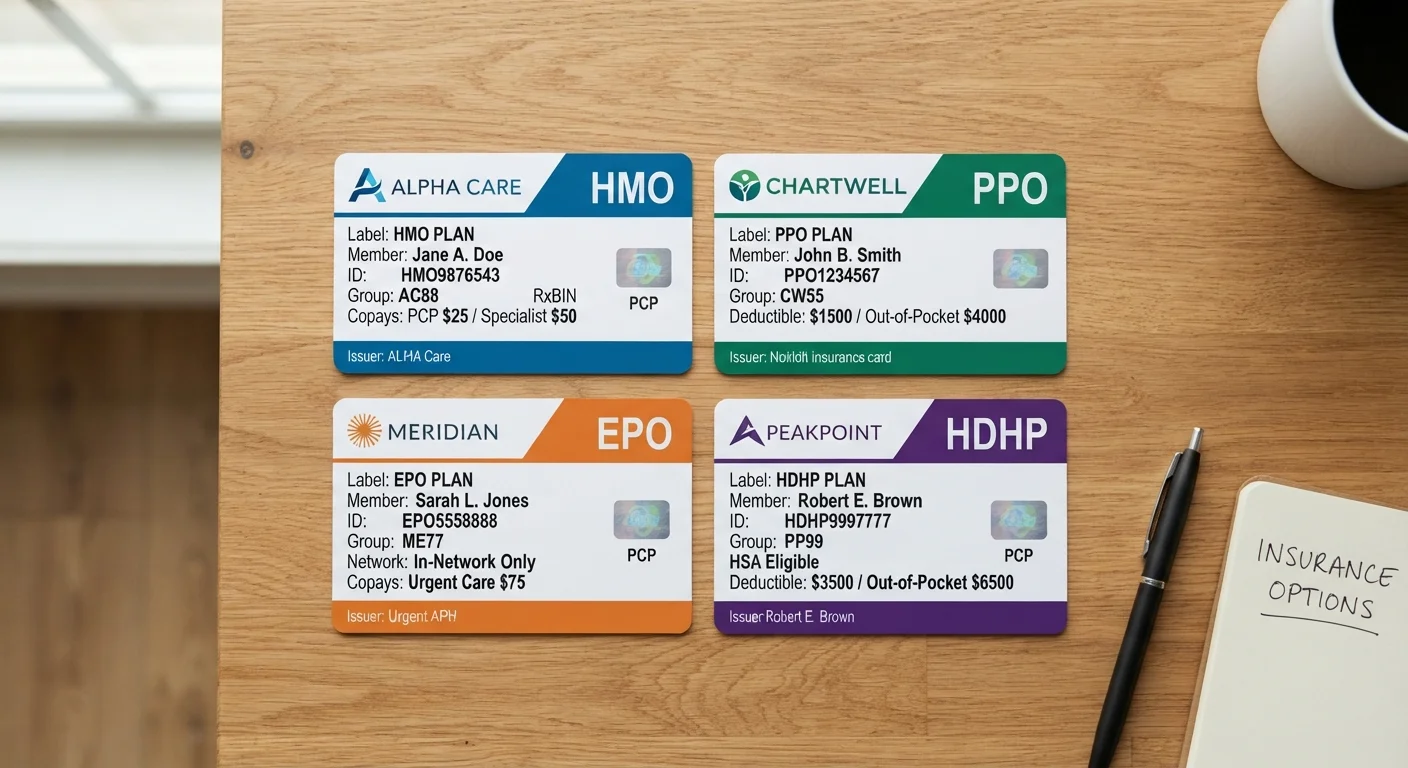
The four most common plan structures in the US are HMO (Health Maintenance Organization), PPO (Preferred Provider Organization), EPO (Exclusive Provider Organization), and HDHP (High-Deductible Health Plan). HDHPs are often paired with an HSA (Health Savings Account), a tax-advantaged account you can use to pay medical costs.
Understanding these structures is foundational. For a broader look at why health coverage matters alongside other policy types, see the major types of insurance coverage Americans actually need. And if terms like deductible, copay, or premium are still fuzzy, this plain-language breakdown of deductibles, premiums, and copays is a useful starting point.
HMO, PPO, EPO, HDHP: Side-by-Side
The table below compares the four plan types across the criteria that matter most when choosing coverage. Keep in mind that specific terms vary by insurer and state — always review the actual Summary of Benefits and Coverage (SBC) for any plan you're considering.
| HMO | PPO | EPO | HDHP | |
|---|---|---|---|---|
| Requires primary care physician (PCP) | Yes | No | No | Varies by plan |
| Referrals needed for specialists | Yes | No | No | Varies by plan |
| Out-of-network coverage | Emergency only | Yes, at higher cost | Emergency only | Varies; often limited |
| Typical monthly premium | Lower | Higher | Moderate | Lower |
| Deductible level | Moderate | Moderate to high | Moderate | High (IRS minimum applies) |
| HSA-eligible | No | No | No | Yes |
| Best for | Cost-focused, routine care | Flexibility seekers | No-referral simplicity | Healthy, savings-minded |
One pattern stands out: flexibility and cost tend to move in opposite directions. Plans that let you see any doctor without a referral (PPOs) usually charge higher monthly premiums. Plans that restrict your choices (HMOs, EPOs) generally cost less upfront but require more planning.
How Each Plan Type Works in Practice
HMO
With an HMO, you choose a primary care physician who manages your care and provides referrals to specialists within the network. Out-of-network care is typically not covered except in emergencies. The trade-off is a simpler, lower-cost structure — but less spontaneity when seeking care.
PPO
PPOs don't require a PCP or referrals. You can see in-network providers at a lower cost, or go out-of-network and pay more — the plan still pays a portion. This flexibility is valuable if you have established relationships with specific doctors or need ongoing specialist care. Premiums and out-of-pocket costs are usually higher than HMOs.
EPO
An EPO removes the referral requirement but keeps the network restriction. You can see any specialist within the network without asking your PCP first, but going outside the network means paying the full cost yourself (except in emergencies). EPOs can be a practical middle ground for people who want autonomy without the premium cost of a PPO.
HDHP
An HDHP has a higher deductible — the amount you pay before insurance starts covering most costs — than traditional plans. In exchange, premiums are lower. The IRS sets minimum deductible thresholds that qualify a plan as an HDHP, allowing enrollment in an HSA. Money contributed to an HSA is tax-deductible and rolls over year to year, making it a meaningful financial tool for those who can manage higher short-term costs. Understanding how deductibles, premiums, and coverage limits interact helps clarify whether a high-deductible structure makes sense for your finances.
Always Check the Network Before Enrolling
Before selecting any plan, use the insurer's online directory to verify that your current doctors and any preferred hospitals are listed as in-network. Networks can change year to year, even if you're re-enrolling in the same plan. A quick check now can prevent a large unexpected bill later.
Choosing the Right Structure for Your Situation
No plan type is objectively superior — the right fit depends on your health profile, finances, and how you use care. A few practical considerations:
- Frequency of care: If you see doctors often or manage a chronic condition, the referral friction of an HMO or the high deductible of an HDHP may create real barriers.
- Provider relationships: If you have specialists you rely on, confirm they're in-network before enrolling. Out-of-network surprises are one of the most common sources of unexpected medical bills.
- Financial cushion: HDHPs work best when you can cover the deductible out of pocket if needed. Pairing one with an HSA and contributing regularly builds a safety net over time.
- Geographic access: In rural areas, narrow networks (HMOs, EPOs) can limit practical access to care. Check network adequacy for your zip code.
For a fuller picture of what your health plan actually pays for — and what it doesn't — see what health insurance actually covers and what it doesn't.
This article provides general information about health insurance plan structures and is not personalized insurance, financial, or medical advice. Coverage terms, costs, and availability vary by insurer, plan, and state. Always review your plan's Summary of Benefits and Coverage and consult a licensed insurance agent or broker before making enrollment decisions.