Why Fiber Has Fallen Off Most American Plates
The modern American diet is built heavily around refined grains, processed snacks, and animal products - none of which contribute meaningful fiber. As food processing strips bran and germ from grains, fiber disappears with it. The result is a population-wide shortfall that nutrition researchers describe as one of the most common dietary gaps in the United States.
According to data from national dietary surveys, average fiber intake in the U.S. hovers near 15 grams per day - roughly half of what most health authorities recommend. This isn't a niche concern; it affects people across age groups and income levels. If you're curious about how your eating patterns stack up more broadly, a plain-language nutrition primer can be a useful starting point.
~15g
Average daily fiber intake in the U.S.
National dietary surveys consistently show American adults consuming roughly half the recommended amount of fiber each day.
25-38g
Recommended daily fiber intake for adults
The Institute of Medicine recommends 25 grams per day for women and 38 grams per day for men under age 50.
~95%
Americans falling short of fiber recommendations
Dietary data analyzed in peer-reviewed research suggests the vast majority of U.S. adults do not meet daily fiber targets.
Soluble vs. Insoluble Fiber: What the Difference Actually Means
Fiber isn't a single substance - it's a category. The two main types behave differently in the body and offer distinct benefits.
Soluble fiber dissolves in water and forms a viscous gel in the digestive tract. This gel slows the absorption of glucose, which helps stabilize blood sugar after meals. Soluble fiber also binds to cholesterol particles, supporting their removal from the body - a mechanism linked to lower LDL (low-density lipoprotein) cholesterol levels. Oats, barley, apples, citrus fruits, and legumes are rich sources.
Insoluble fiber does not dissolve. Instead, it adds bulk to stool and speeds transit through the colon, reducing constipation and supporting regular bowel movements. Whole wheat products, bran, nuts, and most vegetables are strong sources.
Most plant foods contain a mix of both types, so eating a varied diet naturally delivers both. The distinction matters most when someone is targeting a specific health concern - a conversation best had with a healthcare provider or registered dietitian.
A Simple Way to Remember Good Sources
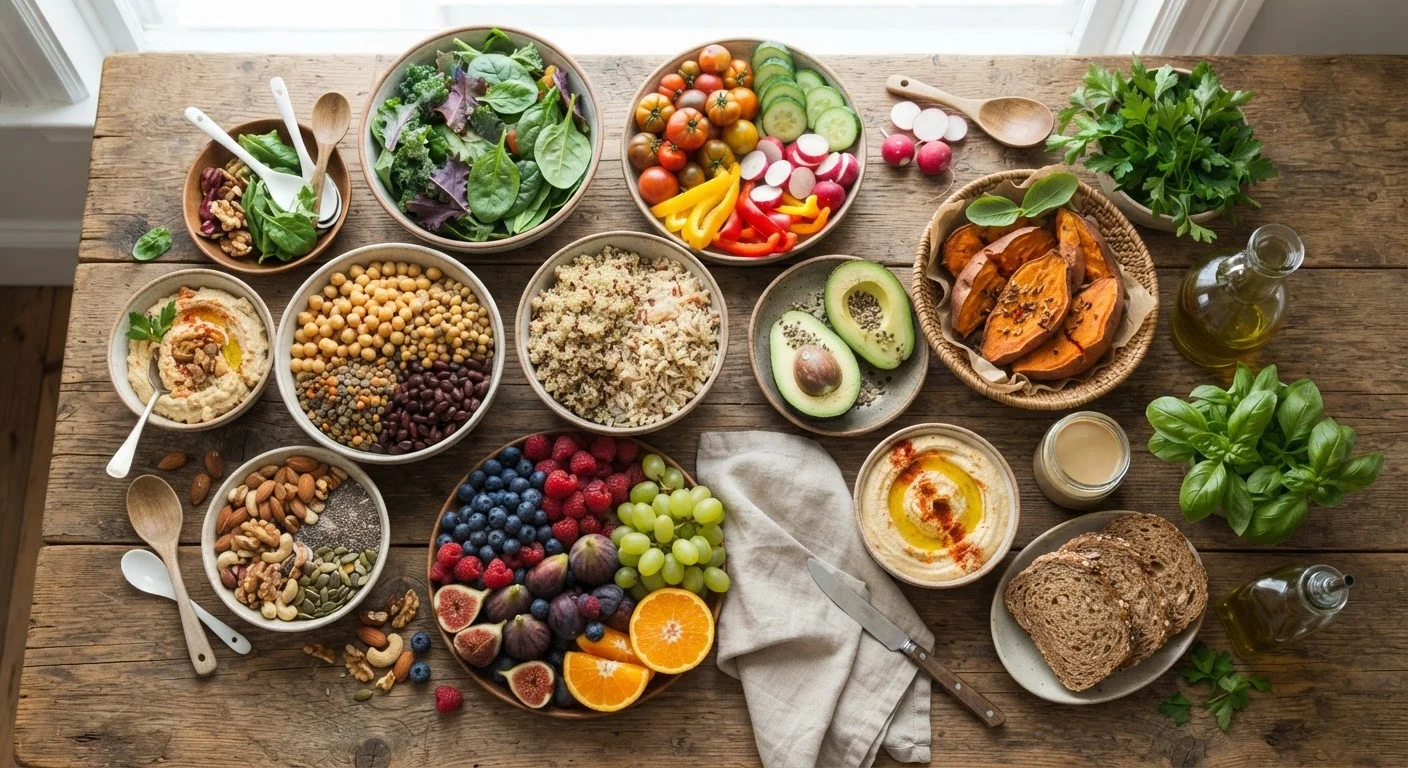
Think of fiber as coming from anything that grows in the ground or on a plant: beans, lentils, oats, vegetables, fruits, and whole grains. If a food's ingredient list starts with whole wheat, rolled oats, or a legume, that's a signal it likely contains meaningful fiber. Checking the Nutrition Facts panel for grams of dietary fiber per serving confirms the amount quickly.
The Health Associations Are Hard to Ignore
Decades of nutrition research have consistently linked higher fiber intake to a range of favorable health outcomes. The associations are robust enough that dietary fiber appears prominently in federal nutrition guidelines and recommendations from major health organizations.
Higher fiber diets are associated with lower risk of cardiovascular disease, type 2 diabetes, colorectal cancer, and diverticular disease. Fiber also supports a healthy gut microbiome - the community of bacteria in the large intestine that ferments certain fibers, producing short-chain fatty acids that may have broad-reaching effects on gut lining integrity and metabolic health.
It's worth noting that much of this evidence is observational: people who eat more fiber also tend to have other health-supportive habits. Causality isn't always cleanly established. That said, the consistency and strength of the data across diverse populations make fiber a well-supported dietary priority. For a broader look at what evidence-based eating patterns have in common, see what nutrition research consistently finds.
“Dietary fiber is one of the most evidence-supported components of a health-promoting diet, yet it remains one of the most consistently under-consumed nutrients in the American food supply.”
— Walter Willett, Professor of Epidemiology and Nutrition, Harvard T.H. Chan School of Public Health
Practical Ways to Close the Fiber Gap
Increasing dietary fiber doesn't require overhauling your entire diet at once. Small, consistent substitutions tend to stick better than dramatic changes.
- Switch refined grains for whole grains. Choosing whole wheat bread, brown rice, or oatmeal over their refined counterparts meaningfully increases fiber without adding preparation time.
- Add legumes to familiar dishes. Stirring black beans into soup, adding lentils to ground meat, or using chickpeas in salads are low-effort additions with high fiber payoff.
- Keep the skin on produce. Peeling apples, potatoes, and cucumbers removes a significant portion of their fiber. Washing and eating the skin is a simple upgrade.
- Prioritize whole fruit over juice. Juicing removes most fiber. A whole orange delivers far more fiber than the same volume of orange juice. The contrast with added sugar in processed beverages is another reason to choose whole fruit - the distinction between natural and added sugars explains the broader context.
One practical caution: increase fiber intake gradually over several weeks and drink adequate water alongside it. Jumping from low to high intake too quickly commonly causes gas and bloating. The adjustment period is temporary, but the pace matters. When reviewing packaged foods, reading the Nutrition Facts label makes it straightforward to compare fiber content across options.
This article provides general nutrition information for educational purposes only and is not a substitute for personalized advice from a registered dietitian, physician, or other qualified healthcare professional. Consult a provider before making significant dietary changes, especially if you have a chronic health condition.