
Why Standard Budgeting Advice Misses the Mark for Variable Earners
Most budgeting frameworks assume a steady paycheck arriving on predictable dates. For freelancers, gig workers, commission-based employees, and seasonal workers, that assumption breaks down immediately. When your income fluctuates month to month — sometimes significantly — applying a fixed-income budget template can lead to shortfalls, stress, and eventually abandonment of the budget altogether.
If you're new to budgeting concepts or want a grounding in core terminology first, the foundational guide to personal budgeting covers the essentials before you adapt them here.
The core challenge with variable income isn't that budgeting is impossible — it's that the standard method of "divide income by expenses" requires you to know your income in advance. The workaround is to stop budgeting from your income down and instead budget from your essential expenses up.
Think in Income Floors, Not Averages
Many variable earners make the mistake of budgeting from their average monthly income, which means half the time they're planning to spend more than they actually earn. Building your plan around your lowest realistic month creates a structural safety margin that doesn't depend on willpower alone.
What You Need Before You Start
Before building your variable-income budget, gather the following:
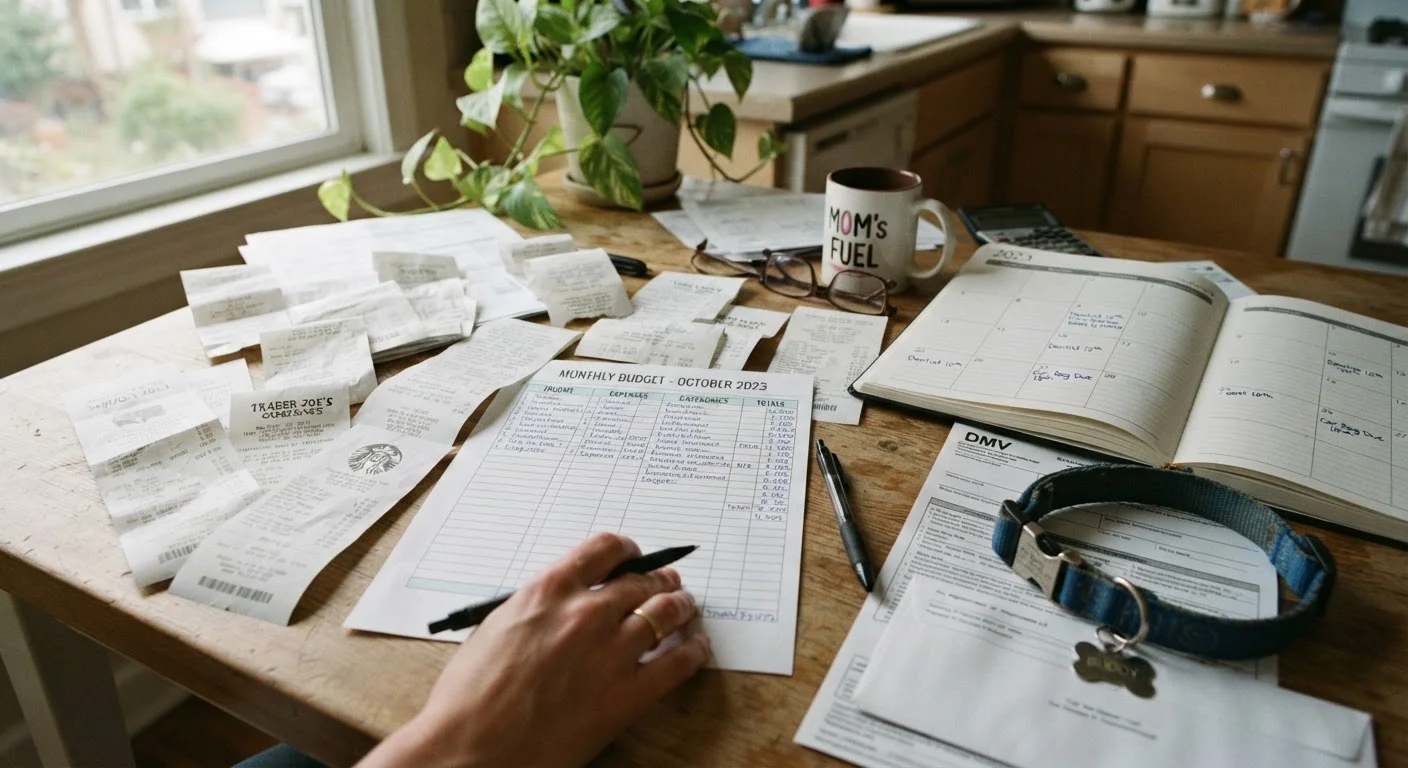
What you will need
One often-overlooked category is irregular annual costs — car registration, professional subscriptions, and similar items that don't appear on monthly bank statements but silently wreck budgets. The guide to costs people forget when budgeting is worth reviewing before you finalize your expense list.
Step-by-Step: Building Your Variable-Income Budget
Follow these steps each month to build a spending plan that flexes with your income without letting your finances become unpredictable.
Establish your income baseline
Look at your last 6–12 months of income and identify the lowest monthly amount you earned. This figure — not the average — becomes your planning baseline. Budgeting from your floor rather than your ceiling means your essential expenses are always covered, even in a slow month.
Map and categorize every expense
List all monthly and annual expenses, then sort them into three tiers:
- Fixed essentials: Rent or mortgage, loan payments, insurance premiums — costs that don't change and must be paid.
- Variable essentials: Groceries, utilities, gas — costs that fluctuate but are non-negotiable.
- Discretionary: Dining out, streaming services, hobbies — spending you control and can scale down when income is low.
Annual expenses should be divided by 12 and treated as a monthly obligation to avoid seasonal shocks.
Set a bare-bones monthly floor
Add up your fixed essentials and an estimated minimum for variable essentials. This total is your monthly floor — the absolute minimum you need to keep your household running. Every budget decision flows from this number. Your income baseline (Step 1) must be equal to or greater than this floor; if it isn't, you'll need to identify which expenses can be reduced.
Open a dedicated income buffer account
Set up a separate savings account that acts as a buffer between your variable income and your fixed monthly expenses. In high-income months, deposit the surplus here. In low-income months, draw from it to meet your floor. Aim to build this buffer to at least one full month of essential expenses before relying on it heavily.
Assign discretionary spending only after essentials are funded
Once your floor is covered for the month — either by income or by drawing from your buffer — calculate what remains. Allocate discretionary spending from this remainder only. In lean months, discretionary spending may be minimal or zero. In strong months, you can fund it more generously while still prioritizing savings.
Review and reset at the start of each month
At the beginning of every month, project your likely income — confirmed invoices, scheduled shifts, or known contracts — and compare it to your floor. Adjust discretionary allocations accordingly. Document what you projected versus what you actually earned; over time, this log improves the accuracy of your income estimates and your planning confidence.
Don't Confuse Your Buffer With Your Emergency Fund
A buffer account is designed to smooth out normal month-to-month income variation — it's not a substitute for a dedicated emergency fund. Drawing your emergency fund down to cover routine slow months leaves you exposed to genuine financial crises. Build both accounts separately, with distinct purposes and separate access habits.
Maintaining the Budget When Income Dips or Surges
A variable-income budget isn't a "set it and forget it" system — it requires a monthly reset. At the start of each month, project your likely income based on confirmed work, pending invoices, or scheduled shifts. Compare that figure to your baseline essential expenses and adjust discretionary spending accordingly.
When income exceeds your baseline, resist the impulse to immediately expand spending. Prioritize topping up your buffer account, then your emergency fund, before allocating extra funds to discretionary categories. When income falls short, your buffer account absorbs the gap rather than your credit card.
For a month-by-month setup checklist you can return to each time, see the monthly budget setup checklist. And if you find your plan unraveling after the first couple of months, common reasons budgets collapse early may identify the specific pressure point.
Your emergency fund also plays a structural role here — not just a safety net for job loss, but an income-smoothing tool. The guide to sizing an emergency fund explains why the standard "three to six months" rule may need adjusting for variable earners specifically.
This article provides general financial information and education only. It is not personalized financial advice. Please consult a qualified financial professional regarding decisions specific to your situation.