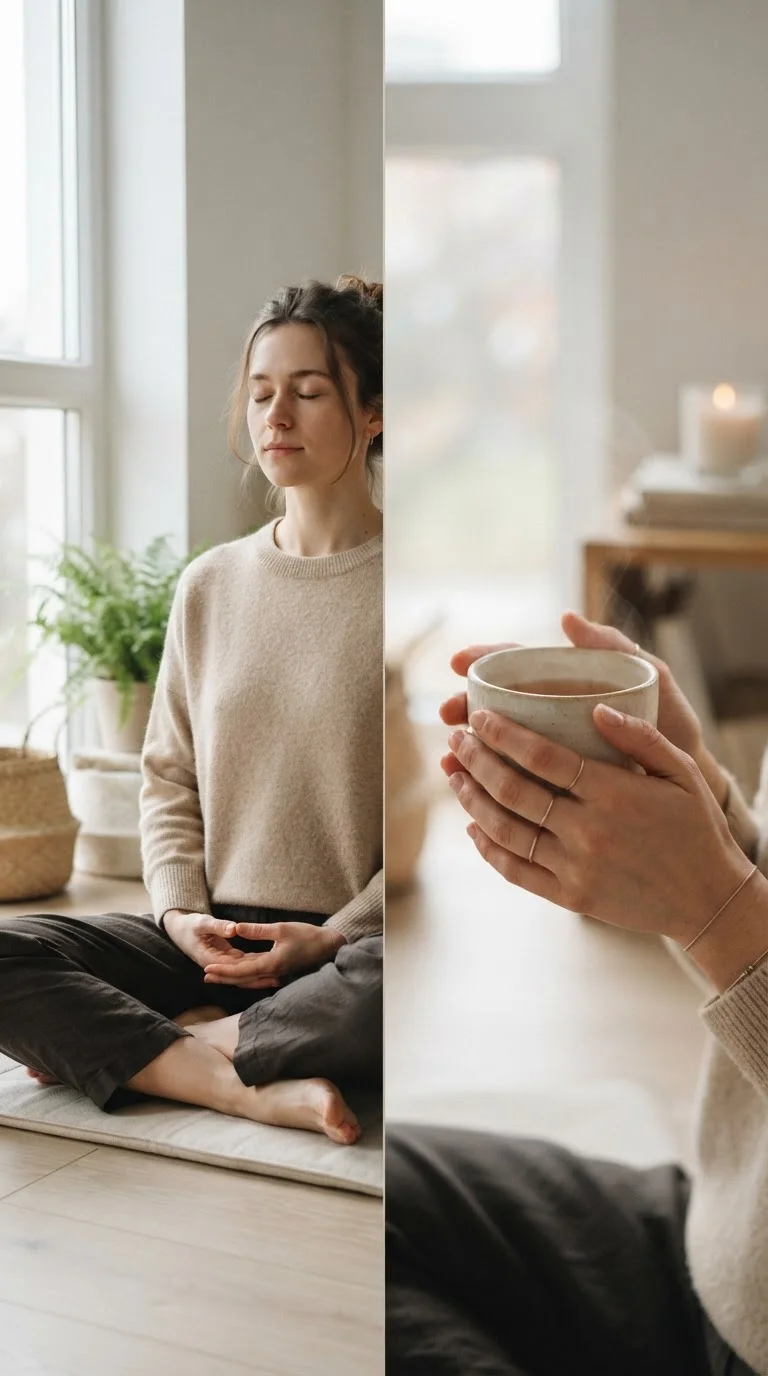

What Mindfulness Actually Means
Mindfulness is the practice of paying deliberate, non-judgmental attention to what is happening right now - your breath, your surroundings, your thoughts, or bodily sensations. That's it. There is no requirement to achieve a special mental state, sit in a particular posture, or believe in any philosophy.
Mindfulness
The practice of paying deliberate, non-judgmental attention to the present moment - including thoughts, feelings, and physical sensations - without trying to change them.
Meditation
A structured exercise - often involving focused attention on the breath, a word, or a sensation - used to train mental awareness and calm. Meditation is one method of cultivating mindfulness.
Body scan
A guided or self-directed practice where you slowly move attention through different parts of the body, noticing sensations without judgment. Commonly used as a relaxation and awareness tool.
Attention regulation
The ability to direct and sustain mental focus on a chosen object and to redirect it when distraction occurs. Mindfulness practice is widely understood to strengthen this skill over time.
Informal practice
Bringing mindful, present-moment awareness to everyday activities like eating, walking, or washing dishes - without setting aside dedicated meditation time.
Mindfulness-based programs
Structured, evidence-informed courses - such as Mindfulness-Based Stress Reduction (MBSR) - that teach mindfulness skills over several weeks, typically led by a trained facilitator.
The concept draws on long traditions of contemplative practice and has been studied extensively in clinical settings over the past four decades. Researchers have examined mindfulness-based programs for stress reduction, anxiety, and depression with generally positive findings, though individual results vary and the field continues to evolve.
What mindfulness is not: a way to stop thinking, a religious ritual, or a passive activity. The mental effort of noticing when attention has drifted and bringing it back is the actual exercise - every bit as real as a physical workout.
Common Approaches for Beginners
There is no single correct entry point. The following are the most widely used formats for people starting from scratch:
- Breath awareness: Sit comfortably, set a timer for five to ten minutes, and focus attention on the physical sensation of breathing - the rise of the chest, the air at the nostrils. When your mind wanders (it will), return to the breath without self-criticism.
- Body scan: Lie down or sit and slowly move attention through different parts of the body, noticing sensations without trying to change them. This is a common starting point in structured programs.
- Mindful movement: Gentle yoga or slow walking with deliberate attention to physical sensation counts as mindfulness practice. This works well for people who find stillness difficult.
- Informal practice: Bring focused attention to an everyday task - washing dishes, eating a meal, or brushing your teeth - without multitasking. This is an accessible on-ramp that requires no dedicated time block.
For a clearer picture of how these approaches differ from formal meditation, the Mindfulness vs. Meditation explainer lays out the distinctions in plain language.
Start With What Feels Natural
If sitting still sounds unappealing, begin with informal practice or mindful walking rather than forcing a format that creates friction. The best approach is the one you'll actually return to. Once a basic habit is established, exploring other formats becomes much easier.
What to Expect in the First Few Weeks
New practitioners almost universally report the same experience: the mind wanders constantly, and sitting still feels unproductive or even frustrating. This is normal and expected. Research suggests that the act of noticing distraction and redirecting attention is itself the core cognitive skill being trained.
Common early experiences include:
- A sense that you are "doing it wrong" because your mind won't quiet down
- Restlessness or boredom during sessions
- Occasional moments of calm that feel surprisingly accessible
- Increased awareness of habitual thought patterns, which can initially feel unsettling
Progress in mindfulness is rarely linear and is difficult to measure by feel alone. Many people report noticing benefits - such as a slight pause before reacting to stress - only in retrospect, weeks into consistent practice.
Progress Looks Different for Everyone
There is no standard timeline for when mindfulness begins to feel beneficial. Some people notice subtle shifts within a couple of weeks; others take longer. Comparing your inner experience to idealized descriptions of meditation can create unnecessary discouragement. Treat early sessions as exploration rather than performance.
Building the Habit Without Burning Out
Habit research consistently shows that consistency and low friction matter more than intensity. The same logic that applies to building a sustainable nutrition approach applies here: start smaller than feels necessary and anchor the new behavior to an existing routine.
Practical strategies that support consistency:
- Anchor to an existing habit. Practice immediately after brushing your teeth in the morning or before your first cup of coffee. Linking a new behavior to an established one reduces the decision burden.
- Set a realistic minimum. Two minutes counts. A minimum so small it feels almost trivial lowers the activation energy to begin, especially on difficult days.
- Track streaks loosely. Noting consecutive days of practice can motivate continuation, but a missed day should be treated as neutral, not a failure. Resume the next day.
- Vary the format. If formal sitting practice feels stale, shift to a body scan or mindful walk. Flexibility prevents the routine from feeling like a rigid obligation.
The same principle of starting small and building momentum applies across many areas of life - whether you're developing a mindfulness habit or building a savings habit from zero.
When Mindfulness Isn't Enough on Its Own
Mindfulness is a well-supported wellness tool, but it is not a clinical treatment and is not appropriate as a substitute for professional care when symptoms are significant. If you are experiencing persistent anxiety, depression, trauma responses, or other mental health concerns, mindfulness may be a useful complement to - not a replacement for - treatment provided by a qualified professional.
Mindfulness Is Not a Clinical Treatment
For some people, particularly those with trauma histories or certain anxiety conditions, unguided mindfulness practice can occasionally intensify difficult emotions. If you notice consistent distress during or after sessions, pause and consult a mental health professional before continuing. A clinician can advise on whether a modified approach or supported program is more appropriate for your situation.
If you're uncertain whether mindfulness is appropriate given your current mental health situation, or if you find that practice consistently brings up distressing material, speaking with a therapist or counselor is a reasonable and sensible step. Our guide on what to expect when you first talk to a mental health professional can help demystify that process.
This article is for general informational purposes only and is not a substitute for professional medical or mental health advice. If you have concerns about your mental health, please consult a qualified healthcare provider.