Two Terms, One Source of Confusion
The words mindfulness and meditation appear together so often that many people assume they are interchangeable. They are not - though they are closely related. Understanding the distinction helps you choose the right tool for your life rather than feeling you have to commit to something more elaborate than you need.
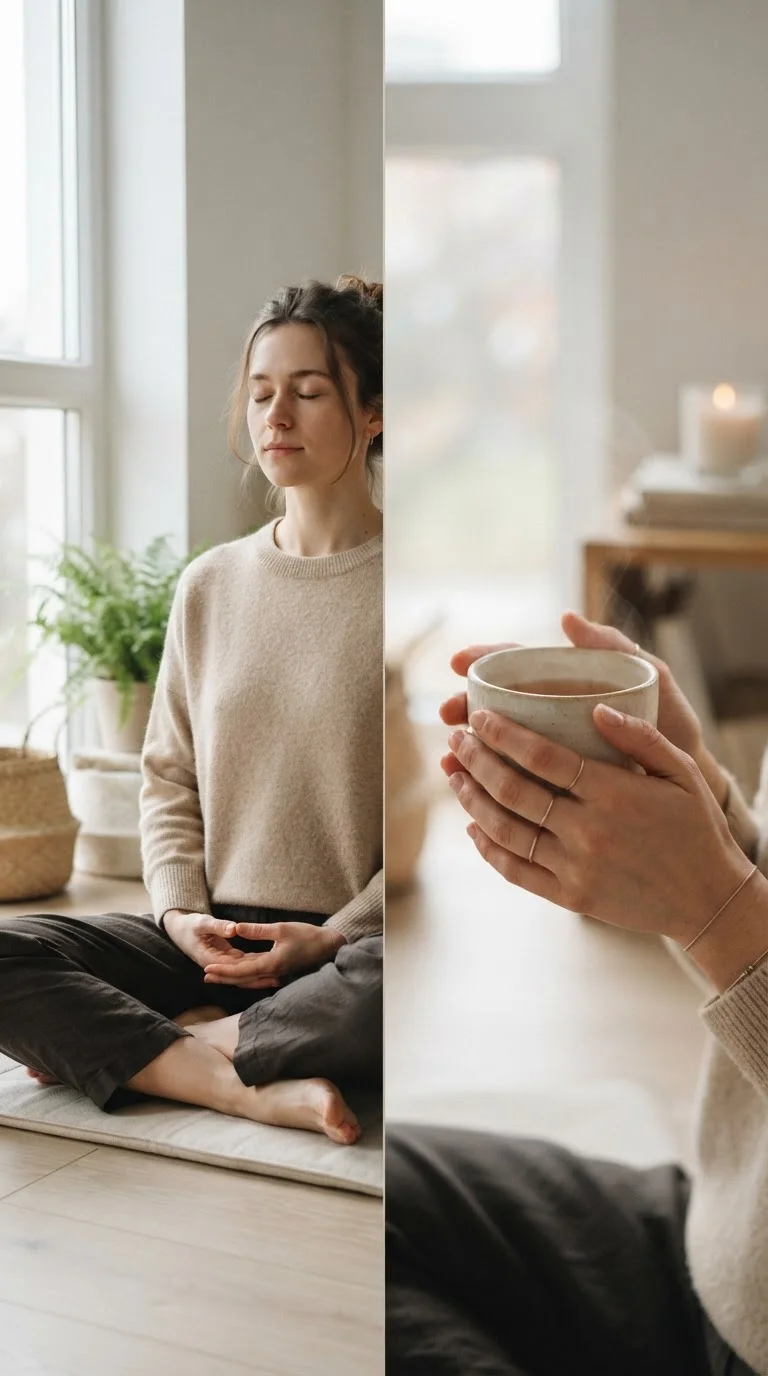
At its simplest: mindfulness is a quality of attention, and meditation is a practice. Mindfulness is the state of being deliberately aware of what is happening right now - your breath, your surroundings, a conversation - without judgment. Meditation is the deliberate exercise you use to train and deepen that capacity. Think of mindfulness as the destination and meditation as one road that leads there.
This distinction matters because it opens a wider set of options. If sitting still for twenty minutes sounds daunting, you may find that informal mindfulness woven into daily moments is both achievable and genuinely useful. If you want a more structured approach, formal meditation offers that. Many people ultimately use both. For a plain-language introduction to building either habit from scratch, see Starting a Mindfulness Practice When You've Never Meditated Before.
What Mindfulness Actually Is
Mindfulness is rooted in Buddhist contemplative traditions but was adapted for secular clinical use - most notably through the Mindfulness-Based Stress Reduction (MBSR) program developed at the University of Massachusetts Medical School in the late 1970s. In that framework, mindfulness is defined as paying attention, on purpose, in the present moment, non-judgmentally.
Crucially, mindfulness does not require a cushion, a quiet room, or a timer. You can practice it while drinking coffee, listening to a colleague, or folding laundry - the key is intentional, non-reactive attention rather than the automatic mental chatter that usually accompanies routine tasks.
~14%
U.S. adults who have meditated
According to a 2017 CDC National Health Interview Survey, approximately 14% of U.S. adults reported practicing meditation in the past year - more than triple the rate recorded in 2012.
~40%
Reduction in perceived stress reported in MBSR studies
Multiple MBSR clinical trials have reported self-reported stress reductions in the range of 30-40%, though individual outcomes vary and study designs differ.
Common informal mindfulness practices include:
- Mindful eating - noticing taste, texture, and hunger cues without distraction
- Mindful walking - paying attention to physical sensations and environment as you move
- Body check-ins - briefly scanning for tension or discomfort throughout the day
These moments do not eliminate stress on their own, but research suggests that consistent informal practice can shift habitual patterns of reactivity over time. Results vary by individual, and mindfulness is not a substitute for professional mental health care.
What Meditation Actually Is
Meditation is an umbrella term for a wide range of formal mental exercises performed intentionally, usually in a dedicated session. While mindfulness meditation is the most widely researched in Western clinical settings, meditation includes many other forms:
| Criterion | Mindfulness | Meditation |
|---|---|---|
| Definition | Quality of present-moment awareness | Formal mental training practice |
| When it happens | Anytime, during daily activities | Dedicated session, set aside time |
| Requires a specific setting | No | Usually yes |
| Always mindfulness-based | Yes, by definition | No - mantra, visualization, TM differ |
| Typical time commitment | Moments woven into routine | 10-45 minutes per session |
| Clinical evidence base | Moderate, harder to measure | Stronger (MBSR, MBCT programs studied) |
| Learning curve | Lower - no technique required | Moderate - benefits from instruction |
- Focused attention (concentration) meditation - repeatedly directing attention to a single object, such as the breath or a mantra
- Open monitoring meditation - observing thoughts and sensations without attachment, the basis of most mindfulness meditation
- Loving-kindness (metta) meditation - cultivating feelings of goodwill toward oneself and others
- Visualization or guided imagery - using directed mental imagery, common in stress-reduction and sports psychology contexts
- Transcendental Meditation (TM) - a mantra-based technique taught in a specific standardized format
Because the category is broad, not all meditation is mindfulness-based. A mantra practice, for instance, trains focused attention but does not emphasize non-judgmental observation of present-moment experience in the same way. Understanding this breadth means you are not locked into a single style.
What the Research Says
Both practices have been studied, though the evidence base is stronger for structured meditation programs (particularly MBSR and Mindfulness-Based Cognitive Therapy, or MBCT) than for informal mindfulness alone. A 2014 meta-analysis published in JAMA Internal Medicine found moderate evidence that mindfulness meditation programs improved anxiety, depression, and pain outcomes - though the authors noted significant variation in study quality.
Informal mindfulness has been studied less rigorously, partly because it is harder to measure. That does not mean it is ineffective - only that claims about its specific benefits should be held with appropriate caution.
Meditation Is Not One-Size-Fits-All
While most people tolerate mindfulness and meditation practices well, emerging research highlights that intensive practice can occasionally surface difficult emotions or experiences, particularly for individuals with trauma histories. This does not mean such individuals should avoid these practices entirely - rather, they may benefit from working with a qualified instructor or therapist who can provide appropriate guidance and support.
It is also worth noting that meditation is not universally beneficial for everyone. Some individuals - particularly those with trauma histories or certain psychiatric conditions - may find intensive practice distressing. If you have concerns about how either practice might interact with your mental health, consult a qualified healthcare professional before starting. For context on how these self-directed tools fit alongside professional support, see Therapy, Self-Help, and Mental Health Apps: Understanding the Differences.
Choosing What Fits Your Life
The most effective practice is the one you will actually maintain. Consider these practical distinctions when deciding where to start:
- If your schedule is unpredictable, informal mindfulness is easier to sustain - it adapts to your day rather than requiring it.
- If you respond well to structure, guided meditation apps or programs offer clear progression and accountability.
- If you are curious about both, many practitioners begin with informal mindfulness and add formal meditation sessions as the habit builds.
Neither approach demands perfection. A two-minute body-check-in practiced consistently is likely more beneficial than an aspirational hour-long session attempted twice and abandoned. The goal is not a flawless technique - it is a sustainable shift in how you relate to your own attention.
This article is for general informational and educational purposes only and does not constitute medical or mental health advice. Always consult a qualified healthcare professional for guidance specific to your health circumstances.