
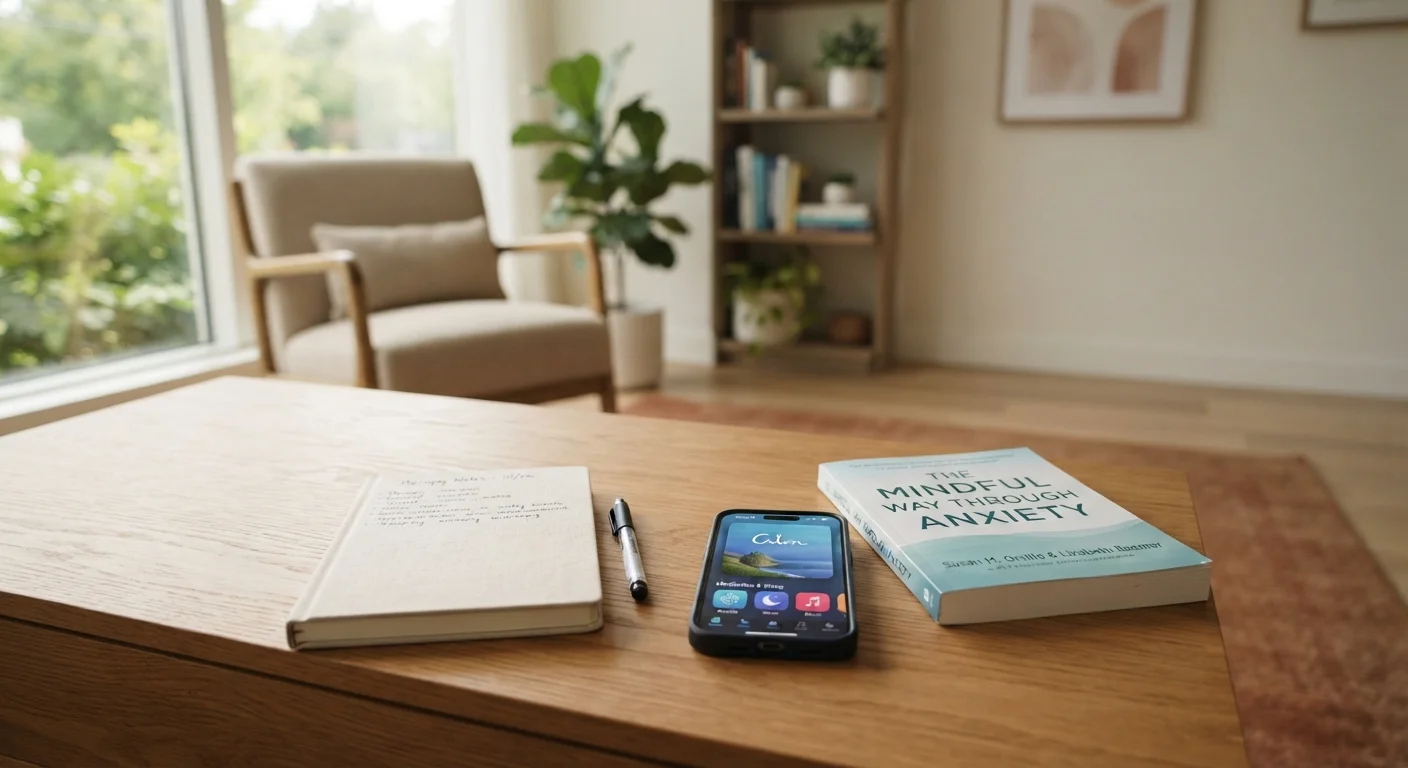
What Each Approach Actually Involves
The terms therapy, self-help, and mental health apps are often used loosely - sometimes interchangeably - but they describe meaningfully different types of support. Understanding those differences is the first step toward choosing what fits your situation.
Professional therapy involves a licensed clinician - such as a psychologist, licensed clinical social worker, or licensed professional counselor - who assesses your mental health, develops a treatment plan, and delivers evidence-based interventions such as cognitive behavioral therapy (CBT) or dialectical behavior therapy (DBT). Therapy is the only option on this list that constitutes actual medical or clinical care.
Self-help resources - books, structured workbooks, podcasts, and psychoeducational courses - translate psychological research into accessible formats. They can teach skills like emotional regulation and mindfulness, but they do not involve professional assessment or individualized guidance. See our guide to emotional regulation skills for examples of what structured self-help content can offer.
Mental health apps are digital tools that typically deliver mood tracking, guided meditation, CBT-style exercises, or peer support features via smartphone. Some connect users with licensed therapists through messaging or video; others are fully automated. The category is broad, and quality varies considerably.
How They Compare Across Key Dimensions
Comparing these three approaches across practical criteria helps clarify what each can realistically offer - and where each falls short.
| Professional Therapy | Self-Help Resources | Mental Health Apps | |
|---|---|---|---|
| Clinical oversight | Licensed clinician, regulated | None | Varies; some include licensed therapists |
| Personalization | High - tailored to individual | Low - general audience | Moderate - algorithm-based |
| Suitable for clinical conditions | Yes | Generally no | Not as standalone treatment |
| Typical cost | Higher; insurance may apply | Low to moderate | Free to moderate subscription |
| Accessibility | Limited by availability, cost | High - widely available | High - smartphone required |
| Evidence base | Strong for established modalities | Varies by resource | Emerging; inconsistent by product |
| Best role | Primary treatment for conditions | Skill-building and education | Daily habit support and tracking |
A key distinction worth emphasizing: only professional therapy is supervised by a licensed clinician with legal and ethical accountability. Apps and self-help tools are subject to far less regulatory oversight, and the research base supporting many specific products remains limited. For a deeper look at common misunderstandings about clinical care, see common misconceptions about therapy.
When Professional Therapy Is the Right Call
Certain situations call for clinical expertise that no app or workbook can provide. If you are experiencing persistent depression, anxiety disorders, trauma responses, psychosis, substance use concerns, or thoughts of self-harm, professional evaluation is essential. A licensed clinician can accurately diagnose, rule out underlying medical factors, and deliver treatments with a meaningful evidence base behind them.
Don't Delay Care When Symptoms Are Serious
If you are experiencing thoughts of self-harm, suicidal ideation, or symptoms that are significantly disrupting your daily functioning, please reach out to a licensed mental health professional or a crisis resource promptly. Apps and self-help tools are not appropriate substitutes in these situations. The 988 Suicide and Crisis Lifeline (call or text 988 in the US) provides free, confidential support around the clock.
Therapy also offers something qualitatively different from automated tools: a genuine therapeutic relationship. Research consistently identifies the alliance between client and therapist as one of the strongest predictors of treatment outcomes. If you're considering your first appointment, what to expect from a first session can help reduce uncertainty about the process.
Where Self-Help and Apps Add Real Value
Self-help resources and mental health apps are not just consolation prizes for those who can't access therapy. Used appropriately, they offer genuine benefits - particularly for people whose needs fall in the mild-to-moderate range, those maintaining mental wellness rather than treating active conditions, or those supplementing professional care between sessions.
Research suggests that structured self-guided interventions based on CBT principles can produce meaningful improvements in mild anxiety and depressive symptoms for some people. Apps that incorporate evidence-informed techniques - such as mood journaling, breathing exercises, or guided mindfulness - can support the kind of consistent daily practice that matters for long-term well-being. Our article on building a daily routine for mental health explores how small, consistent habits compound over time.
Use Apps as a Consistency Bridge
Mental health apps work best when they reinforce skills you're already learning - from a therapist, a structured workbook, or a course. Think of them as a daily practice tool rather than a standalone solution. Look for apps that are transparent about the evidence behind their features, and be cautious about any that make strong clinical claims.
For those curious about mindfulness-based tools specifically, understanding the distinction between practices helps in choosing the right app features. Our piece on mindfulness versus meditation clarifies what each involves.
Combining Approaches Thoughtfully
For many people, these three approaches are not mutually exclusive. Someone working with a therapist weekly might also use an app to track mood patterns between sessions or read a workbook their clinician recommended. Someone maintaining general well-being without clinical needs might rely primarily on self-help resources, using an app as a consistency tool.
The important boundary to hold: self-help and apps should not substitute for professional care when professional care is genuinely warranted. Access barriers - cost, availability, stigma - are real and meaningful obstacles for many Americans. But the answer to those barriers is to seek lower-cost professional options (community mental health centers, sliding-scale therapists, university training clinics) rather than to treat an app as clinically equivalent to a licensed clinician.
Regular self-reflection can help you notice when your needs are shifting. The mental well-being check-in questions in our related guide offer a structured way to assess where you are - and whether your current approach is still the right fit.
This article is for general informational and educational purposes only and does not constitute medical or mental health advice. Please consult a licensed mental health professional for guidance specific to your situation.