
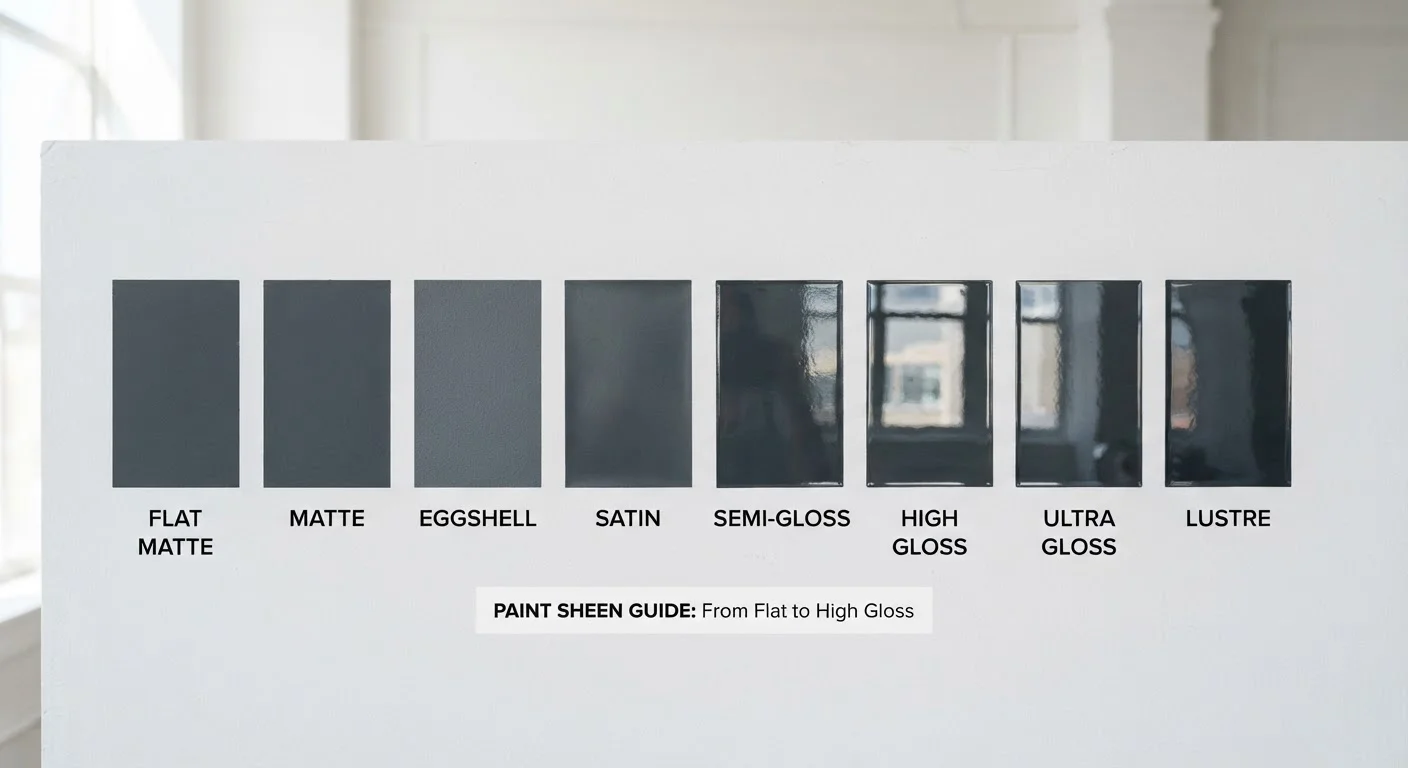
Why Sheen Level Matters as Much as Color
When most people choose paint, they focus almost entirely on color - but sheen level is equally consequential. Sheen determines how light interacts with a surface, how easily the paint cleans, and how forgiving it is of wall imperfections. The wrong finish in the wrong room can make a wall look dingy after one month or expose every drywall texture flaw under afternoon sunlight.
Understanding the five standard sheen categories helps you match the right finish to each room's use, lighting conditions, and traffic level. This is a reference you can return to every time you tackle a painting project.
| Flattest finish | Flat (Matte) |
| Best for ceilings | Flat or ceiling-specific matte |
| Most versatile for living areas | Eggshell |
| Best for kitchens & bathrooms | Satin or Semi-Gloss |
| Standard finish for trim & doors | Semi-Gloss |
| Easiest finish to clean | Gloss (High-Gloss) |
The Five Sheen Levels Explained
Flat (Matte)
Reflectivity: Essentially none. Flat paint absorbs light rather than bouncing it, producing a uniform, velvety surface. It hides surface imperfections - bumps, patches, and texture - better than any other finish. The trade-off is that it marks and stains easily and is generally not washable. Flat is best suited for low-traffic adult bedrooms and formal dining rooms, or ceilings in any room.
Eggshell
Reflectivity: Very low, with a faint sheen resembling the surface of an eggshell. This is the workhorse finish for most living rooms and adult bedrooms. It offers meaningfully better stain resistance than flat while still minimizing wall imperfections. It can be wiped down gently, making it a practical upgrade without sacrificing too much of that smooth, understated look.
Satin
Reflectivity: Moderate. Satin has a soft, pearl-like glow and holds up well against moisture, scrubbing, and frequent contact. It is the go-to choice for kitchens, bathrooms, hallways, children's rooms, and laundry spaces - anywhere walls face regular wear. Because satin reflects more light, it can highlight surface flaws, so proper prep and priming matter more here.
Semi-Gloss
Reflectivity: High. Semi-gloss is durable, moisture-resistant, and easy to wipe clean. It is the standard choice for trim, doors, window casings, and cabinetry, and it also works well in bathrooms and kitchens where walls need to withstand splashes and frequent cleaning. The increased reflectivity makes wall imperfections very visible, so surface preparation is critical.
Gloss (High-Gloss)
Reflectivity: Maximum. Gloss paint creates a hard, mirror-like finish that is exceptionally durable and moisture-resistant. It is typically reserved for furniture, cabinetry, front doors, and decorative accents rather than broad wall surfaces, where it would amplify every imperfection dramatically. High-gloss surfaces are the easiest to clean but require the most meticulous prep work.
Sheen
The degree of light reflectivity a dried paint film produces. Higher sheen means more light bounces off the surface, creating a shinier appearance.
Reflectivity
A measure of how much light a surface reflects versus absorbs. In paint, this directly corresponds to how glossy or matte the finish appears.
Washability
A paint's ability to withstand cleaning - wiping, scrubbing, or rinsing - without losing color or adhesion. Generally increases with higher sheen levels.
Surface preparation
The process of cleaning, sanding, patching, and priming a surface before painting. Higher-sheen finishes demand more thorough prep because they expose imperfections more readily.
Practical Room-by-Room Guide
Applying these categories to specific rooms makes the decision concrete:
- Living rooms and bedrooms: Eggshell is the standard recommendation. It reads as close to flat in low light but withstands occasional cleaning.
- Kitchens and bathrooms: Satin or semi-gloss for walls; semi-gloss for trim. Both resist moisture and allow frequent scrubbing.
- Hallways and children's rooms: Satin performs well under the wear these areas experience.
- Ceilings: Flat or matte ceiling paint in nearly all cases. Sheen on ceilings picks up shadows and imperfections harshly.
- Trim, doors, and cabinetry: Semi-gloss or gloss for durability, ease of cleaning, and visual definition.
Keep in mind that sheen also interacts with color. Higher-sheen finishes tend to make colors appear slightly more saturated and vivid. If you are carefully calibrating a room's mood and atmosphere, factor this in alongside your color selection. For a deeper look at how color choices shape a room's feel, see our guide to color psychology in the home.
Sheen Can Vary Between Paint Brands
The terms flat, eggshell, satin, semi-gloss, and gloss are industry conventions, but exact reflectivity levels are not standardized across manufacturers. A "satin" from one brand may be slightly shinier or flatter than another brand's equivalent. When in doubt, request a sample and test it on your actual surface under your room's lighting conditions before committing to a full project.