
Why This Checklist Matters
Most people spend more time researching a new appliance than reading an insurance policy. That gap can be expensive. A policy is a legal contract, and the details buried in it — exclusions, sublimits, cancellation clauses — determine whether you're actually protected when something goes wrong.
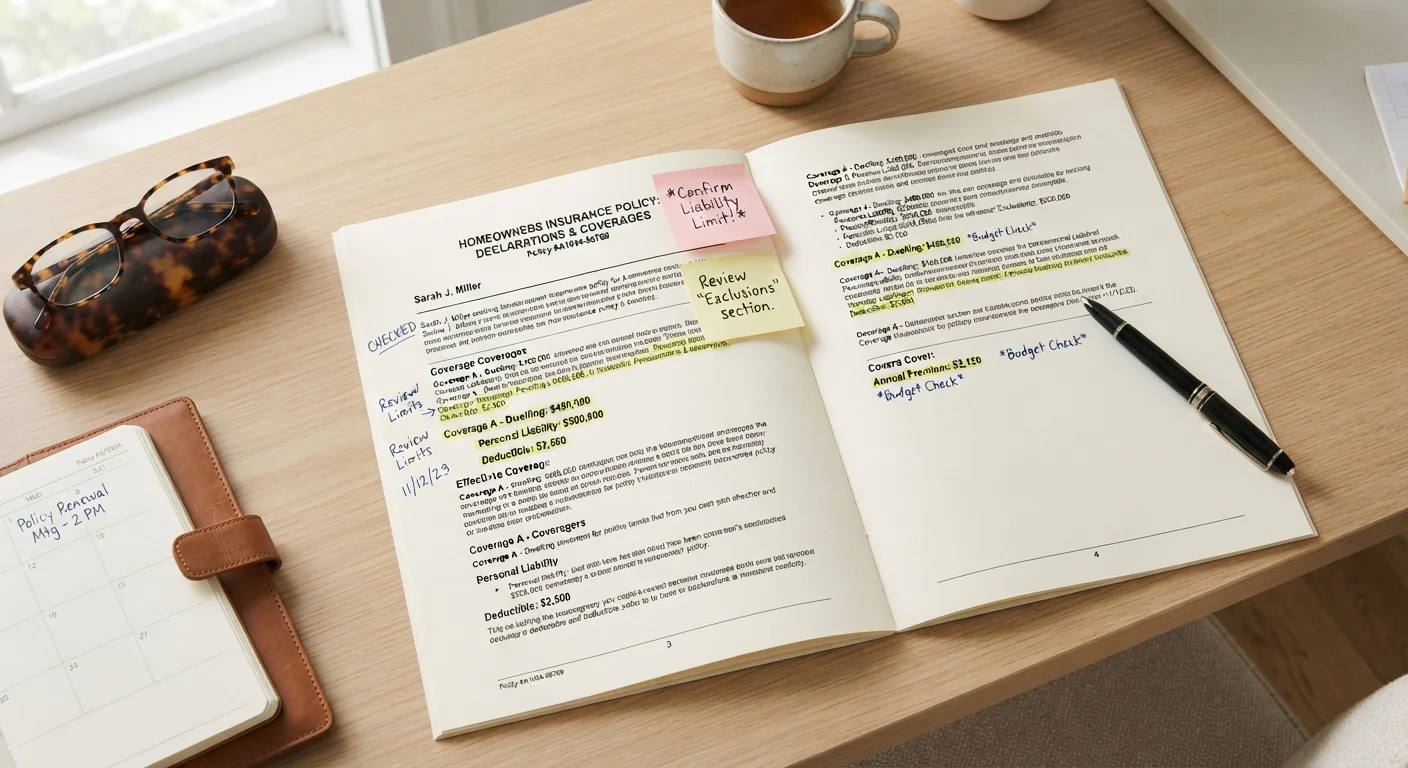
This checklist is designed to be used before you sign any new policy or renew an existing one. Work through it alongside the actual policy documents, not just the summary sheet. If a question surfaces a term you don't recognize, that's the moment to ask your agent — not after a loss occurs.
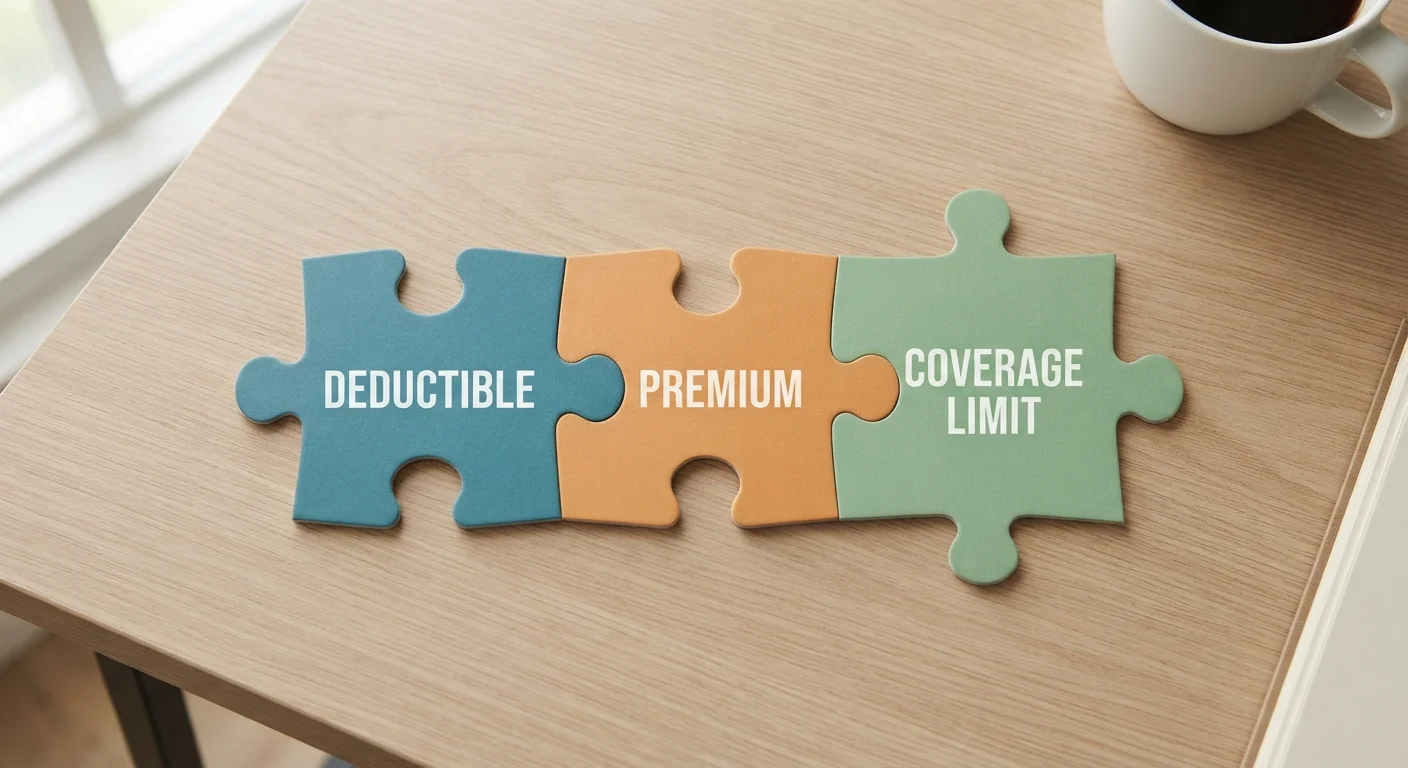
For a grounding refresher on the three numbers that shape every policy, see how deductibles, premiums, and coverage limits work together.
Coverage Basics
Exclusions and Limitations
Policy Terms and Renewal
Claims Process
Final Verification
Tools You'll Need
Before you start, gather the documents and resources below. Having them in front of you makes it easier to verify answers rather than rely on memory or marketing materials.
Full policy document (declarations page + complete policy form)
Contains the binding terms, exclusions, and limits you are agreeing to — not just the summary sheet.
Your state's insurance department website
Allows you to verify insurer licensing and look up consumer complaint histories.
Licensed insurance agent or broker
Can explain unfamiliar terms, compare coverage structures, and clarify policy language before you sign.
Home or personal property inventory list
Helps you check whether your coverage limits are adequate for what you actually own.
Key Risks to Keep in Mind
A few situations catch policyholders off guard more than others. The warning below highlights the most common — and most costly — oversight.
Don't Rely Only on the Summary Sheet
Insurers provide a declarations page and sometimes a brief coverage summary, but these documents are not the full contract. Important exclusions and sublimits often appear only in the full policy form. Always request and read the complete policy document before signing. If something is unclear, ask your agent to point to the specific policy language — verbal reassurances are not binding.
Watch for Coverage Gaps at Renewal
Insurers can change terms, raise deductibles, or reduce limits at renewal — sometimes without prominent notice. Before auto-renewing any policy, compare the new declarations page to your previous one line by line. A small change in wording can significantly affect what gets paid after a loss.
It also helps to understand that coverage decisions made at signing ripple forward. If you later need to file a claim, the terms you agreed to govern what gets paid. Our claims and coverage tips hub covers what happens after a loss — but the best preparation starts here.
For a plain-language breakdown of covered perils, exclusions, and endorsements — the three levers that define what a policy actually protects — see covered perils, exclusions, and endorsements explained.
This article provides general insurance information for educational purposes only. It is not personalized insurance, legal, or financial advice. Coverage terms, exclusions, and regulations vary by provider and state. Always read your actual policy documents and consult a licensed insurance agent or adviser before making coverage decisions.