
How Zero-Based Budgeting Actually Works
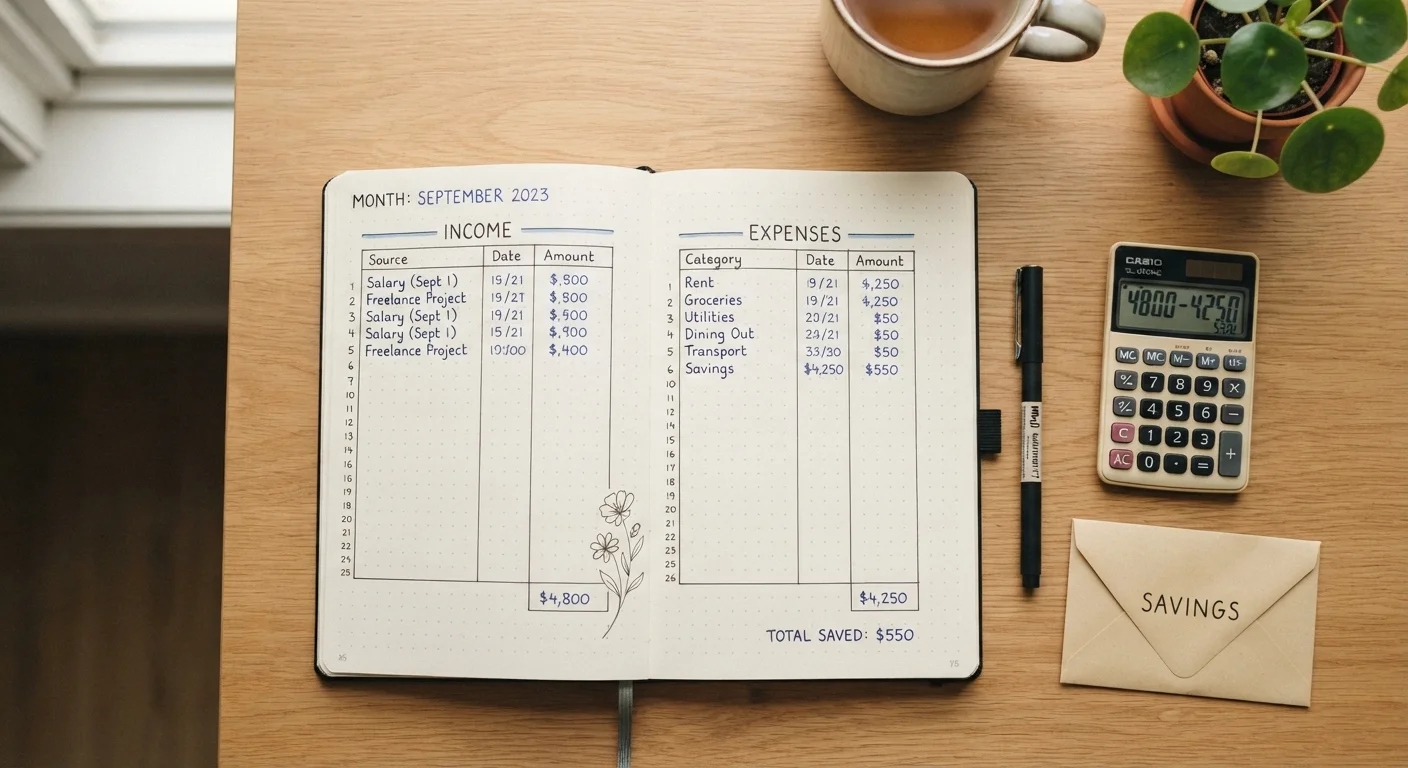
The mechanics of zero-based budgeting are straightforward: take your total monthly take-home income and distribute every dollar across named categories until the remaining balance is zero. Those categories span fixed expenses (rent, insurance, loan payments), variable necessities (groceries, utilities, gas), discretionary spending (restaurants, streaming, hobbies), and financial goals (emergency fund, retirement contributions, debt payoff).
The critical distinction is that savings and debt payments are not afterthoughts — they are budget line items treated with the same weight as rent. This structure prevents the common pattern where spending happens freely throughout the month and saving only occurs if something is left over.
If you're new to budgeting concepts more broadly, the foundational budgeting guide covers core vocabulary and first steps before you dive into a specific method.
Use Last Month's Statements as Your Starting Point
Before building your first zero-based budget, pull 60–90 days of bank and credit card statements. Categorize actual transactions rather than estimating from memory — most people significantly underestimate discretionary spending. Real data produces a far more accurate first budget.
Building Your Zero-Based Budget: A Practical Walkthrough
Start with your actual take-home income — what hits your bank account after taxes and deductions, not your gross salary. If your income varies month to month, use a conservative estimate based on your lowest recent months.
- List all fixed expenses first. These are non-negotiable obligations with set amounts: rent or mortgage, car payment, minimum debt payments, insurance premiums.
- Estimate variable necessities. Look at two to three months of bank or credit card statements to find realistic averages for groceries, utilities, transportation, and healthcare costs.
- Assign savings and debt goals as categories. Decide how much goes toward your emergency fund, retirement, or extra debt payments before addressing discretionary spending. These are allocations, not aspirations.
- Distribute remaining income to discretionary categories. Entertainment, clothing, dining, personal care — give each a specific dollar amount rather than a vague allowance.
- Confirm the math reaches zero. Income minus all allocations should equal zero. If it's negative, trim discretionary categories or revisit variable estimates. If it's positive, direct the surplus to a savings or debt goal.
The monthly budget setup checklist provides a structured walkthrough to help you gather figures and finalize categories before the month begins.
65%
Americans living paycheck to paycheck
According to a 2023 LendingClub and PYMNTS report, approximately 65% of U.S. consumers reported living paycheck to paycheck, underscoring the need for intentional spending frameworks.
$400
Median unexpected expense Americans can't cover
Federal Reserve survey data has consistently shown that a substantial share of U.S. adults would struggle to cover a $400 emergency expense from savings alone, highlighting the importance of dedicated savings categories.
3x
More likely to feel in control of finances
Research from the National Endowment for Financial Education suggests people who maintain a written budget report significantly greater confidence in their ability to manage money compared to those without one.
Who Benefits Most — and Where ZBB Has Limits
Zero-based budgeting tends to deliver the strongest results for people with predictable, consistent income who feel their spending is unintentional or unclear. If you regularly reach the end of the month unsure where your money went, the category-level discipline of ZBB provides direct visibility and accountability.
It also works well for households actively paying down debt or building an emergency fund, because those goals must compete for the same dollars as discretionary spending — making trade-offs explicit rather than invisible.
ZBB is more demanding than methods like the 50/30/20 rule. It requires monthly rebuilding or review, category-by-category tracking, and willingness to make mid-month adjustments when spending diverges from the plan. For people who prefer a lighter-touch system, a percentage-based approach may be more sustainable. The budgeting methods comparison lays out the trade-offs across the most common frameworks.
For households with very tight margins, ZBB can surface uncomfortable realities — but that visibility is often exactly what's needed. The tight-income budgeting guide explores strategies designed for households with little room for error.
Making the Method Stick Over Time
The first month of zero-based budgeting is rarely perfect — estimates are off, forgotten expenses appear, and categories need reshaping. That's expected. The goal in month one is to establish a working structure, not achieve flawless execution.
By month three, most people have a category structure that closely reflects their real life. At that point, ZBB shifts from setup work to monthly calibration: review what happened last month, adjust allocations for upcoming irregular expenses (annual subscriptions, seasonal bills), and reconfirm that goals are still funded.
Connecting your budget to broader financial goals amplifies its impact. Once spending is intentional, surplus dollars can be directed toward saving and debt reduction with a clear strategy behind each choice. If building a savings habit is new territory, the beginner's savings guide explains how to start small and automate consistency.
“A budget is telling your money where to go instead of wondering where it went.”
— Dave Ramsey, Personal finance author and radio host
This article is for general informational and educational purposes only and does not constitute personalized financial advice. Consult a qualified financial professional for guidance specific to your situation.