What Each Approach Actually Does
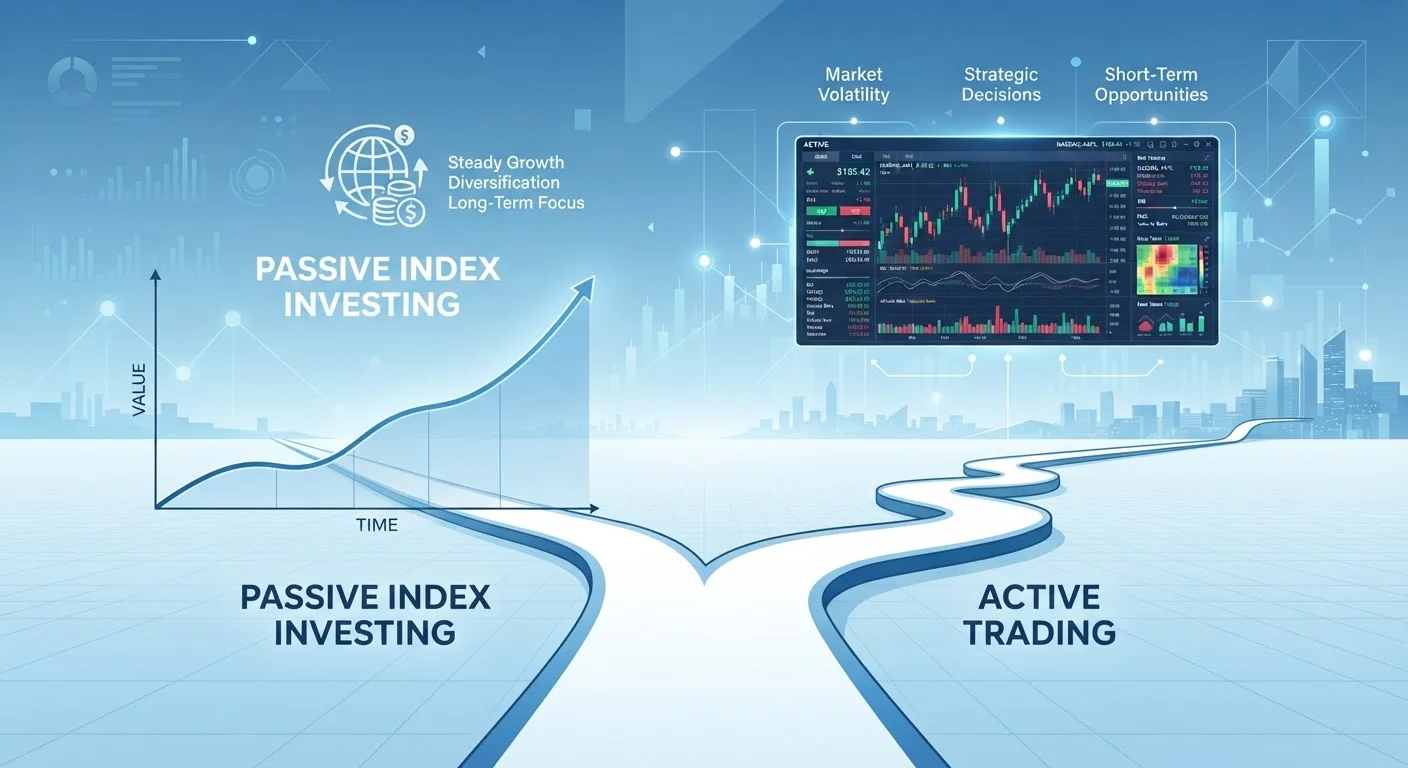
Understanding the difference starts with the underlying philosophy. An index fund is designed to replicate the performance of a specific market benchmark — such as the S&P 500 or the Bloomberg U.S. Aggregate Bond Index. It holds the same securities as that benchmark in roughly the same proportions, trading only when the index itself changes. No manager is trying to beat the market; the goal is simply to match it.
An actively managed fund works differently. A team of professional analysts and portfolio managers researches securities, tries to identify those they believe are undervalued or well-positioned for growth, and constructs a portfolio designed to outperform a benchmark. Decisions about what to buy, hold, or sell are made continuously based on research, economic forecasts, and manager judgment.
Before diving deeper, it helps to understand the asset classes these funds invest in. Both index and active funds can hold stocks, bonds, or a mix. Learn how stocks, bonds, and cash work together as foundational building blocks before choosing a fund strategy.
The Cost Difference — and Why It Matters
Cost is one of the starkest differences between these two approaches. Index funds typically carry very low expense ratios — the annual fee expressed as a percentage of your investment — because there is no research team to pay and trading activity is minimal. Many broad-market index funds carry expense ratios well under 0.10% annually.
Actively managed funds, by contrast, must cover the cost of research staff, higher trading volumes, and manager compensation. Average expense ratios for active equity funds are typically several times higher than comparable index funds, though they vary widely.
~85%
Active large-cap funds underperforming S&P 500
According to S&P SPIVA data, approximately 85% of actively managed U.S. large-cap equity funds underperformed the S&P 500 over a 15-year period.
0.03%–1.0%+
Expense ratio range across fund types
Broad-market index funds can carry expense ratios as low as 0.03%, while many actively managed equity funds charge 1% or more annually.
$40,000+
Potential fee drag over 30 years
On a $100,000 portfolio earning 7% annually, a 1% fee difference can cost more than $40,000 in foregone growth over 30 years, based on standard compound-interest modeling.
Why does this matter? Because fees are deducted from returns every year, compounding in reverse. A seemingly small difference of 0.80% annually can translate to tens of thousands of dollars in lost growth over a 30-year investment horizon, depending on portfolio size. Expense ratios deserve close attention from any investor evaluating fund options.
What the Performance Evidence Shows
The performance debate is where this comparison gets particularly pointed. Large-scale analyses — including the S&P SPIVA (S&P Indices Versus Active) scorecards, which track active fund performance against benchmarks over rolling periods — have consistently found that the majority of actively managed funds underperform their benchmark index over periods of 10 to 15 years, after accounting for fees.
This doesn't mean active management never works. Some managers do outperform — but identifying them in advance is difficult, and past outperformance is not a reliable predictor of future results. Markets in the United States are broadly considered efficient, meaning prices already reflect most publicly available information, which limits the consistent edge any manager can sustain.
| Criterion | Index Funds | Actively Managed Funds |
|---|---|---|
| Management style | Passive — tracks a benchmark | Active — manager selects securities |
| Typical expense ratio | Very low (often under 0.10%) | Higher (often 0.50%–1.00%+) |
| Long-term benchmark performance | Matches benchmark by design | Majority underperform after fees |
| Trading frequency | Low — only when index changes | High — based on manager decisions |
| Tax efficiency | Generally higher | Generally lower due to more trading |
| Flexibility | Follows index rigidly | Can adapt to market conditions |
That said, market volatility can test even index investors' resolve. Historical patterns around market volatility suggest that staying invested through downturns has generally been more rewarding than reacting to short-term swings — a principle that applies regardless of which fund type you choose.
Active Funds in Less Efficient Markets
The case for active management is generally stronger in markets where information is less uniformly available — such as certain emerging markets, small-cap stocks, or specialized sectors. In these areas, skilled research may provide a more meaningful edge than in large, heavily analyzed U.S. equity markets. Even so, there is no guarantee of outperformance, and higher fees remain a structural hurdle.
Choosing What's Right for You
Neither index funds nor actively managed funds are the right answer for every investor. Your decision should factor in your investment timeline, your tolerance for costs, and whether you believe a particular manager or market segment offers a genuine advantage worth paying for.
Many investors use a combination: a core portfolio of low-cost index funds for broad market exposure, supplemented by a smaller allocation to active strategies in markets where inefficiencies may be more exploitable — such as emerging markets or small-cap equities. This is sometimes called a core-satellite approach.
If you're new to investing and find the options overwhelming, you're not alone. Common investing myths keep many people from getting started at all — exploring those can help you separate fact from folklore as you build confidence.
This article is for general informational and educational purposes only and does not constitute personalised financial, investment, tax, or legal advice. Past performance does not guarantee future results. Please consult a qualified, licensed financial adviser before making investment decisions based on your individual circumstances.