What Expense Ratios Actually Are — and How They Work
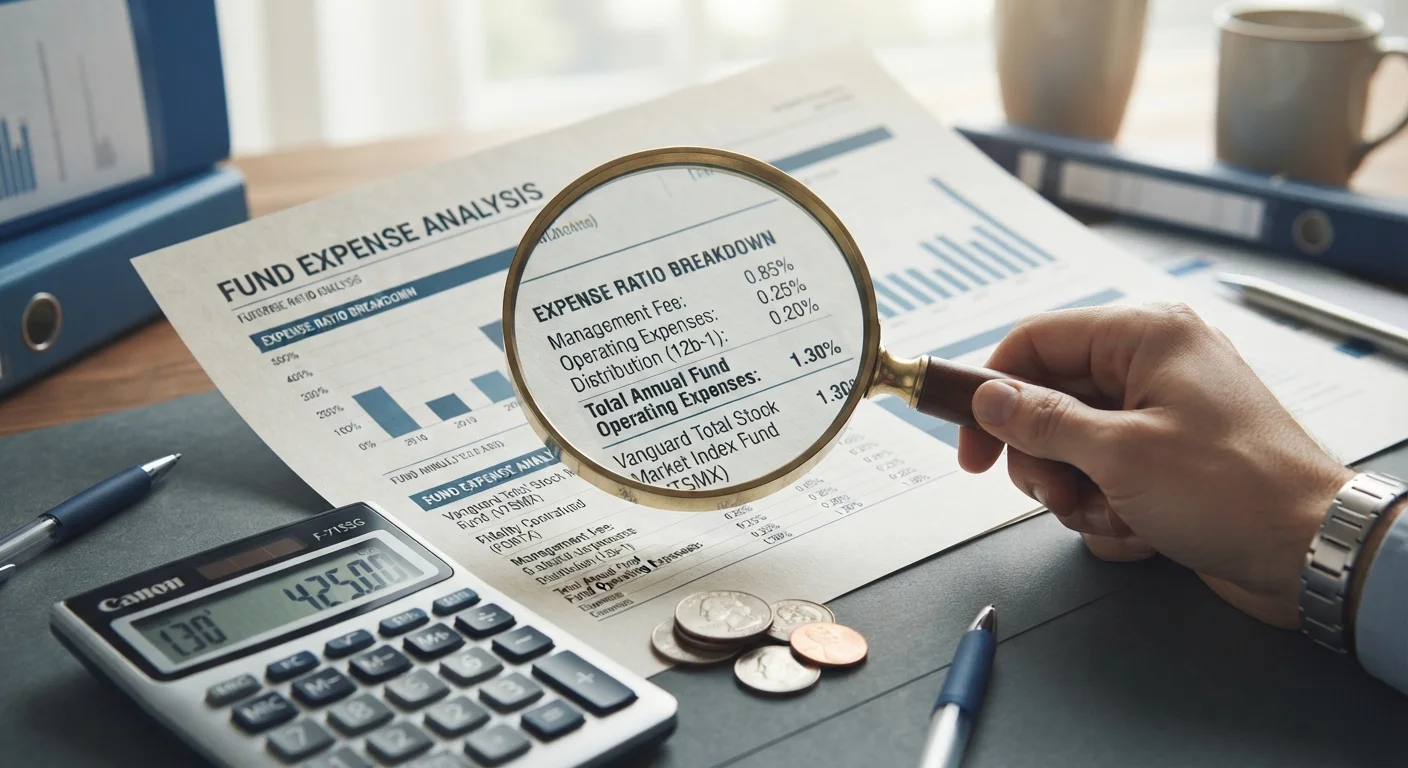
When you invest in a mutual fund or ETF, a team of professionals (or an automated system, in the case of index funds) manages the pooled money on your behalf. Running that operation costs money. The expense ratio is how the fund recoups those costs — automatically, annually, and silently.
Rather than sending you an invoice, the fund simply deducts the fee from its total assets before calculating your daily share value. If a fund returns 7% in a given year but carries a 1% expense ratio, your actual return is closer to 6%. The math is straightforward; the psychological trap is that you never write a check, so the cost rarely feels real.
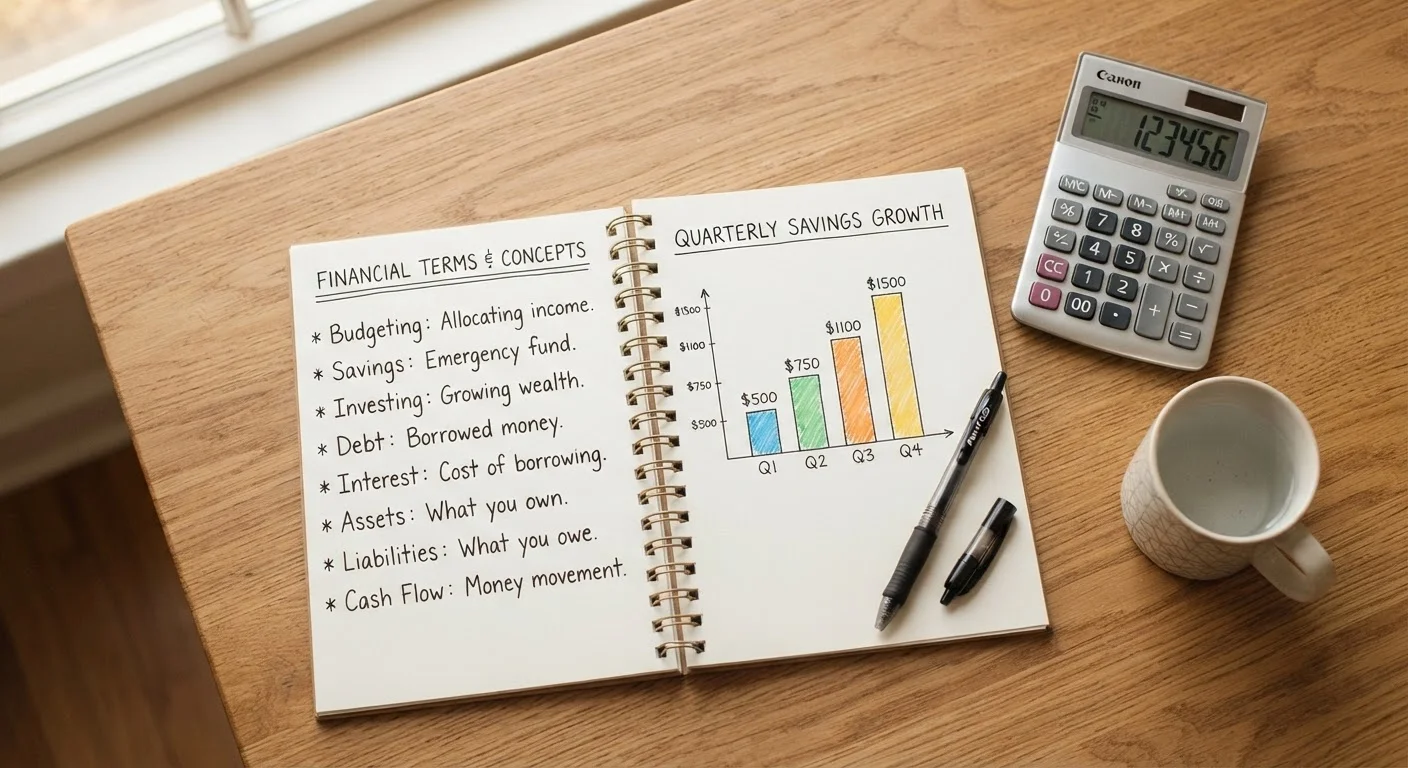
Understanding expense ratios is a natural next step after mastering basic investing vocabulary. If you are still building that foundation, our investing terms guide for beginners covers the core concepts in plain language.
0.05%
Average expense ratio for broad U.S. index ETFs
According to Morningstar's annual fund fee research, asset-weighted average fees on passive U.S. equity funds have declined sharply over the past two decades.
~0.66%
Average expense ratio for actively managed U.S. equity funds
Morningstar's fee research indicates actively managed funds continue to carry significantly higher costs than passive alternatives on an asset-weighted basis.
$100,000+
Potential long-term cost of a 1% fee difference
Financial planning illustrations consistently show that a 1% annual fee gap on a mid-sized portfolio over 30 years can result in a six-figure difference in ending wealth, assuming comparable gross returns.
The Compounding Problem: Why Small Fees Have Large Consequences
The insidious nature of fund fees lies in compounding — the same force that grows your wealth also amplifies the damage done by costs. Every dollar paid in fees is a dollar that no longer earns future returns. Over 10 or 20 years, that lost compounding snowballs.
Consider two hypothetical investors, each starting with $50,000 and earning identical gross returns of 7% annually over 30 years. One chooses a fund with a 0.10% expense ratio; the other selects a fund charging 1.00%. The low-cost investor ends with substantially more — the fee difference alone, compounded over three decades, can represent a six-figure gap in final portfolio value. Past growth assumptions do not guarantee future results, but the mathematical relationship between fees and outcomes is not speculative: it is arithmetic.
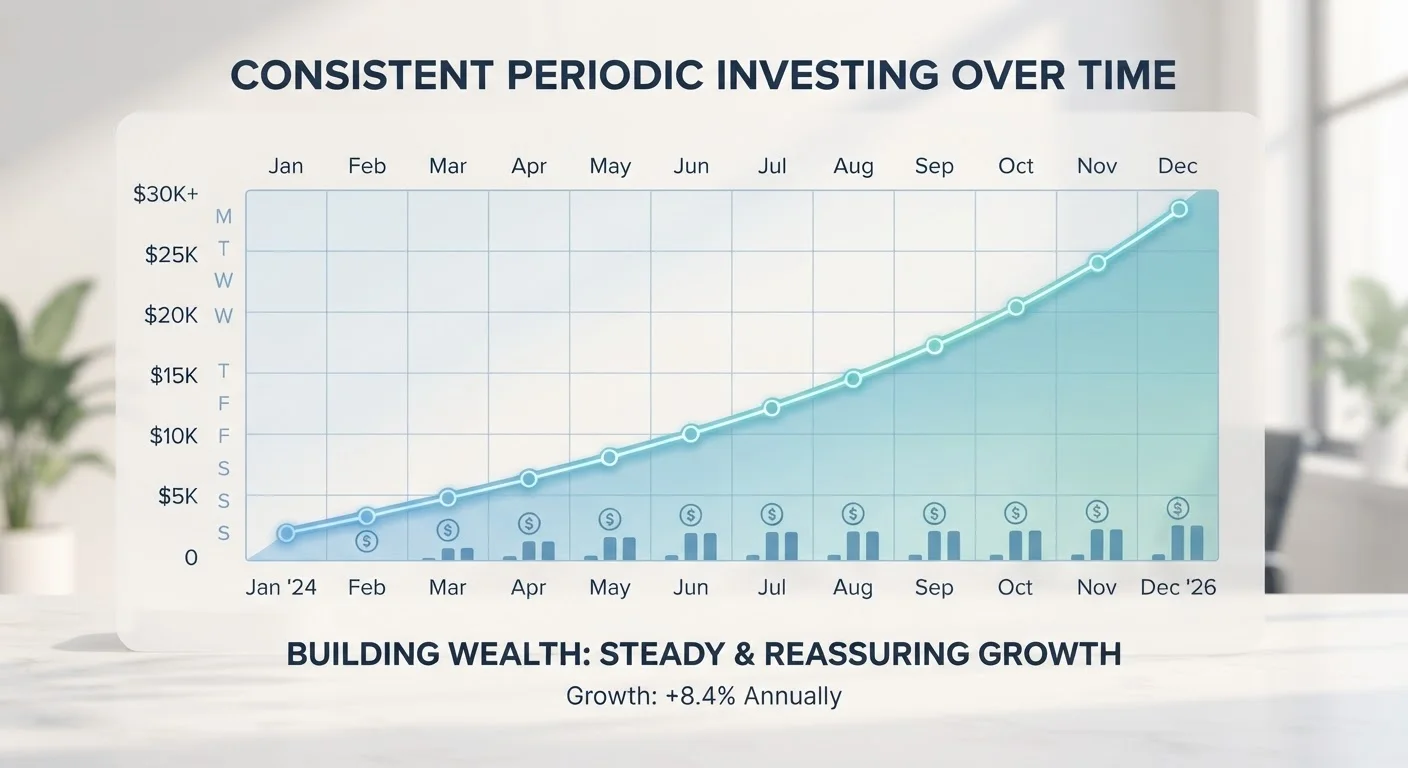
This is why fee awareness belongs alongside other consistent investing habits. Strategies like dollar-cost averaging help you build wealth systematically — but only if costs are not quietly eroding your progress.
Use the Expense Ratio as a Starting Filter
When evaluating any fund, make the expense ratio one of the first data points you check — not an afterthought. For funds tracking the same or similar benchmarks, a lower expense ratio is almost always preferable, all else being equal. Keeping costs low is one of the few aspects of investing that is entirely within your control.
Active vs. Passive Funds: A Fee Comparison
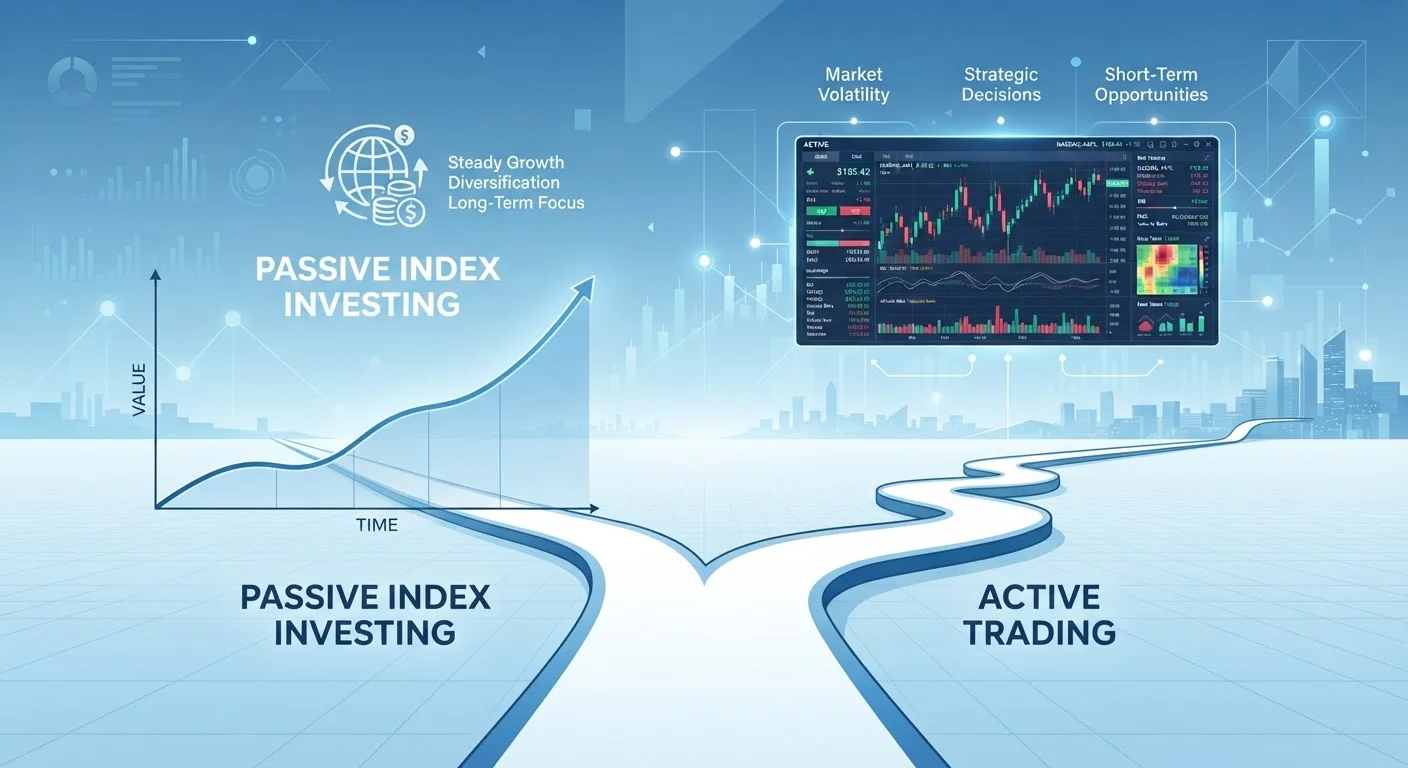
Expense ratios vary widely depending on how a fund is managed. Actively managed funds employ analysts and portfolio managers who research, select, and trade securities in an attempt to beat a benchmark index. That human effort comes at a cost, and it is passed directly to investors through higher expense ratios — often ranging from 0.50% to over 1.00% annually.
Passively managed index funds, by contrast, simply replicate a market index — such as the S&P 500 — with minimal trading and no active security selection. Because operational costs are far lower, expense ratios on broad index funds can fall below 0.05%. Our explainer on index funds versus actively managed funds explores the performance and cost tradeoffs in detail.
It is worth noting that actively managed funds do not reliably outperform their lower-cost passive counterparts after fees are accounted for. This is not a universal truth for every fund in every period, but it is the pattern observed across broad research over long time horizons.
“In investing, you get what you don't pay for. The less you pay, the more you keep.”
— John C. Bogle, Founder of Vanguard and pioneer of index fund investing
How to Factor Fees Into Your Investment Decisions
Comparing expense ratios should be a standard step before committing to any fund. Here is a practical framework:
- Locate the expense ratio in the fund's prospectus or on its fact sheet — it is a required disclosure for all registered funds.
- Compare like with like — benchmark expense ratios against similar funds in the same category. A 0.75% ratio on an international small-cap fund may be more reasonable than the same ratio on a domestic large-cap index fund.
- Account for additional costs — sales loads, redemption fees, and account fees are not included in the expense ratio. Ask explicitly whether any apply.
- Weigh the total cost against the investment case — a modestly higher expense ratio may be justifiable for genuinely differentiated access to an asset class, but is rarely justified by the promise of outperformance alone.
Thinking carefully about fund fees is part of broader financial awareness. Just as overlooked recurring costs derail household budgets, recurring investment fees quietly erode portfolios — both reward attention.
This article is for general informational and educational purposes only and does not constitute personalized financial, investment, or tax advice. Consult a qualified, licensed financial professional before making investment decisions based on your individual circumstances.