
What a Personal Loan for Debt Payoff Actually Does
When people talk about using a personal loan to pay off debt, they're describing a form of debt consolidation — taking out a new loan to pay off one or more existing balances, then repaying the single new loan over a fixed term. The appeal is straightforward: potentially lower interest, one monthly payment instead of several, and a defined end date.
What it doesn't do is reduce the amount owed. If you carry $12,000 in credit card debt and take out a $12,000 personal loan, you still owe $12,000. The structure changes; the debt doesn't disappear. For a broader look at how this strategy fits into debt management, see how debt consolidation works and when it helps.
Can lower your effective interest rate significantly
Borrowers who qualify for a personal loan at a lower APR than their existing credit card rates will pay less interest over the loan's life, assuming they don't add new debt.
Simplifies repayment into one fixed payment
Consolidating several accounts into one loan reduces the number of due dates, minimum payments, and lenders to manage each month.
Provides a defined payoff timeline
Unlike revolving credit card debt — which can stretch indefinitely — a personal loan has a set term (commonly 24 to 60 months), giving borrowers a concrete finish line.
Fixed rate protects against future rate increases
Most personal loans carry a fixed interest rate, so your payment stays predictable even if market rates rise — a contrast to variable-rate credit cards.
May improve credit utilization ratio
Paying off revolving credit card balances with an installment loan can lower your credit utilization percentage, which is a significant factor in most credit scoring models.
The Real Costs and Risks to Weigh
The case for a personal loan is rate-dependent — it only makes financial sense if the loan's annual percentage rate (APR) is lower than what you're currently paying across your debts. Borrowers with strong credit histories tend to qualify for competitive rates; those with fair or poor credit may be offered rates that rival or exceed their existing balances.
Fees matter too. Many personal loans carry origination fees — typically 1% to 8% of the loan amount — deducted upfront or rolled into the loan balance. A 5% origination fee on a $10,000 loan adds $500 in cost before you make a single payment. Read the full loan agreement carefully, including prepayment penalty clauses.
There's also a behavioral risk worth naming plainly: once existing credit card balances are paid off, some borrowers resume charging on those cards. That leaves them repaying the personal loan and rebuilding new card debt simultaneously — a worse position than before. This isn't a reason to avoid the strategy, but it's a reason to be honest with yourself about spending patterns first.
Rate depends heavily on your credit profile
Borrowers with fair or poor credit may be offered high rates that offer little or no improvement over existing balances, undermining the entire premise of the strategy.
Origination fees add to the total cost
Lenders commonly charge origination fees of 1%–8% of the loan amount, which increases the effective cost and can eat into projected savings.
Risk of accumulating new credit card debt
Once cards are paid off, they have available credit again. Without a change in spending behavior, borrowers can end up carrying both the personal loan and new card balances.
Fixed payments reduce financial flexibility
Unlike minimum payments on a credit card, a personal loan requires a set monthly payment regardless of income fluctuations, which can strain cash flow during difficult months.
Does not address root causes of debt
If overspending or insufficient income drove the original debt, restructuring it with a loan doesn't solve those underlying issues and may delay confronting them.
Questions Worth Asking Before You Apply
Before submitting an application, work through a few concrete questions:
- What rate will I actually receive? Advertised rates are usually reserved for borrowers with excellent credit. Use pre-qualification tools (which typically use a soft credit pull) to get a realistic estimate without affecting your score.
- Does the math work after fees? Calculate the total repayment cost — principal plus interest plus origination fee — and compare it to what you'd pay staying on your current repayment path.
- Can I afford the fixed monthly payment? Personal loans have set monthly payments. If cash flow is tight, a higher fixed payment could create new financial stress.
- Are there alternatives I haven't fully explored? A 0% APR balance transfer card, a structured payoff strategy like the debt avalanche, or negotiating directly with creditors may accomplish similar goals with less complexity.
Pre-Qualification vs. Formal Application
Many lenders offer a pre-qualification process that uses a soft credit inquiry, meaning it won't affect your credit score. This lets you see an estimated rate and loan terms before committing to a full application. A formal application triggers a hard inquiry, which can temporarily lower your score by a few points. It's worth using pre-qualification to compare realistic offers before applying formally.
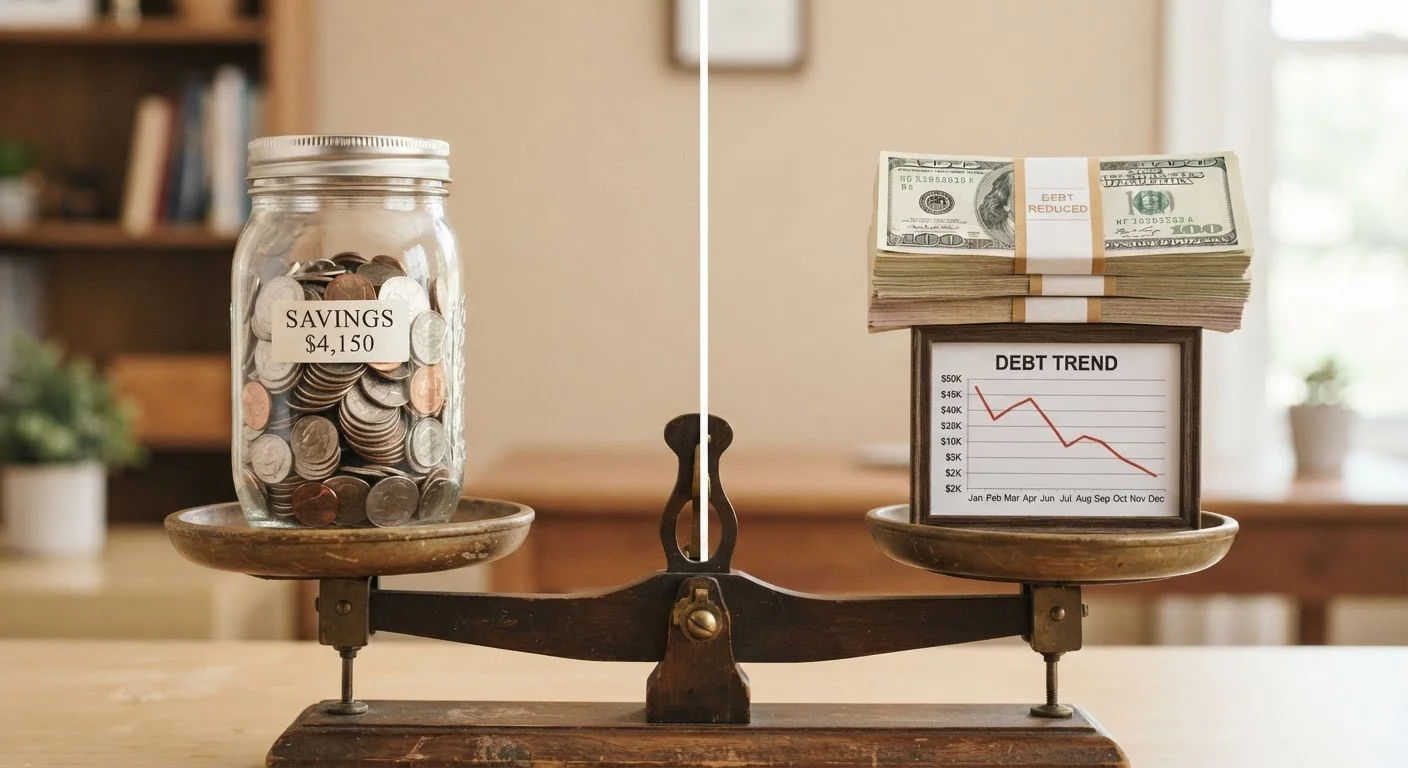
Thinking through debt reduction alongside your savings goals is also worth doing — how to balance saving and debt repayment covers the key tradeoffs.
This article is for general informational purposes only and does not constitute personalized financial or legal advice. Consult a qualified financial professional before making decisions about your specific situation.