What Each Option Actually Means
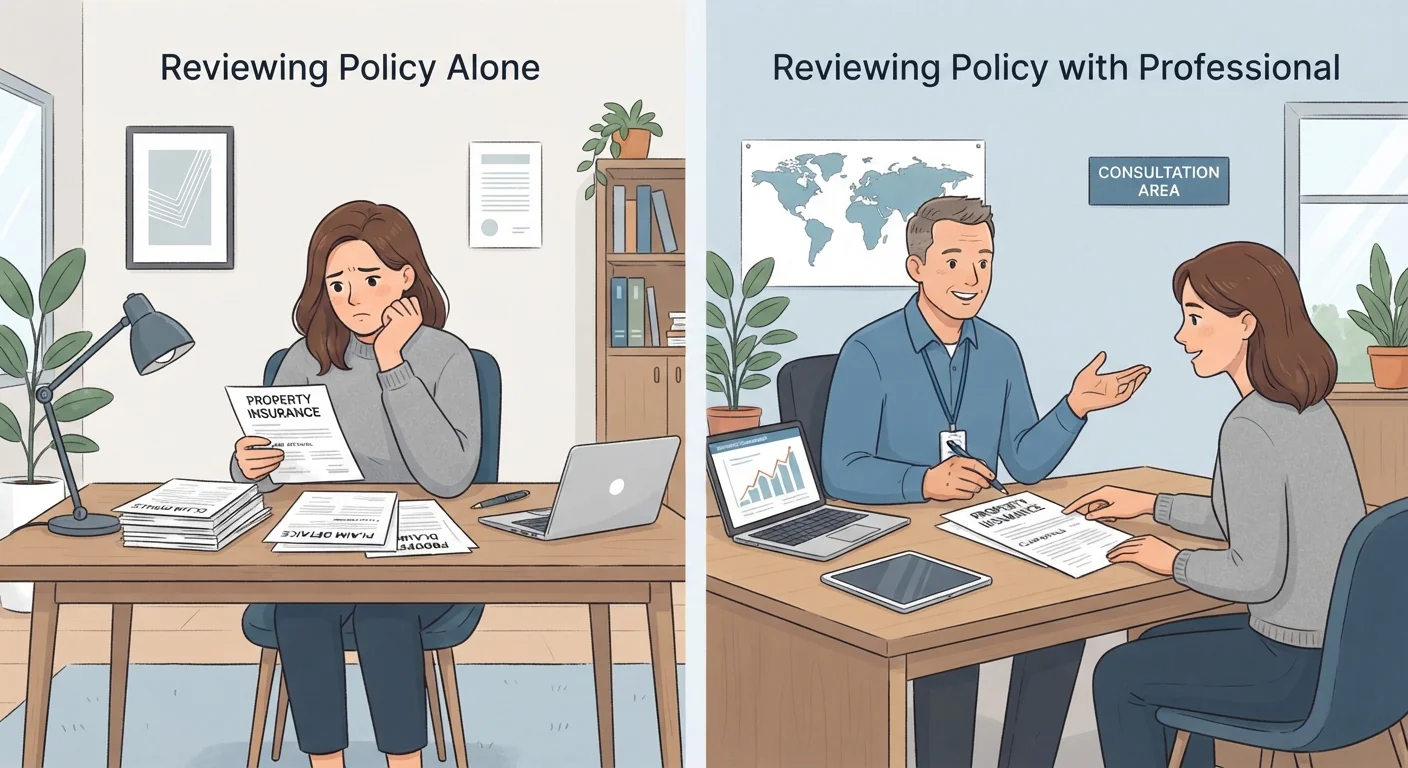
When you file a claim, your insurer sends their own adjuster to assess the damage and estimate what they owe you. That adjuster works for the insurance company. You have the right to either accept that process as-is — filing and managing the claim yourself — or to hire your own representative, called a public adjuster, to advocate for your interests throughout the process.
Public adjusters are licensed professionals regulated at the state level. They review your policy, document your loss independently, and negotiate with the insurer on your behalf. They are not affiliated with your insurance company. Their fee is typically a percentage of your final settlement — often ranging from 5% to 15%, though rates and regulations vary by state. Before hiring one, confirm they hold a valid license in your state and clarify the fee structure in writing.
If you've never filed before, our first-timer's roadmap to the claims process walks through every stage from first notice to final payment.
| Criterion | Filing Yourself | Using a Public Adjuster |
|---|---|---|
| Cost | No professional fee | Typically 5–15% of settlement |
| Who represents you | You manage it directly | Licensed adjuster advocates for you |
| Time commitment | High — you handle all paperwork | Lower — adjuster manages documentation |
| Best claim size | Smaller, straightforward losses | Large, complex, or disputed claims |
| Policy expertise required | You must interpret coverage yourself | Adjuster interprets policy on your behalf |
| Negotiation leverage | Limited to your own knowledge | Professional negotiator with industry experience |
| Regulated by state | N/A | Yes — must hold a state license |
When Filing Yourself Works Well
Managing your own claim is a reasonable choice in many situations. If the damage is limited — a broken window, a minor roof repair, or a small water leak — and your insurer's estimate aligns with your own assessment of the loss, the process is often manageable without professional help.
The keys to success are thorough documentation and careful communication. Photograph everything before any cleanup or repair begins, keep records of all conversations with your insurer, and respond to requests promptly. How you communicate with your insurer matters more than many policyholders realize — recorded statements can affect how your claim is evaluated.
It's also worth pausing before you file at all. In some situations, filing a claim may not be the right move, particularly when the loss is close to your deductible or when a claim history could affect your renewability.
5%–15%
Typical public adjuster fee range
Public adjuster fees are generally calculated as a percentage of the final settlement amount and are regulated differently in each state.
~1 in 20
Homeowners who file a claim annually
According to the Insurance Information Institute, roughly 5–6% of homeowners file a claim in any given year, with weather-related losses being the most common driver.
When a Public Adjuster May Be Worth Considering
Public adjusters tend to deliver the most value in situations where the complexity of the loss, the size of the potential settlement, or the insurer's initial offer creates a meaningful gap worth negotiating. Large structural losses, extensive water or fire damage, business interruption claims, and situations involving multiple coverage categories are common examples.
If your insurer's settlement offer feels too low, you don't have to accept it immediately. You have options at each stage for disputing a low offer, including internal appeals, appraisal clauses, and state insurance regulators — with or without a public adjuster involved.
One caution: be wary of unsolicited public adjusters who show up at your door immediately after a disaster. Some are legitimate professionals, but high-pressure solicitation after major weather events is a known fraud risk. Verify credentials independently and take time to review any contract before signing.
This article is for general informational purposes only and does not constitute legal, financial, or insurance advice. Coverage terms, adjuster regulations, and fee structures vary by state and by insurer. Consult a licensed insurance professional for guidance specific to your situation and policy.