What Actually Happens When You File a Claim
When a covered loss occurs — a fender bender, a burst pipe, a medical procedure — the claim process follows a predictable sequence. Your insurer assesses the damage or cost, determines the covered amount, and then subtracts your deductible from that figure. The remainder is what the insurer pays you (or your provider).
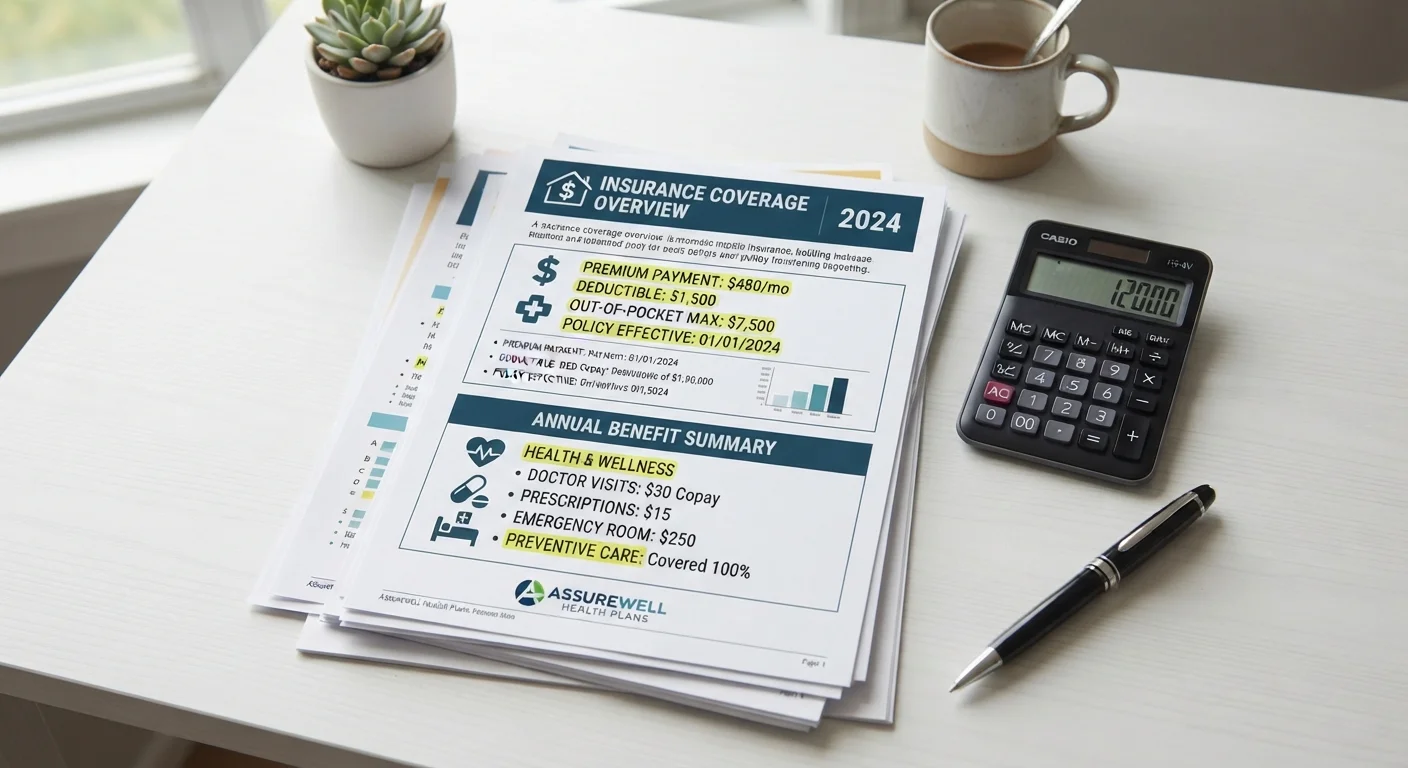
That sequence matters because the deductible you selected months or years ago, possibly with only your premium in mind, now has immediate financial consequences. If your auto policy carries a $1,500 collision deductible and a repair estimate comes in at $2,200, you'll write a check for $1,500 before any insurance money moves. If the repair comes in at $1,400 — below your deductible — your insurer owes you nothing for that claim.
Understanding this mechanic is foundational. For a broader look at how premiums, deductibles, and coverage limits interact as a system, see how deductibles, premiums, and coverage limits work together.
$1,763
Average annual deductible for single health coverage
According to the Kaiser Family Foundation's 2023 Employer Health Benefits Survey, the average deductible for single coverage in employer-sponsored plans was approximately $1,763.
43%
Adults who couldn't cover a $1,000 unexpected expense
A 2023 Bankrate survey found that roughly 43% of U.S. adults said they could not pay a $1,000 emergency expense from savings — highlighting the real risk of high deductibles for many households.
The Tradeoff You Made — and What It Means Now
When you enrolled, you likely chose between a lower deductible (higher premium) or a higher deductible (lower premium). That tradeoff doesn't disappear after signup — it follows you into every claim situation.
A high deductible functions as a form of self-insurance. You're agreeing to absorb a larger initial loss in exchange for paying less each month. That strategy works well when losses are rare and your savings can cover the gap. It becomes a problem when an unexpected event wipes out more than you kept in reserve.
Match Your Deductible to Your Emergency Fund
A practical rule of thumb: your deductible should not exceed the amount you could realistically pay within 30 days without financial strain. If your emergency savings are limited, a lower deductible — even at a higher premium — may reduce your financial risk when a claim actually happens. Review your deductible alongside your savings at each policy renewal.
A low deductible shifts more financial exposure to the insurer from the start, which is why premiums are higher. For people who know they'll use their coverage regularly — such as those managing ongoing health conditions — a lower deductible can produce better overall value even at a higher monthly cost.
Neither approach is universally correct. What matters is whether the amount you chose is one you can realistically pay without significant hardship if a loss happens tomorrow.
Per-Claim vs. Annual Deductibles — and Why It Matters
Not all deductibles work the same way. Property and auto insurance typically apply a deductible per occurrence — meaning every separate claim triggers a new deductible. Health insurance usually uses an annual deductible that accumulates across claims within a plan year, resetting each January (or on your policy anniversary).
This distinction matters when multiple losses or expenses occur in a short period. Under a per-claim structure, two separate auto incidents in one year mean you pay the deductible twice. Under an annual health insurance deductible, multiple medical visits in the same year all count toward one shared threshold.
Health vs. Property Insurance: Different Rules
Health insurance deductibles accumulate across multiple claims within a single plan year and reset annually. Property and auto deductibles, by contrast, typically apply per incident — each new claim triggers a fresh deductible. Always confirm which structure your specific policy uses, because the financial impact of multiple claims in one year can differ significantly between these models.
Some homeowners policies also include separate, higher deductibles for specific perils — most commonly hurricanes, wind, or hail — often expressed as a percentage of the insured home value rather than a flat dollar amount. A 2% wind deductible on a $350,000 home means $7,000 out of pocket before coverage applies. If your policy is in a storm-prone area, it's worth confirming whether a separate peril deductible applies.
For a clear breakdown of all the key terms on your policy, see how deductibles, premiums, and copays are defined side by side.
When Filing May Not Be Worth It
One practical consequence of understanding your deductible is knowing when filing a claim may not serve your interests. If the cost of a loss is only slightly above your deductible — say, $1,600 in damage against a $1,200 deductible — your net insurance payout is just $400. Filing for that amount could affect your claims history and, in some cases, your renewal eligibility or future premium.
This doesn't mean you should never file small claims. It means you should weigh the expected payout against the potential downstream effects before you call your insurer. Situations where filing a claim may not be the right move walks through these scenarios in more detail.
It's also worth remembering that your deductible is separate from whether a claim is covered at all. A claim can still be denied for reasons unrelated to your deductible amount — exclusions, policy conditions, or documentation issues. Why claims get denied and what the fine print usually says can help you avoid those surprises.
This article provides general insurance education and is not personalized financial or insurance advice. Coverage terms, deductible structures, and regulations vary by policy and state. Read your policy documents carefully and consult a licensed insurance agent or adviser for guidance specific to your situation.