
Why Insurance Language Is So Hard to Follow
Insurance policies are legal contracts, and they read like it. Terms like subrogation, indemnification, and named perils appear throughout standard policy documents — without any plain-language explanation. That gap between what policies say and what consumers understand has real consequences: people file claims incorrectly, waive rights without knowing it, or buy coverage that doesn't match what they think they're getting.
This reference decodes the terms that most commonly trip up policyholders. It's intended as general educational information, not personalized insurance or legal advice. Coverage details, definitions, and regulations vary by insurer, policy, and state — always read your actual policy documents and consult a licensed insurance agent or adviser for guidance specific to your situation.
For a broader foundation, start with the basics of insurance vocabulary before diving into the more advanced terms below.
Subrogation
The legal right of an insurance company to pursue a third party that caused an insurance loss to the insured. After paying a claim, your insurer may seek reimbursement from the person or entity responsible for the damage.
Rider / Endorsement
An amendment to a standard insurance policy that adds, removes, or modifies coverage. Riders and endorsements are how insurers customize a base policy — for example, adding jewelry coverage to a homeowners policy.
Named Perils
A type of policy that only covers losses caused by events specifically listed in the policy document. If a cause of damage isn't named, it isn't covered.
Open Perils (All-Risk)
A broader type of coverage that pays for any cause of loss that is not explicitly excluded. Exclusions — not a list of covered events — define the limits of coverage.
Actual Cash Value (ACV)
The value of a damaged or stolen item after depreciation is applied. ACV reflects what the item is worth at the time of the loss, not what it would cost to replace it new.
Replacement Cost Value (RCV)
The amount it would cost to replace a damaged item with a new one of similar kind and quality, without a deduction for depreciation. RCV policies generally carry higher premiums than ACV policies.
Indemnification
The principle that insurance should restore you to your financial position before the loss — no more, no less. It prevents policyholders from profiting from a claim.
Declarations Page
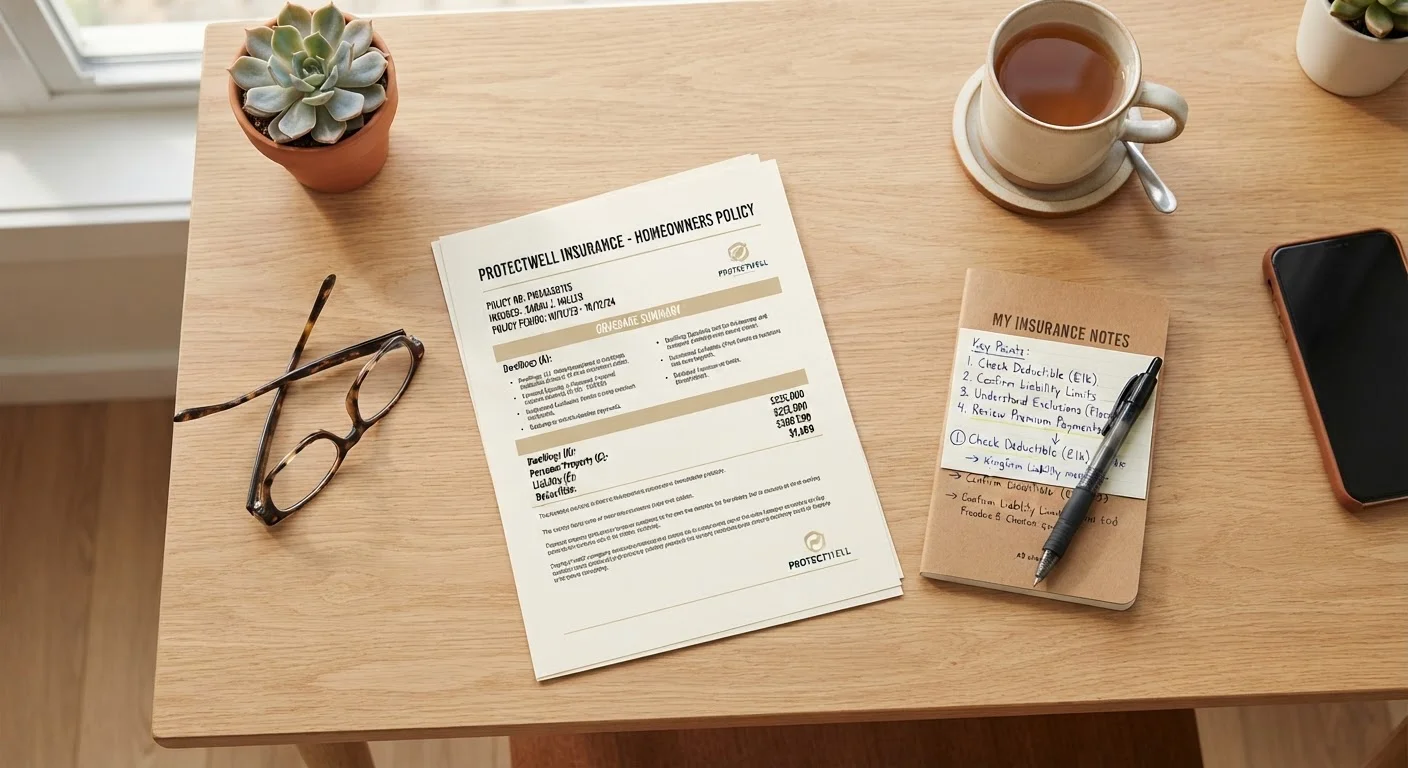
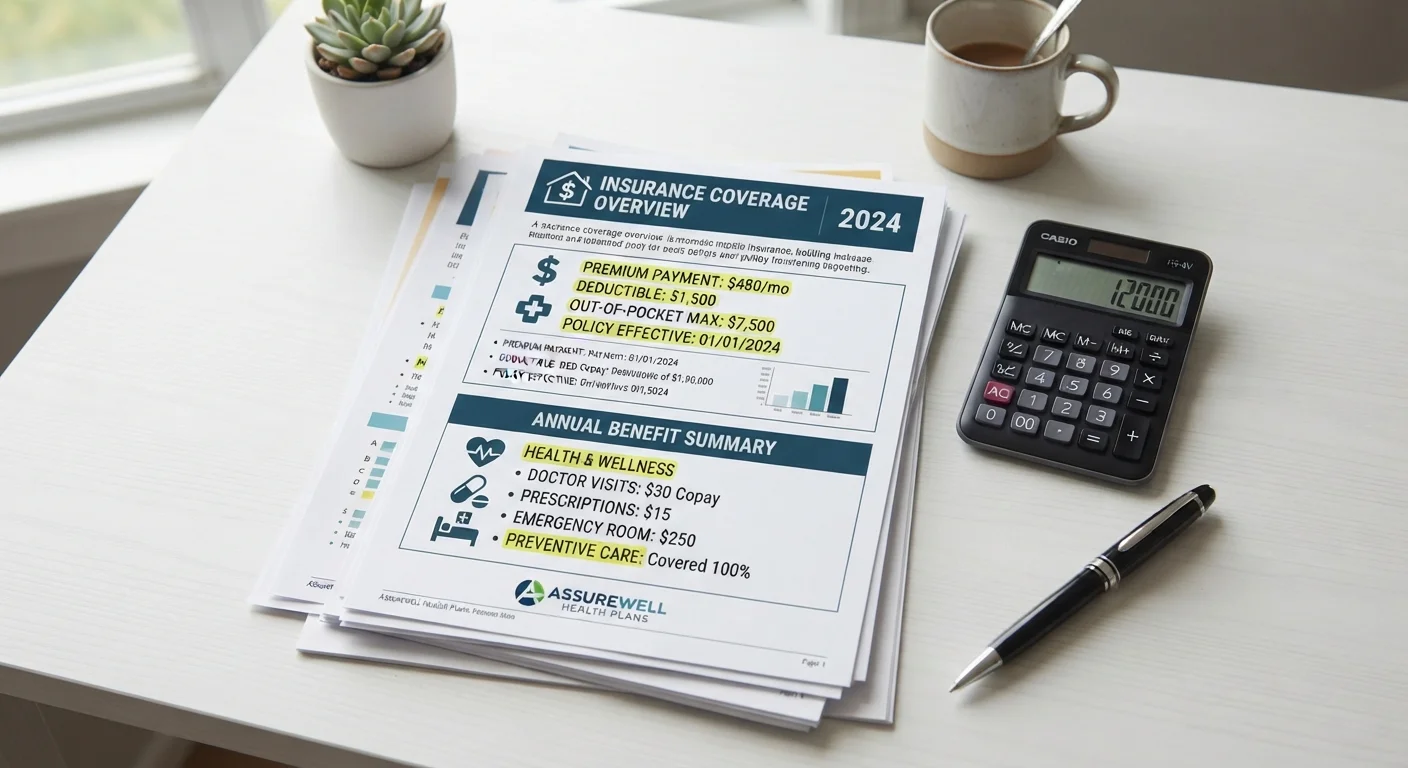
The summary page at the front of an insurance policy that lists the insured, covered property, coverage amounts, policy period, and premium. It's often the quickest way to confirm what a policy covers.
Liability Coverage
Coverage that pays for bodily injury or property damage you cause to others. It does not pay for your own injuries or damage to your own property.
Exclusion
A specific condition, cause of loss, or type of property that a policy does not cover. Exclusions are listed in the policy and are just as important to read as the coverage sections.
Underwriting
The process by which an insurer evaluates risk and decides whether to offer coverage and at what price. Your driving record, health history, or home's condition can all affect underwriting decisions.
Grace Period
A set number of days after a premium due date during which a policy remains in force even if payment hasn't been received. If payment isn't made before the grace period ends, the policy may lapse.
Key Terms and What They Actually Mean
The terms below go beyond common words like premium and deductible — though those trip people up too. If you want a focused explanation of how premiums, deductibles, and copays interact, see our article on what deductibles, premiums, and copays actually mean.
| Named Perils vs. Open Perils | Named perils covers only listed events; open perils covers everything except stated exclusions |
| ACV vs. Replacement Cost | ACV pays depreciated value; replacement cost pays what a new comparable item costs |
| What a Rider Does | Adds, removes, or modifies coverage in a base policy — not a separate policy |
| Declarations Page | The summary front page of any policy — lists coverage amounts, dates, and named insured |
| Grace Period Typical Range | Commonly 10–30 days depending on policy type and state regulations |
| Subrogation Trigger | Activates after insurer pays a claim caused by a third party's negligence |
One area where confusion is especially costly is the distinction between named perils and open perils coverage. Named perils policies only pay for losses caused by events specifically listed in the policy. Open perils policies (sometimes called all-risk) cover any cause of loss except those explicitly excluded. Homeowners often assume they have broader coverage than they do. Common misconceptions about what policies actually cover explores exactly this kind of gap.
Understanding your policy's structure — including what perils are covered and what endorsements you've added — can also prevent costly surprises at claim time. Our reference on covered perils, exclusions, and endorsements breaks down how these pieces fit together.
How These Terms Affect Your Coverage in Practice
Knowing a definition isn't always the same as knowing how a term affects you. Here are a few examples of where these terms show up in real policyholder situations:
- Subrogation: After your insurer pays your claim for a car accident caused by another driver, your insurer may pursue that driver's insurance company to recover what it paid. You generally shouldn't sign anything that releases the at-fault party from liability before checking with your insurer — doing so could jeopardize your claim.
- Riders and endorsements: Standard homeowners policies often exclude floods and earthquakes. A rider or endorsement can add specific coverage, but it changes your premium. Not all endorsements are available in all areas or from all insurers.
- Actual cash value vs. replacement cost: If a five-year-old television is stolen, an actual cash value policy pays what that TV is worth today (depreciated). A replacement cost policy pays what it costs to buy a comparable new one. The difference in payout can be significant.
These distinctions matter most when something goes wrong. Common things policyholders get wrong about their own coverage walks through the assumptions that most often lead to denied or reduced claims.
For broader coverage guidance across policy types, the Claims and Coverage Tips hub is a practical starting point.
This article is for general informational and educational purposes only and does not constitute personalized insurance, legal, or financial advice. Coverage terms, definitions, and regulations vary by insurer, policy type, and state. Always review your policy documents carefully and consult a licensed insurance professional for guidance specific to your needs.