
Why Policyholders Get Caught Off Guard
Insurance is one of those products most people buy and file away — sometimes literally. A policy can sit in a drawer for years before someone needs it, and by then, the assumptions they made when they signed up may not reflect what the document actually says. Coverage gaps aren't usually the result of bad faith from insurers; they're often the result of policyholders never verifying what they actually purchased.
This article walks through five of the most common misconceptions policyholders hold about their own coverage — and what the policies actually say. For a broader look at how these mistakes play out financially, see misconceptions that cost policyholders money.
Myth
My homeowners insurance covers flood damage from heavy rain or a nearby river overflowing.
Fact
Standard homeowners insurance policies almost universally exclude flood damage. Flood coverage requires a separate policy.
Flood is one of the most expensive and common misconceptions in property insurance. A standard homeowners policy covers many water-related losses — like a burst pipe — but flooding caused by external water sources is explicitly excluded. Separate flood insurance is available through the National Flood Insurance Program (NFIP) or some private insurers. If you live in a flood-prone area and don't carry a separate flood policy, you're bearing that risk entirely on your own. For a broader look at what standard policies leave out, see gaps most standard policies leave out.
Myth
As long as I have liability coverage, I'm fully protected no matter how serious an accident is.
Fact
Liability coverage only pays up to your policy limit. Any amount beyond that limit is your personal financial responsibility.
A liability limit of $100,000 sounds substantial — until a serious auto accident or injury claim exceeds that amount. Once your policy's limit is reached, your personal assets can be at risk. This is why many advisors suggest reviewing whether your limits reflect your actual financial exposure. Understanding the difference between individual coverage limits and your overall policy limit matters here. Learn how policy limits and coverage limits differ before assuming you're fully protected.
Myth
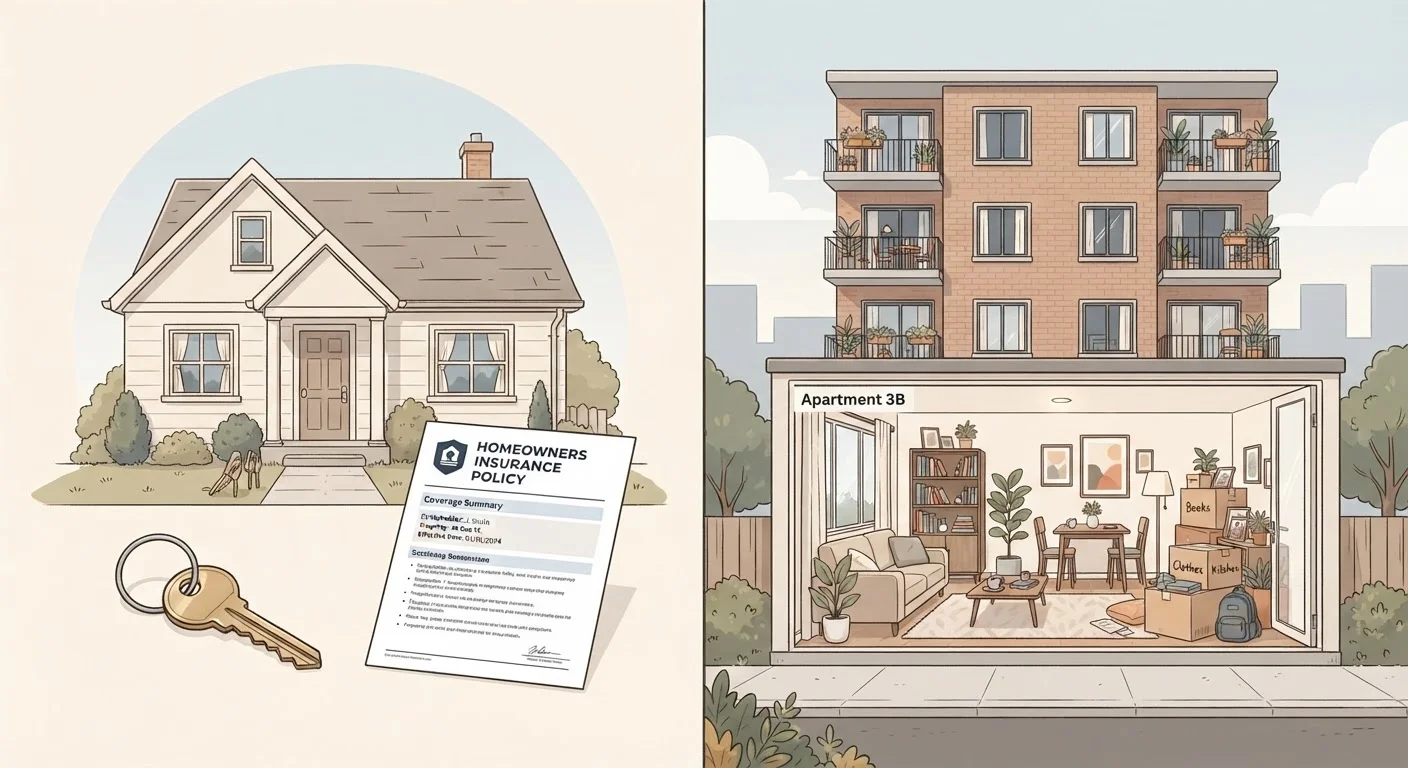
My landlord's insurance covers my belongings and my liability if someone gets hurt in my apartment.
Fact
A landlord's policy covers the building structure — not a tenant's personal property or personal liability.
This misconception leaves millions of renters financially exposed. A landlord's insurance is designed to protect the building owner's property interest, not yours. If your belongings are stolen, damaged by fire, or destroyed, and you don't carry renters insurance, you're on your own. The same applies to liability: if a guest is injured in your unit, your landlord's policy won't help you. See how renters and homeowners insurance compare so you know exactly what each type of policy is designed to protect.
Myth
If I miss a premium payment, my coverage ends immediately and I'm completely uninsured.
Fact
Most policies include a grace period — a window of time after a missed payment during which your coverage remains in force.
Missing a payment is stressful, but it doesn't always mean instant cancellation. Insurers typically provide a grace period — often 10 to 30 days depending on the policy type and state regulations — during which you can bring your account current without losing coverage. That said, if a claim occurs during a lapse after the grace period expires, it may be denied entirely. Understand how grace periods, lapses, and reinstatement work so you know your options if a payment is late.
Myth
Insurance jargon is too complicated to understand — I just trust that I'm covered for the basics.
Fact
Many coverage gaps exist precisely because policyholders don't understand what terms like 'named perils,' 'exclusions,' and 'endorsements' actually mean.
Trusting that you're covered 'for the basics' without reading your policy is one of the most common reasons claims get denied. Terms like named perils (specific events your policy covers, listed by name) versus open perils (coverage for all losses except those explicitly excluded) can make a dramatic difference in what you're actually protected against. An endorsement can add coverage your base policy doesn't include. Decode the insurance terms that confuse most policyholders and learn how perils, exclusions, and endorsements work before your next renewal.
How to Avoid Being Surprised at Claim Time
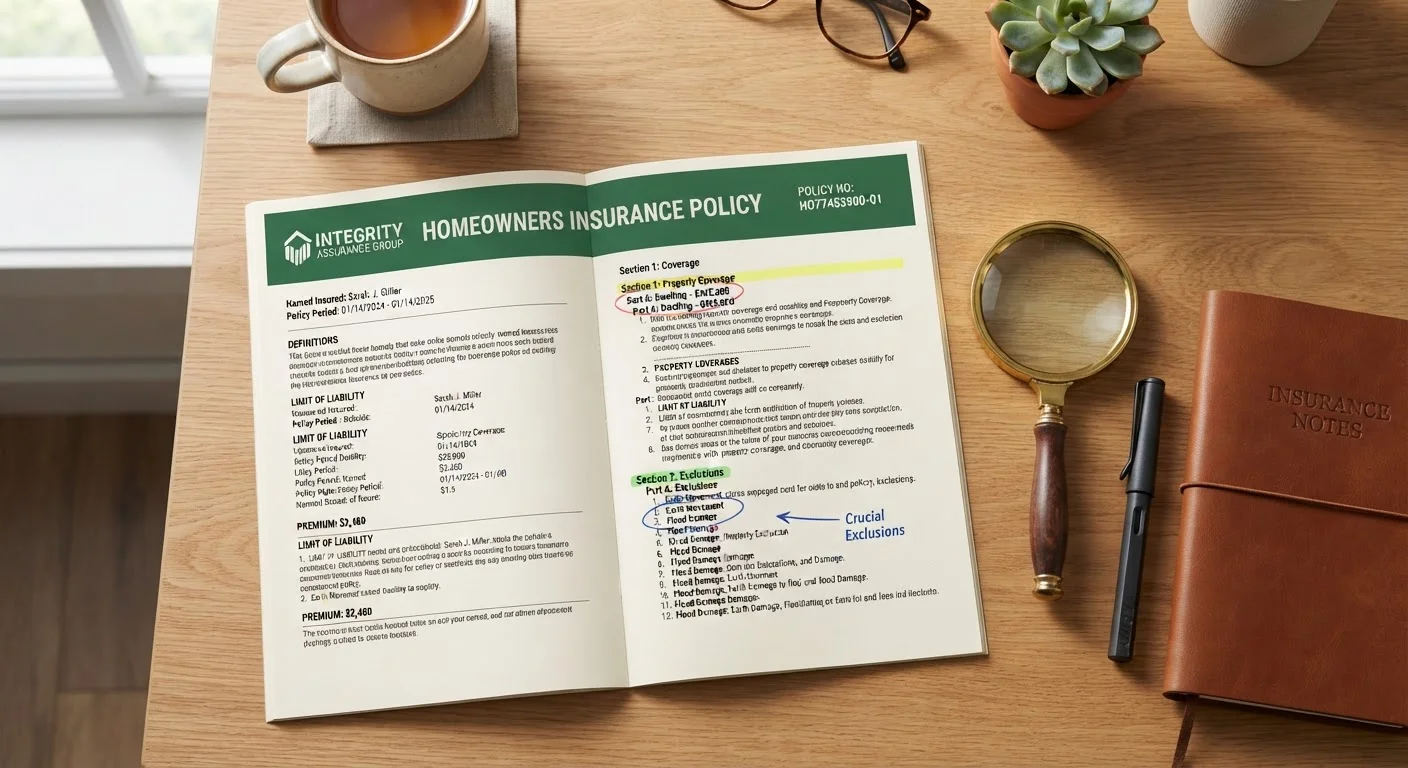
The single most effective thing you can do is read your policy — specifically the declarations page (which summarizes your coverage) and the exclusions section (which lists what isn't covered). If you find language you don't understand, your insurer's customer service line or a licensed independent agent can explain it without obligation.
Your Policy Is a Legal Contract — Read It
Insurance policies are binding contracts, not summaries. What your agent described verbally may not match what the written policy actually covers. Always read your declarations page and policy language, and ask your insurer or a licensed agent to clarify anything unclear before you need to file a claim.
It's also worth doing a coverage review at least once a year, especially after major life changes like buying a home, adding a vehicle, or acquiring valuable property. Use this yearly coverage review checklist to catch gaps before they cost you. And if you want to understand the full landscape of what standard policies typically leave out, explore common misconceptions about what policies actually cover.
Assumptions Can Leave You Uninsured
Many claim denials happen because policyholders assumed they were covered for something their policy specifically excludes. Never assume a loss is covered based on what a policy 'usually' includes. Verify coverage for your specific situation by reviewing your policy documents or contacting your insurer directly.
This article is for general informational purposes only and does not constitute personalized insurance, legal, or financial advice. Coverage terms, exclusions, and regulations vary by insurer, policy, and state. Always read your actual policy documents and consult a licensed insurance professional for guidance specific to your situation.