What Each Policy Is Designed to Cover
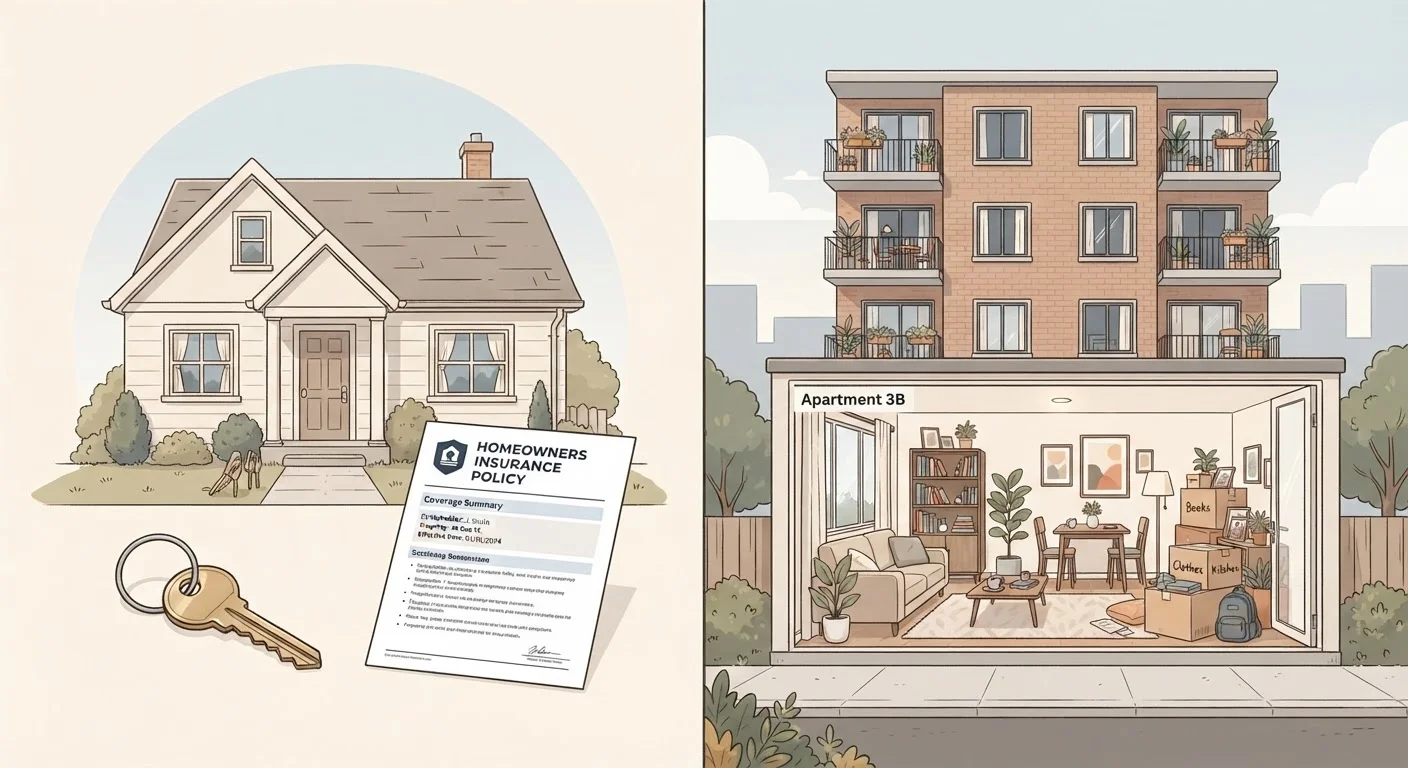
The fundamental difference between homeowners and renters insurance comes down to one question: do you own the building you live in? If yes, you need a policy that covers the structure itself. If no, that burden falls on your landlord — and you need a policy that covers everything else that's yours.
Homeowners insurance is a package policy. It typically combines dwelling coverage (the physical structure of your home), other structures coverage (detached garages, fences), personal property coverage (your belongings), liability protection, and additional living expenses if your home becomes uninhabitable after a covered loss.
Renters insurance skips the dwelling and other structures components entirely — because you don't own them. What it does cover is your personal property, personal liability, and often additional living expenses if you're temporarily displaced. For a fuller picture of how these fit into the broader insurance landscape, see the major types of insurance Americans actually need.
| Criterion | Homeowners Insurance | Renters Insurance |
|---|---|---|
| Covers building structure | Yes | No |
| Covers personal belongings | Yes | Yes |
| Personal liability coverage | Yes | Yes |
| Additional living expenses | Yes | Yes |
| Covers flood damage | Not by default | Not by default |
| Typical premium range | Higher — structure adds significant cost | Lower — no structure coverage |
| Usually required by | Mortgage lenders | Some landlords |
The Shared Ground: What Both Policies Typically Include
Despite their differences, homeowners and renters policies overlap more than most people expect.
- Personal property coverage protects your furniture, electronics, clothing, and other belongings from covered perils like fire, theft, or certain types of water damage. Both policy types include this.
- Personal liability coverage steps in if someone is injured in your home and holds you responsible, or if you accidentally damage someone else's property. Again, both policy types include this.
- Additional living expenses (ALE), sometimes called loss of use coverage, helps pay for temporary housing and meals if your home is uninhabitable after a covered event. Standard in both.
One area where many policyholders get tripped up: neither homeowners nor renters insurance automatically covers flood damage or earthquake damage. Those typically require separate policies or endorsements. This is a common gap worth understanding — misconceptions about insurance coverage that cost policyholders money goes deeper on coverage assumptions that don't always hold up.
~37%
U.S. households that rent their home
According to U.S. Census Bureau data, roughly 37% of American households are renters, making renters insurance relevant to tens of millions of people.
~55%
Renters who carry renters insurance
Industry surveys have consistently found that only around half of renters carry renters insurance, despite its relatively low cost.
Cost and Coverage Levels: Why the Gap Exists
Homeowners insurance premiums are substantially higher than renters insurance premiums, and the reason is straightforward: rebuilding or repairing a home is expensive. A homeowners policy may need to cover hundreds of thousands of dollars in structural replacement costs. A renters policy carries no such exposure.
The cost of renters insurance varies based on location, coverage limits, deductible choices, and the insurer, but it's widely considered one of the more affordable forms of personal insurance available. Homeowners premiums vary considerably more, influenced by the home's age, construction type, location risk (proximity to flood zones, wildfire areas), and the replacement cost of the dwelling.
Both policy types allow you to choose between actual cash value and replacement cost value for personal property. Actual cash value factors in depreciation — meaning an older laptop pays out less than a new one would cost. Replacement cost value pays what it would cost to replace the item new. Understanding these terms matters when comparing coverage options; the glossary of confusing insurance terms is a useful reference.
A Note on What Your Landlord's Policy Covers
Your Landlord's Insurance Won't Cover You
A landlord's policy is designed to protect the building and the landlord's financial interests — not the tenant's belongings or personal liability. Even if your landlord has robust coverage on the structure, none of it extends to your personal property. This is one of the most common coverage gaps renters face. If your belongings are damaged or stolen, only your own renters insurance policy can make you whole.
A very common misunderstanding among renters is assuming that because the landlord has insurance on the building, their personal belongings are covered too. They are not. A landlord's policy protects the building structure and the landlord's liability — it has no obligation to your furniture, electronics, jewelry, or clothing. If a pipe bursts and damages your belongings, your landlord's insurer is under no requirement to compensate you. Only your own renters insurance policy does that.
It's also worth knowing that coverage can differ significantly depending on how your policy is structured — specifically whether it covers named perils (only the events listed) or open perils (all events except those excluded). Named perils vs. open perils explains how these two approaches work and why the distinction matters for your actual protection.
This article is for general informational purposes only and does not constitute personalized insurance, financial, or legal advice. Coverage terms, exclusions, and availability vary by provider and state. Always read your policy documents carefully and consult a licensed insurance agent or adviser for guidance suited to your specific situation.