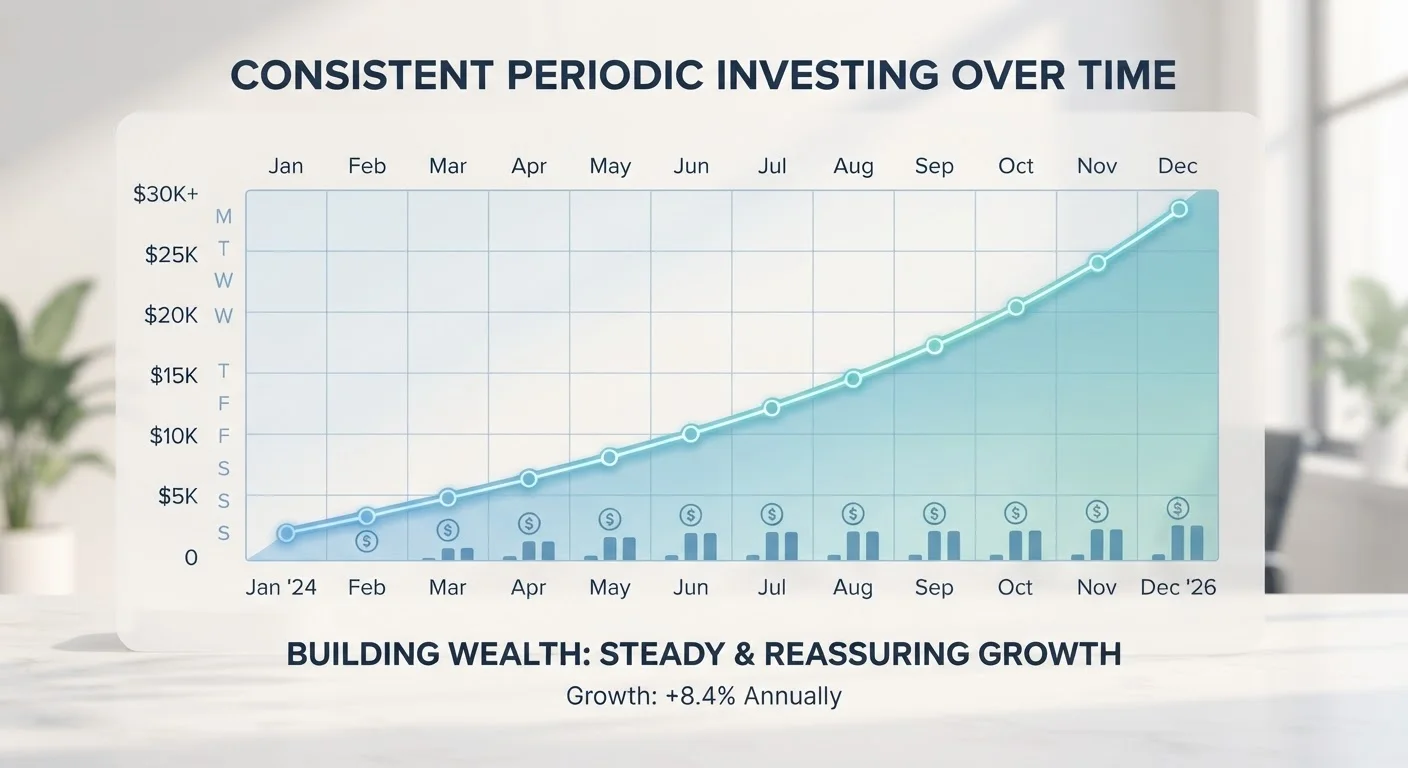

Why Time Is the Most Undervalued Asset in Investing
Most people understand that investing is important. Far fewer fully grasp what it costs — in concrete, mathematical terms — to delay it. The central mechanism at work is compound growth: the process by which investment returns generate their own returns over time. The longer that process runs, the more powerful it becomes. When you postpone investing, you're not just missing one year of returns. You're shortening the entire runway over which compounding can operate.
Consider a simplified illustration. Someone who begins investing at 25 and contributes consistently until retirement has roughly 40 years of compounding ahead of them. Someone who waits until 35 has 30. That ten-year gap doesn't represent a 25% reduction in potential growth — because compounding is exponential, not linear, the gap in outcomes can be far more dramatic. This is general information, not a projection of any specific return, and actual results will vary based on markets, contribution amounts, and account types.
The point isn't to alarm — it's to make the math visible. If you've been putting off investing because it feels complicated, risky, or something to address later, understanding the real cost of waiting is the first step toward changing course. For a broader look at beliefs that often keep people on the sidelines, see common investing myths that aren't supported by evidence.
Common Mistakes That Cause Investors to Wait Too Long
Procrastination rarely feels like a choice. More often, it's the result of specific, identifiable mental patterns and misconceptions. Recognizing them is how you stop them from compounding into decades of inaction.
Waiting until you have a large lump sum before starting.
Why it happens: Many people assume investing requires significant capital upfront, making it feel like a goal for later rather than a habit for now.
Trying to time the market before investing.
Why it happens: Financial news cycles create the impression that there is always a better moment just around the corner — after the next report, after the election, after things 'settle down.'
Treating high-interest debt and investing as mutually exclusive choices.
Why it happens: The logic of eliminating all debt before investing feels prudent, but it can mean years of zero market participation, especially for people carrying long-term balances.
Postponing investing due to financial complexity or fear of making the wrong choice.
Why it happens: The sheer volume of options, terminology, and conflicting information makes investing feel risky and technical, prompting indefinite delay.
Underestimating how much lost compounding time actually costs.
Why it happens: Human intuition is not naturally wired for exponential thinking, making the long-term gap between starting at 25 versus 35 feel abstract rather than concrete.
10 years
Typical delay between first income and first investment
Research from multiple financial literacy surveys suggests many Americans wait a decade or more after entering the workforce before making their first investment.
~50%
U.S. adults who own no stock market investments
According to Gallup polling, roughly half of American adults report having no money in stocks, funds, or retirement accounts tied to market investments.
How to Start — Even When Conditions Feel Imperfect
The antidote to most investing procrastination is replacing the search for a perfect moment with a commitment to consistent action. One strategy built exactly for this is dollar-cost averaging — investing a fixed amount on a regular schedule regardless of market conditions. It doesn't eliminate risk or guarantee returns, but it removes the paralysis of trying to time the market. Dollar-cost averaging is worth understanding before you invest your first dollar.
If debt is part of what's holding you back, that's a legitimate tension — but it doesn't always mean waiting entirely. How you balance the two depends on interest rates, account types, and your specific situation. Saving while in debt explores how to think through that tradeoff.
Employer Matching Is Not Optional Income
If your employer offers a retirement account match and you are not contributing enough to capture it fully, you are leaving part of your compensation on the table. This is broadly considered one of the most straightforward financial missteps to correct. Before addressing any other investment priority, verify whether a match is available and what contribution level is required to receive it in full. The specifics vary by plan — review your plan documents or speak with your HR department.
Starting small is not the same as not starting. Many employer-sponsored retirement accounts accept very modest initial contributions, and the consistency of the habit matters as much as the dollar amount, especially early on. Principles that consistent savers follow can help reinforce the habits that make investing sustainable over time.
This article is for general informational and educational purposes only and does not constitute personalized financial, investment, tax, or legal advice. Investing involves risk, including the possible loss of principal. Past performance does not guarantee future results. Consult a qualified financial adviser before making decisions about your own financial situation.