The Mechanics: How Compounding Actually Works
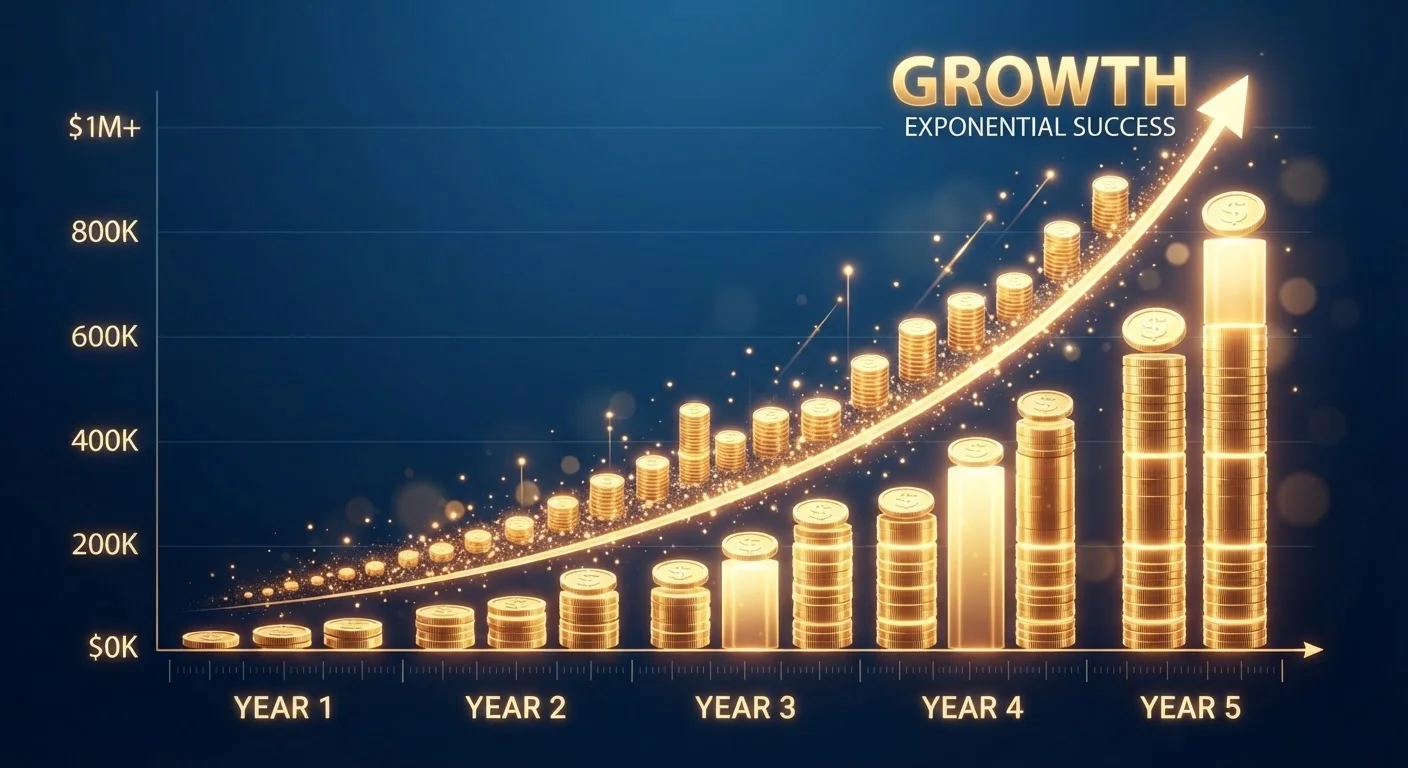
Imagine you deposit $1,000 into an account that earns 6% interest annually. After the first year, you've earned $60 in interest — straightforward enough. But here's where compounding changes the equation: in year two, that 6% applies to $1,060, not the original $1,000. You earn $63.60 instead of $60. The difference looks trivial at first, but the gap widens every single year.
By year 30, that original $1,000 — with no additional contributions — would grow to approximately $5,743. Under simple interest, it would be only $2,800. That's nearly double the outcome, powered entirely by letting earnings compound.
$5,743
Growth of $1,000 at 6% over 30 years
Compared to $2,800 under simple interest, compound growth nearly doubles the outcome over the same period with no additional contributions.
72
The Rule of 72 doubling estimate
Dividing 72 by an annual interest rate estimates years to double money — at 6% annual growth, a balance roughly doubles in 12 years.
10 years
Head start that can outpace 30 years of later contributions
Under typical compound growth assumptions, an investor who starts a decade earlier and then stops can end up with more than one who invests three times as long but starts late.
The key variable in this equation isn't the interest rate alone — it's time. The longer money sits and compounds, the more dramatic the acceleration becomes. This is why financial educators consistently emphasize that getting started early matters far more than trying to optimize every decision later on.
Why Starting Early Creates a Massive Advantage
Consider two people. The first invests $5,000 per year from age 25 to 35 — just 10 years — then stops completely. The second waits until age 35 and invests $5,000 per year all the way until age 65 — a full 30 years of contributions. Assuming the same average annual return, the first investor often ends up with more money at retirement despite contributing far less. The earlier start date is doing most of the work.
This illustrates what's sometimes called the compounding advantage of time. The first investor's money had a decade of growth before the second investor even began, and that head start compounds continuously for decades afterward. For a deeper look at what delayed investing actually costs in dollar terms, see the real cost of waiting.
“Compound interest is the eighth wonder of the world. He who understands it, earns it; he who doesn't, pays it.”
— Widely attributed to Albert Einstein, Paraphrase commonly cited in financial education contexts; original attribution is debated by historians
This doesn't mean late starters are out of options — consistent contributions at any age still benefit from compounding. But the math is unambiguous: earlier is better, and even modest amounts invested in your twenties can outperform larger amounts invested in your forties.
Compounding's Double Edge: Savings vs. Debt
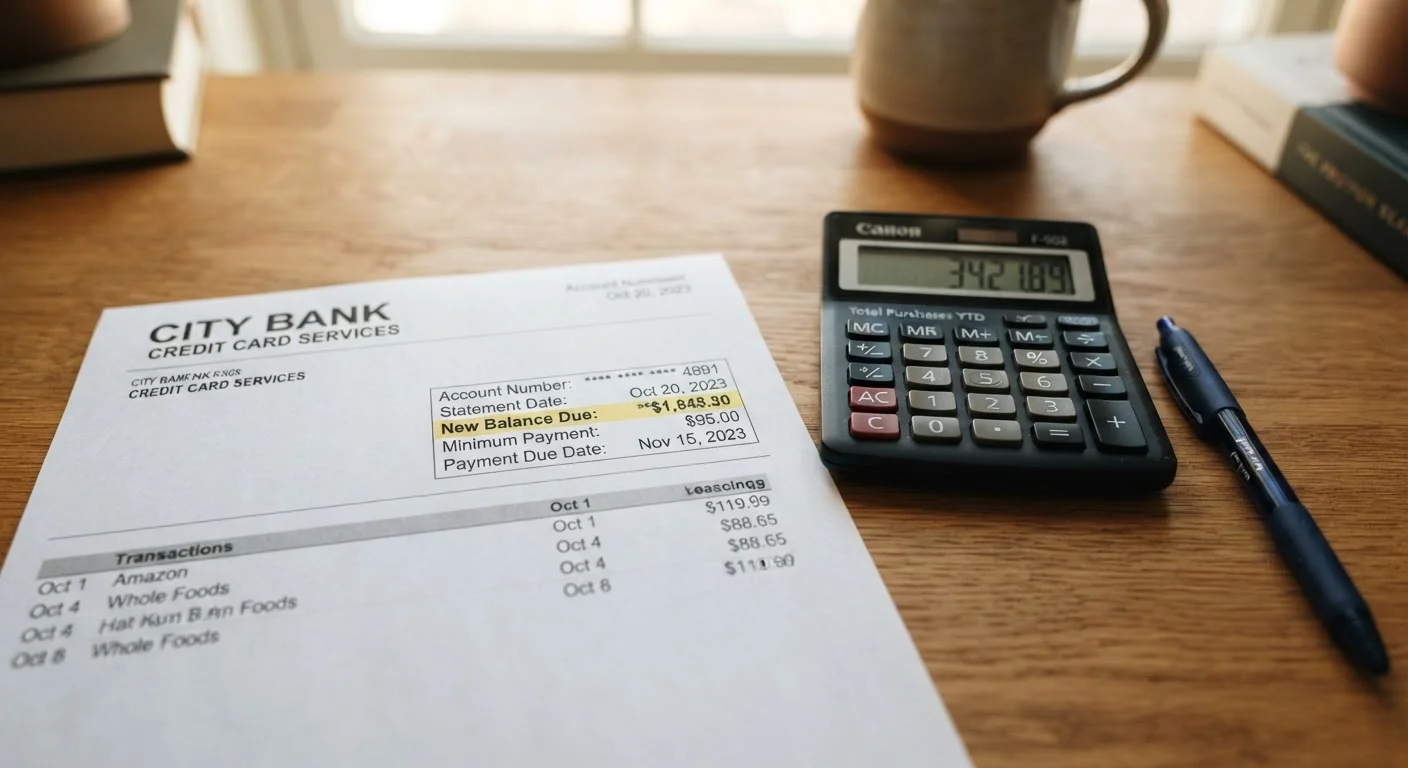
Compound interest is a wealth-building engine when it works in your favor — but it's equally powerful when working against you. High-interest debt, particularly credit card balances, compounds just as relentlessly. A $3,000 balance at 20% APR, paid only the minimum each month, can take well over a decade to pay off and cost thousands in interest charges beyond the original amount borrowed.
Understanding this symmetry is critical. The same force that quietly multiplies your savings is also quietly multiplying your debt. Many people focus on growing investments while carrying expensive revolving balances — a strategy that often cancels out gains. For a plain-English breakdown of how interest accrues on debt, see the true cost of carrying a balance.
Tackle High-Interest Debt Before Investing Aggressively
If you're carrying debt with an interest rate above 7–8%, paying it down typically offers a guaranteed return equivalent to that rate — often better than average market returns. Once high-interest debt is cleared, redirect those payments toward investments to let compounding work in your favor. A qualified financial adviser can help you prioritize based on your full financial picture.
Prioritizing high-interest debt reduction before aggressive investing is a widely held principle in personal finance — not because investing doesn't matter, but because compounding debt at 20% is very difficult to outrun with typical investment returns.
Putting Compounding to Work in Practice
Knowing the concept is one thing; structuring your financial behavior around it is another. A few practical principles follow directly from how compounding works:
- Reinvest returns automatically. In investment accounts, reinvesting dividends rather than withdrawing them is what keeps compounding active. Most retirement accounts do this by default.
- Contribute consistently. Regular contributions — even small ones — mean more principal earning interest, which compounds further. Strategies like paying yourself first are designed to make this automatic.
- Minimize disruptions. Withdrawing early, pausing contributions, or selling investments during downturns interrupts the compounding cycle. Staying the course during volatility preserves the timeline that makes compounding powerful.
If you're just beginning your investment journey, getting started with investing on a modest income walks through realistic first steps without requiring large sums upfront. The habit of consistent saving pairs directly with compounding — explore principles that consistent savers follow for the behavioral side of building this discipline.
This article is for general informational and educational purposes only and does not constitute personalized financial, investment, or tax advice. Consult a licensed financial adviser before making decisions based on your individual circumstances. All investment returns are subject to risk, and past performance does not guarantee future results.