What Is a Personal Savings Rate?
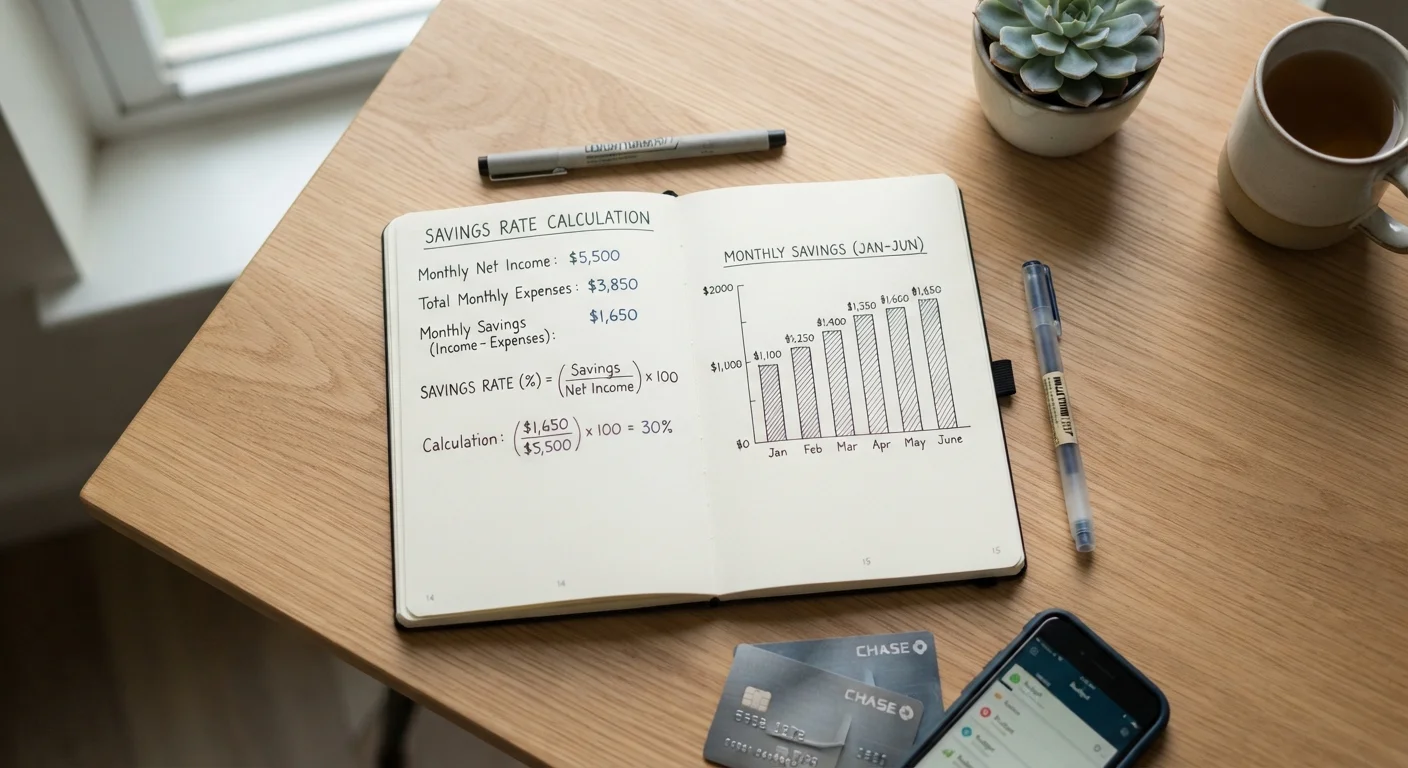
Your personal savings rate is the percentage of your income that you set aside rather than spend. It's calculated by dividing the amount you save in a given period by your gross or net income, then multiplying by 100.
| Standard formula | (Amount saved ÷ Take-home income) × 100 |
| Common benchmark | 10–20% of take-home pay (Widely cited in personal finance guidance; not a universal rule) |
| U.S. personal savings rate (historical avg.) | Roughly 5–8% in recent decades (U.S. Bureau of Economic Analysis, long-run averages) |
| What counts as "savings" | Emergency fund deposits, retirement contributions (401k, IRA), and other intentional saving |
| Best denominator to use | Net (after-tax) income — reflects money you actually control |
For example, if you earn $5,000 per month (after tax) and save $500, your savings rate is 10%. That single number cuts through a lot of noise. A person earning $40,000 a year and saving 20% is building financial resilience faster than someone earning $100,000 and saving 5% — even though the higher earner is saving more dollars in absolute terms.
This is why financial educators and planners often emphasize rate over amount. It normalizes savings across income levels and gives you a consistent benchmark regardless of raises, side income, or life changes. See budgeting strategies for guidance on making room in your budget to improve this number.
Why the Rate Matters More Than the Dollar Amount
Absolute savings figures can mislead. A $200 monthly deposit feels small against a coastal cost of living but might represent genuine sacrifice in a lower-cost area. Worse, focusing only on dollar totals makes it easy to feel like you're "not a saver" even when you're consistently putting away a meaningful share of what you earn.
~4.6%
U.S. personal savings rate (approximate recent annual average)
According to the U.S. Bureau of Economic Analysis, the personal saving rate has fluctuated significantly, including a sharp spike during the pandemic and a return toward lower historical norms.
50%+
Savings rate associated with early financial independence
Research and financial planning literature commonly reference that consistently saving half or more of income can dramatically shorten the years needed to reach financial independence.
Your savings rate also scales naturally. When income rises, a stable savings rate means your actual savings amount grows automatically — without recalibrating a new dollar target each time. Conversely, if income drops temporarily, the rate framework tells you immediately whether your saving behavior has slipped.
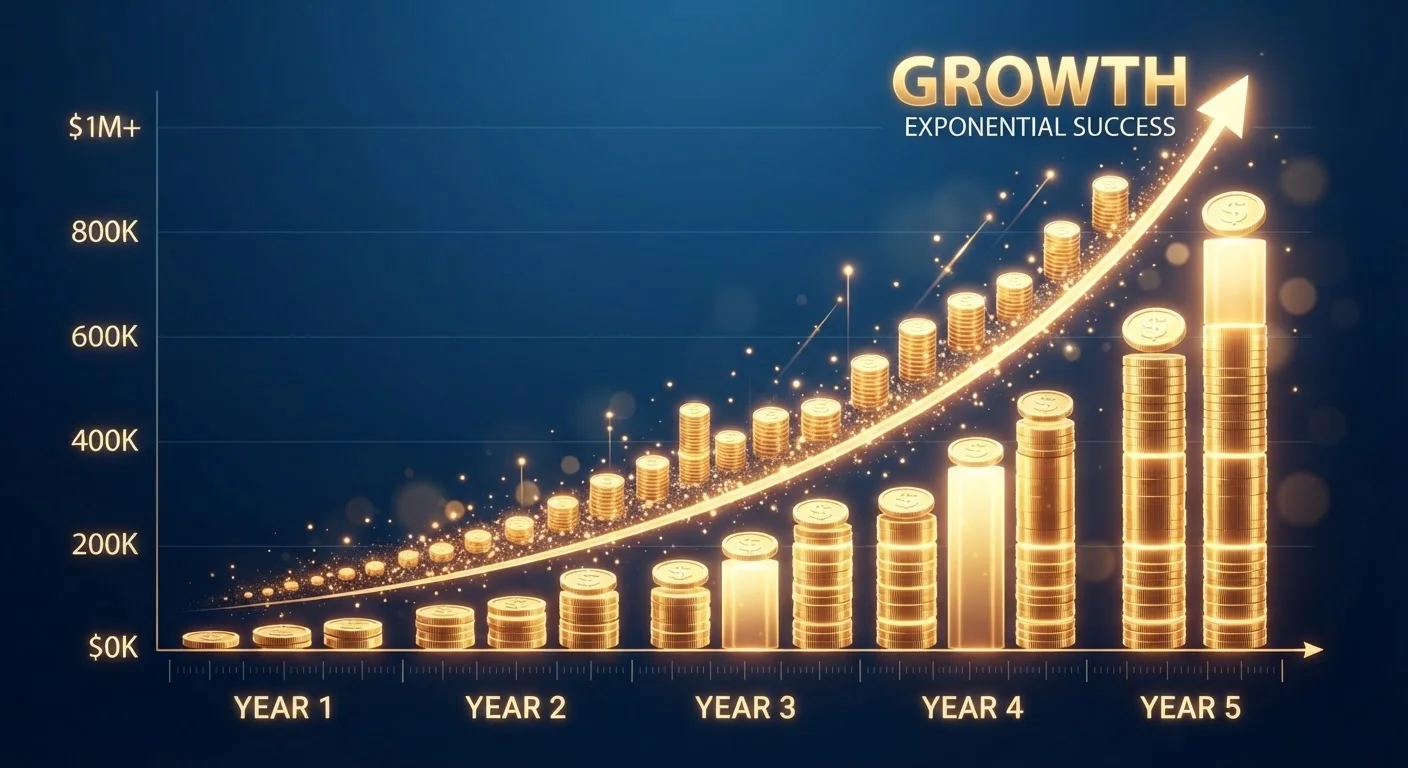
There's a deeper reason the rate matters: it directly governs how long it takes to build financial independence. The higher your savings rate, the shorter the runway to covering unexpected expenses, funding long-term goals, or retiring early. This is the core principle behind strategies like the power of compound growth — the more you consistently save, the larger the base that grows over time.
How to Calculate and Improve Yours
Personal savings rate
The percentage of your income that you save rather than spend in a given period. Calculated as savings divided by income, multiplied by 100.
Take-home pay
Your income after taxes and mandatory deductions are withheld. This is the amount that actually lands in your bank account and is often used as the denominator when calculating your personal savings rate.
Financial resilience
The capacity to withstand financial shocks — job loss, medical expenses, or unexpected costs — without derailing long-term goals. A higher savings rate is one of the primary drivers of resilience.
Lifestyle inflation
The tendency for spending to rise in step with income, often consuming raises or windfalls before they can be saved. Managing lifestyle inflation is central to maintaining or improving your savings rate over time.
To calculate your savings rate, divide your total monthly savings (including retirement contributions, emergency fund deposits, and any other intentional saving) by your take-home pay, then multiply by 100. Many financial planners use take-home pay (after taxes) as the denominator because it reflects what you actually manage.
If your rate is lower than you'd like, a few approaches tend to be effective:
- Automate transfers on payday so savings happen before spending decisions are made. Building a savings habit from zero covers how automation supports consistency.
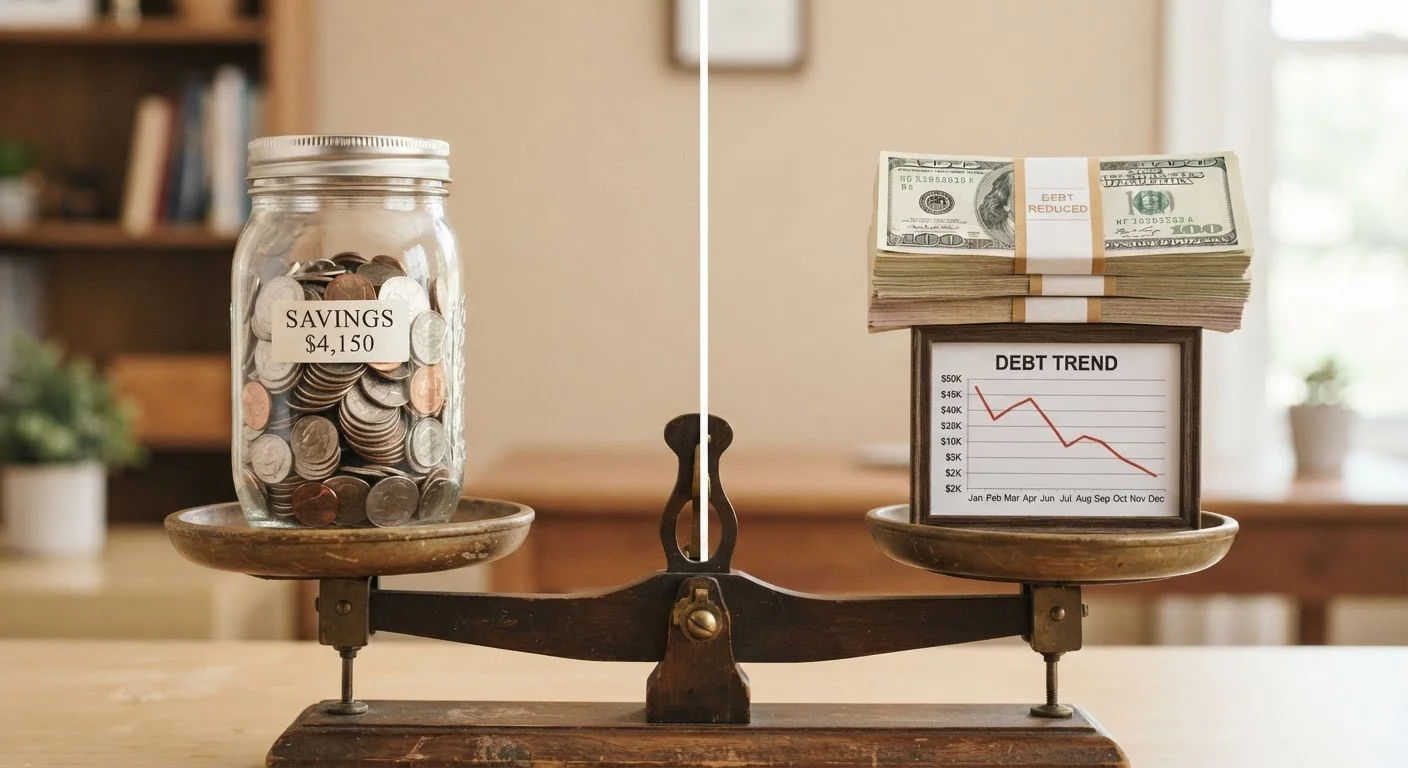
- Treat debt payments strategically. High-interest debt can erode your financial position faster than savings can build it. Understanding how to balance the two is covered in saving while in debt.
- Review where your money is held. Earning meaningful interest on savings matters. High-yield savings accounts offer higher returns than traditional accounts for the same deposit behavior.
- Apply rate-thinking to raises. When your income grows, preserve or increase your savings rate before lifestyle costs expand to absorb the difference — a pattern consistent savers often cite.
No Single "Right" Savings Rate Exists
Common benchmarks like "save 20% of income" are useful starting points, not mandates. Your ideal rate depends on your income, obligations, goals, and timeline. Someone aggressively paying down high-interest debt may reasonably direct less toward traditional savings accounts in the short term. Focus on the direction of your rate — and whether it's moving toward your goals — rather than hitting a specific number immediately.
This article is for general informational and educational purposes only and does not constitute personalized financial advice. Consult a qualified financial professional for guidance specific to your situation.