Why Pet Emergency Preparedness Matters
Natural disasters, house fires, sudden illness, and severe weather can strike with little or no warning. While most households have some form of human emergency plan, pets are frequently overlooked until the moment a crisis begins — and that's too late. The American Veterinary Medical Association (AVMA) consistently emphasizes that pets should be factored into every household emergency plan from the start.
Being unprepared doesn't just put your pet at risk. It can also slow your own evacuation, compromise your safety, and lead to permanent separation from an animal who depends entirely on you. Whether you're a new pet owner or an experienced one reviewing your routine, this checklist provides a structured approach to getting ready before an emergency happens. For a broader look at responsible ownership foundations, see our Pet Care Basics hub.
Never Leave Pets Behind in an Evacuation
If an emergency requires you to leave your home, take your pets with you. Animals left behind during disasters face serious risks including injury, exposure, starvation, and death. Many emergency management agencies, including FEMA, explicitly advise against leaving pets unattended during evacuations. Planning ahead is the only reliable way to ensure you're never forced to make that choice under pressure.
Tools and Supplies You'll Need
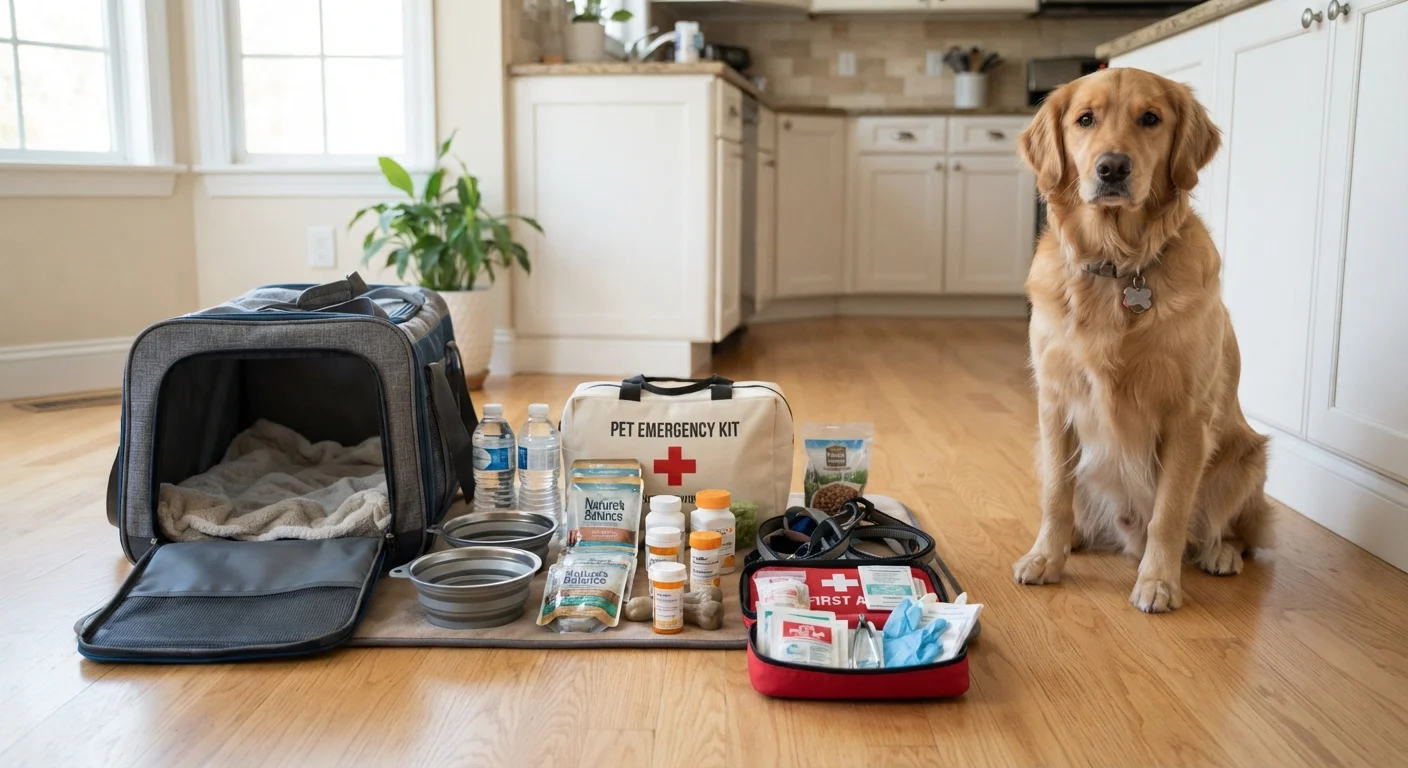
Before working through the checklist, gather or plan to gather the items below. Having the right tools in place is the foundation of effective pet emergency preparedness.
Waterproof storage container or duffel bag
Houses all emergency supplies in one protected, portable location.
Sturdy pet carrier or crate
Provides safe, contained transport for your pet during evacuation.
Pet first aid kit
Allows basic wound care and stabilization before veterinary help is available.
Waterproof document pouch
Protects printed copies of your pet's medical records and ID documents.
Backup leash and harness
Ensures you can safely restrain your pet if primary gear is inaccessible.
Microchip scanner app or registry card
Provides quick access to chip registration details to facilitate reunification.
Collapsible food and water bowls
Space-efficient feeding solution during displacement or travel.
The Complete Pet Emergency Preparedness Checklist
Work through each group systematically. Items marked must are non-negotiable for basic safety; should items represent strongly recommended steps; and nice to have items add meaningful resilience if time and resources allow.
Emergency Kit Essentials
Medical Records and Identification
Evacuation Planning
Transport and Containment
Rotate Supplies to Avoid Expiration
Food, water, and medications stored in an emergency kit can expire and become ineffective or harmful. Check expiration dates on all perishables and medications every six months. Replace anything that has expired, and update your kit any time your pet's diet or prescriptions change.
Once you've completed this checklist, schedule a review every six months — the same cadence recommended for many routine pet health tasks. See our monthly pet care checklist for other recurring tasks to pair with this review.
Keeping Your Plan Current
An emergency plan is only as good as its last update. Each time you renew a prescription, change your pet's diet, or move to a new address, your emergency kit and documentation need to reflect those changes. If you've recently added a pet to your home, this is an especially critical time to get organized — our first-time pet owner guide walks through other foundational steps that complement emergency readiness.
Share your pet emergency plan with a trusted neighbor, family member, or friend who could act on your behalf if you're away from home when a crisis hits. The more people who know your pet's needs — medications, feeding schedule, behavioral quirks — the better your pet's chances in an unexpected situation.
This article is for general informational purposes only and does not constitute veterinary or professional emergency management advice. Consult your veterinarian for guidance specific to your pet's health and needs.