
Why a Monthly Routine Makes a Real Difference
Pets can't tell you when something feels off. A structured monthly routine gives owners a reliable framework to spot early warning signs, maintain preventive care, and avoid the kind of problems that turn into costly emergencies. Whether you're a first-time owner or caring for multiple animals, a checklist removes the guesswork.
This checklist covers dogs and cats together, noting where their needs differ. Use it at the start or end of each month as a dedicated 30–60 minute audit. If you're just getting started, our home preparation guide is a good companion resource before you settle into a monthly rhythm.
Monthly Checks Are Not a Vet Substitute
This checklist supports routine at-home observation but does not replace professional veterinary care. If you notice anything unusual — lumps, sudden weight change, discharge, limping, or behavioral shifts — contact your veterinarian promptly rather than waiting for the next monthly review. Annual wellness exams (or more frequent visits for seniors and pets with chronic conditions) remain essential.
What You'll Need
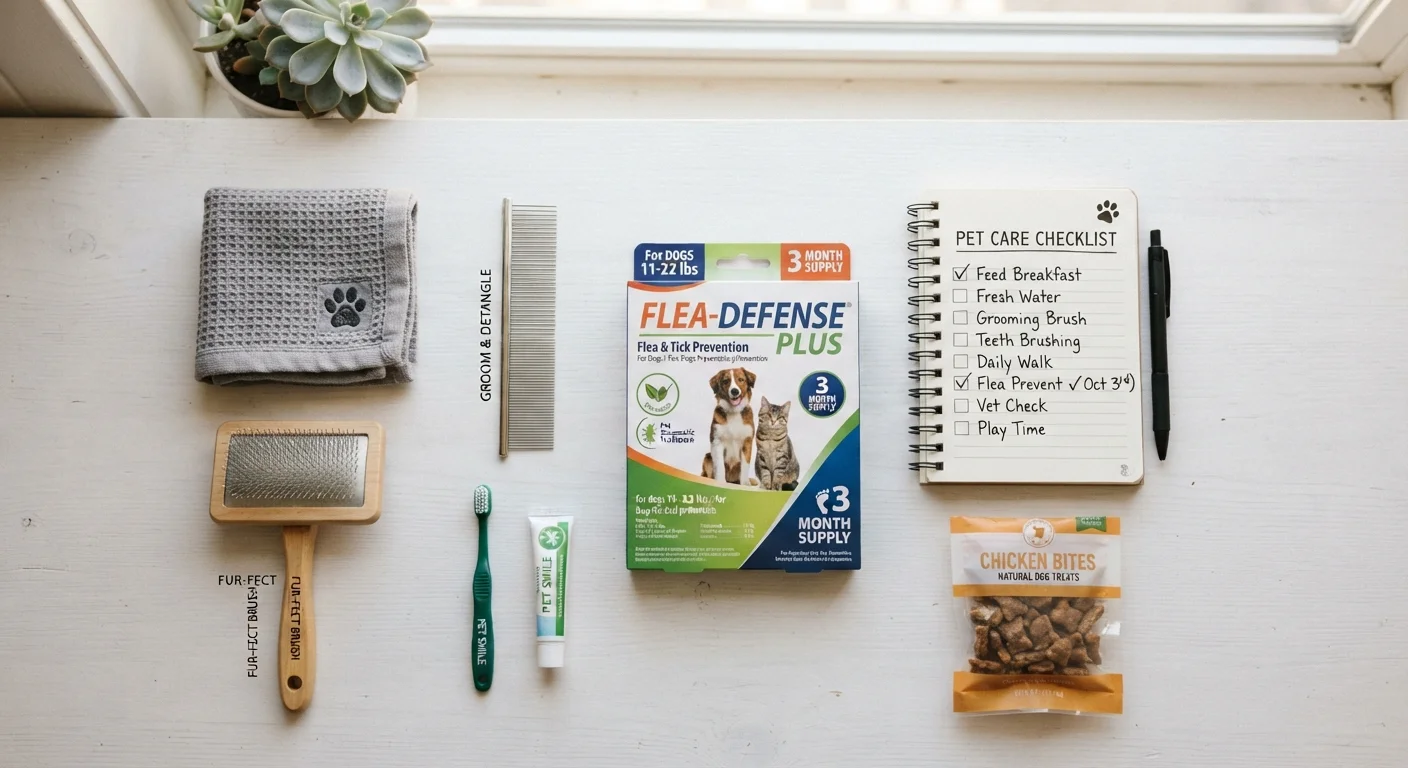
Gather these items before working through the checklist. Having everything on hand makes the process faster and more consistent each month.
Grooming brush or comb
Removes loose fur and prevents matting during the monthly coat check.
Nail clippers (pet-specific)
Used to trim overgrown nails safely during the monthly grooming review.
Pet-safe toothbrush and toothpaste
Needed for the dental inspection and brushing component of the checklist.
Digital pet scale or household scale
Tracks monthly weight to catch gradual gain or loss that might otherwise go unnoticed.
Flashlight or penlight
Helps illuminate the ear canal, teeth, and eyes during the physical inspection.
Pet health journal or app
Records weight, behavioral observations, and vet appointments month to month.
The Monthly Checklist
Work through each group systematically. Items marked must are non-negotiable for your pet's baseline health; should items are strongly recommended; nice to have items add value when time allows.
Health Monitoring
Parasite Prevention
Grooming
Dental Health
Supplies and Records
Never Skip Heartworm Prevention
Heartworm disease is transmitted by mosquitoes and has been reported in all 50 U.S. states. Treatment for an established heartworm infection is significantly more complex, expensive, and stressful for the animal than consistent monthly prevention. Missing even a single dose can create a window of vulnerability. Ask your veterinarian which prevention product and schedule is appropriate for your pet's size, species, and region.
For a deeper look at how care needs change as your pet ages, see our complete life-stage care overview.
Key Areas That Often Get Skipped
Dental Health
Veterinary organizations consistently identify periodontal disease as one of the most common — and preventable — conditions in adult dogs and cats. Monthly isn't enough on its own; daily brushing is ideal. But a monthly inspection gives you a checkpoint. Our dental care guide walks through technique, warning signs, and when a professional cleaning is warranted.
Parasite Prevention
Fleas, ticks, and heartworm are year-round threats across much of the United States — not just a summer concern. Missing even one month of prevention can create an opening for infestation or infection. Our parasite prevention primer explains how these parasites cause harm and what your monthly prevention options look like.
Behavioral Observation
Changes in eating, drinking, litter box habits, or activity levels are often the first indicators that something is wrong. Once a month, take a few minutes to note how your pet has been acting compared to their normal baseline. If you're unsure how to read the signals, our body language quick-reference guide is a useful starting point.
This article provides general pet care information for educational purposes only. It is not a substitute for personalized veterinary advice. Always consult a licensed veterinarian for guidance specific to your pet's health, age, and medical history.