How Active Noise Cancellation Actually Works
Inside every pair of ANC headphones are small microphones — typically located on the outside of the ear cups or earbuds — that continuously sample the sounds around you. The headphone's processor analyzes that audio signal and generates an inverted waveform: a sound that is the mathematical opposite of what was detected. When those two signals meet at your ear, they partially cancel each other out through a phenomenon called destructive interference.
This process happens in milliseconds, continuously adapting as the surrounding noise changes. The electronics must detect, process, and respond faster than the sound reaches your eardrum — which is why ANC is far more effective on predictable, consistent sounds than on sudden or complex ones.
Hybrid ANC: Feedforward and Feedback Combined
Modern headphones often combine feedforward ANC (microphone outside the ear cup) with feedback ANC (microphone inside), using both simultaneously for broader frequency coverage. This hybrid approach has become common in higher-end consumer headphones and generally outperforms single-microphone designs across more of the audible spectrum.
Modern headphones often combine feedforward ANC (microphone outside the ear cup) with feedback ANC (microphone inside), using both simultaneously for broader frequency coverage. This hybrid approach has become common in higher-end consumer headphones.
Where ANC Excels — and Where It Falls Short
ANC is genuinely impressive at handling steady, low-frequency noise. The drone of a jet engine at cruising altitude, the rumble of a subway car, the hum of an HVAC system — these are exactly the types of sounds the technology was designed for. The signal is consistent enough that the processor can accurately predict and counter it.
Where ANC struggles is with high-frequency, unpredictable, or transient sounds. Human speech — particularly consonants — occupies frequency ranges that are much harder to cancel in real time. A sudden loud noise, like a door slamming, arrives faster than the system can respond. The result is that voices in a busy coffee shop or a coworker's phone call will still be partially audible even with ANC switched on.
20–30 dB
Typical low-frequency noise reduction from ANC
Consumer ANC headphones commonly reduce steady low-frequency sounds by 20 to 30 decibels, according to audio engineering assessments, though results vary by product and environment.
~1,000 Hz
Frequency ceiling where ANC effectiveness declines
Audio engineers generally note that ANC performance degrades significantly above roughly 1,000 Hz, where processing latency makes accurate wave inversion increasingly difficult.
Understanding this distinction matters for setting realistic expectations. ANC is not a cone of silence — it's a targeted tool that works exceptionally well within specific acoustic conditions.
The Role of Passive Isolation
Every pair of over-ear or in-ear headphones also provides passive noise isolation — the simple, physics-based effect of physical material blocking sound from reaching your ear canal. A well-sealed over-ear cup or a snug ear tip creates a barrier that attenuates higher-frequency sounds the ANC circuitry may not fully address.
In practice, passive isolation and ANC work as complementary systems. Passive isolation handles the high-frequency range — speech, clicks, sharp tones — while ANC handles the low-frequency rumble. A poor physical fit undermines both: if the ear tips don't seal properly, you lose much of the passive benefit and also degrade ANC performance, since the anti-phase signal leaks away from your ear canal.
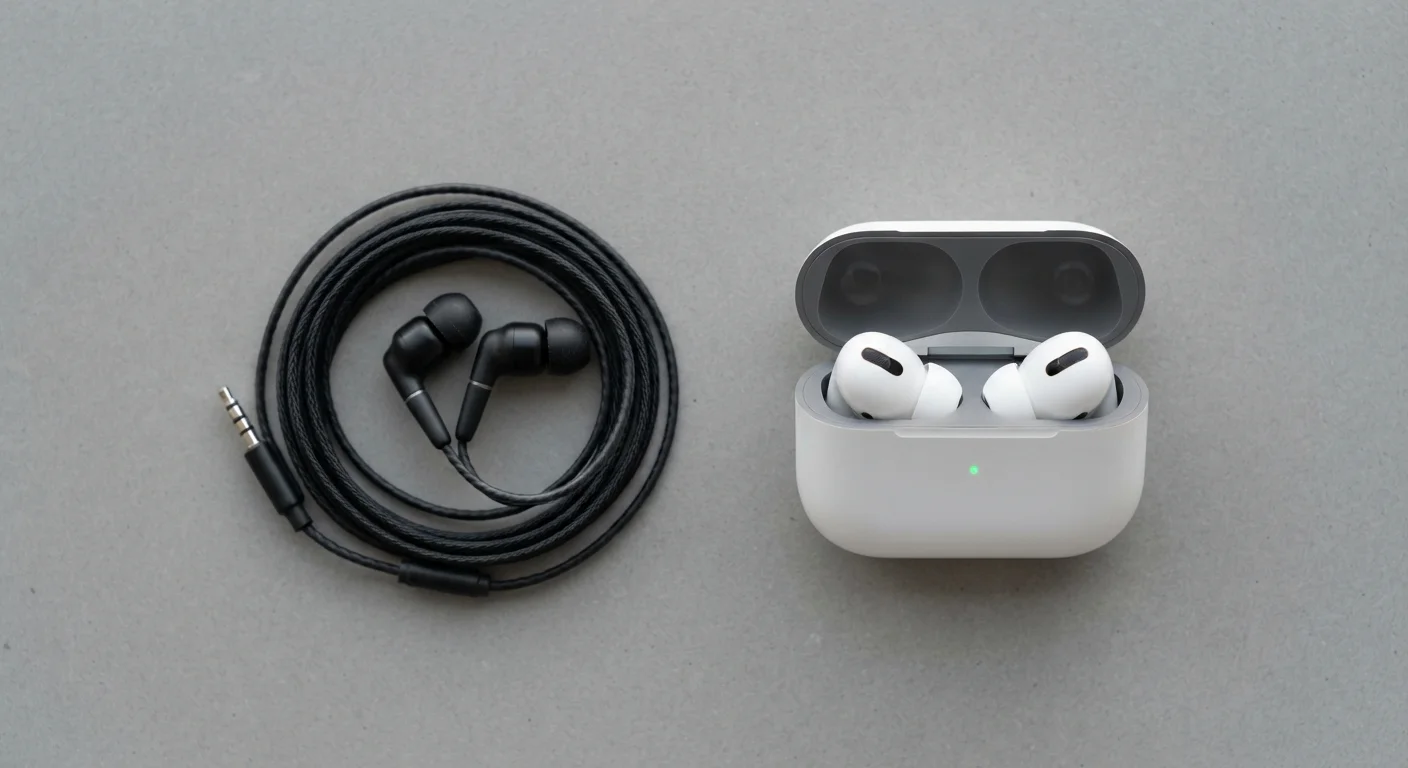
If you're considering whether wired or wireless form factors suit you better, the trade-offs between wired and wireless earbuds are worth understanding before committing — fit and seal quality can vary significantly across design types.
Get the Fit Right First
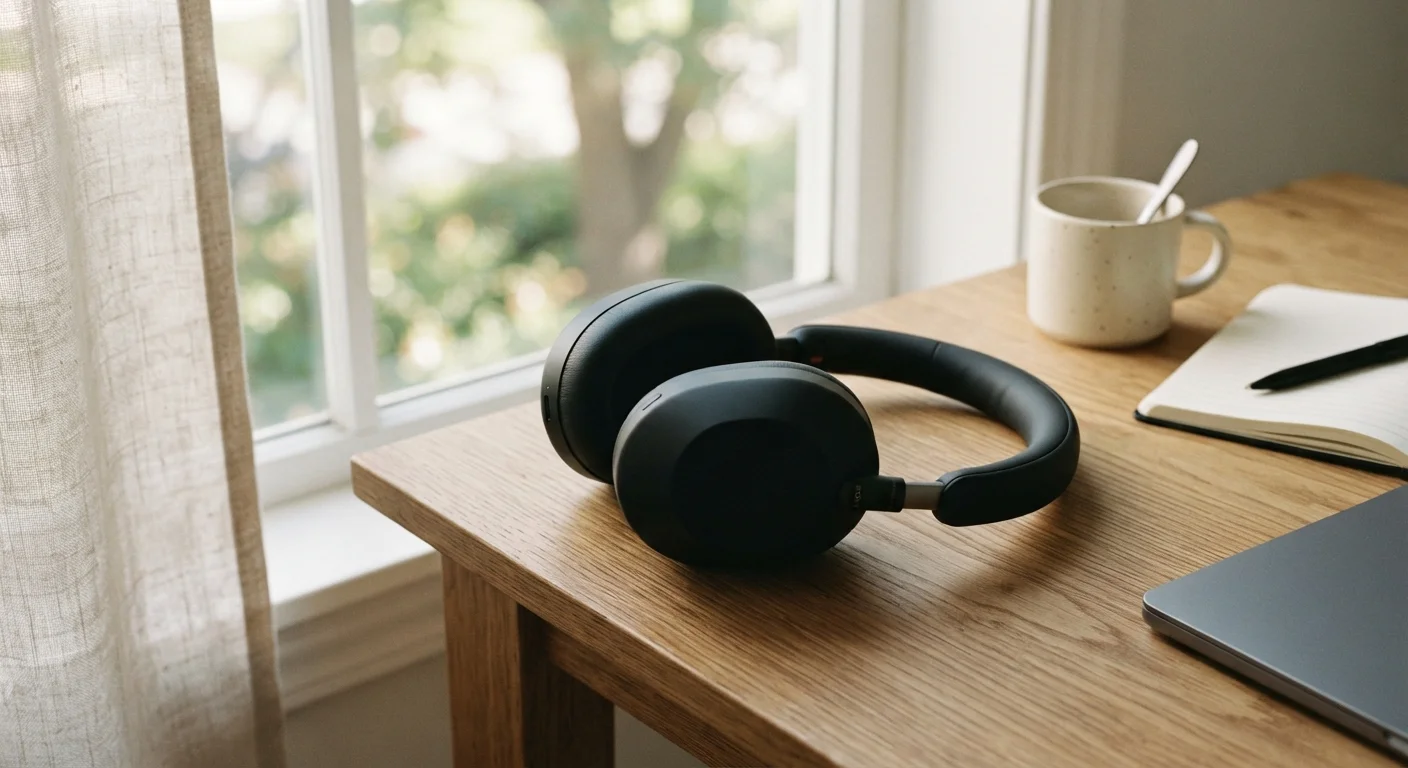
Before assuming your ANC isn't working well, check the physical seal. For in-ear models, try different ear tip sizes until you get a firm, comfortable seal. For over-ear headphones, make sure the ear cushions sit flush against your head without gaps. A poor passive seal significantly undermines ANC performance at all frequencies.
Practical Implications for Everyday Use
Knowing how ANC works helps you use it more effectively. On a long flight or during a commute by rail, enabling ANC can meaningfully reduce listening fatigue by quieting the constant background drone — which in turn may let you listen at a lower, safer volume. In an open-plan office with ambient HVAC noise, ANC can take the edge off the environment without fully isolating you from colleagues.
In situations dominated by speech — a crowded restaurant, a noisy open office with lots of conversation — expectations should be modest. ANC will soften the overall acoustic environment, but you will still hear people talking. For focus work in those settings, many people find a combination of ANC and listening to audio (music, ambient sound) more effective than ANC alone.
Battery consumption is also a practical consideration. ANC processing draws continuous power, and most headphones will show a measurable reduction in playback time when ANC is active. If battery longevity matters more than noise reduction on a given day, most headphones allow ANC to be switched off independently.