Audio Quality: Does the Cable Still Make a Difference?
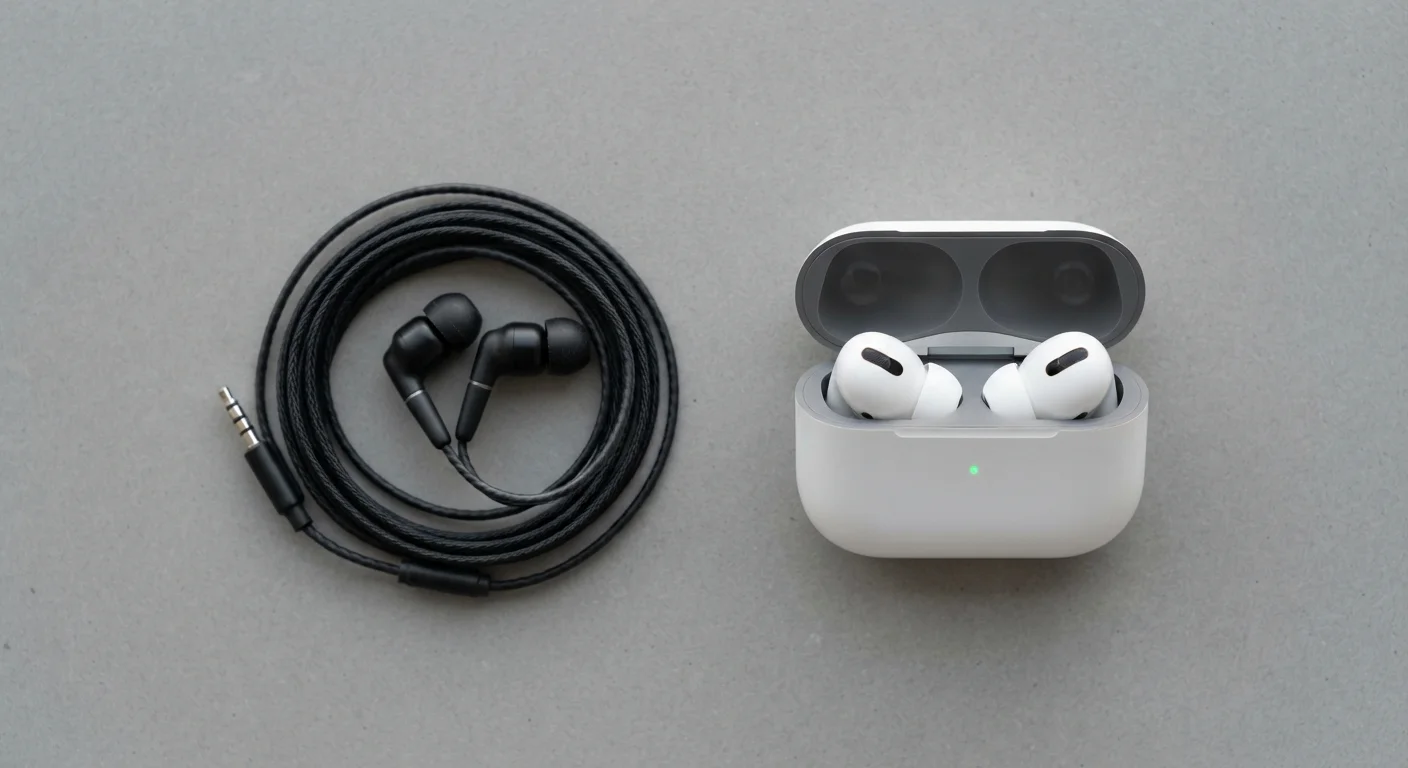
The honest answer is: it depends on how much you're spending. Wired earbuds transmit an analog audio signal directly from your device's DAC (digital-to-analog converter), which means no wireless compression is introduced in the signal chain. That gives them a measurable advantage for resolving fine detail in recordings, particularly at modest price points.
Wireless earbuds encode audio using Bluetooth codecs — SBC being the baseline, with higher-quality options like AAC, aptX, and Sony's LDAC offering progressively better fidelity. LDAC, for example, can transmit up to 990 kbps of audio data, which approaches CD-quality streaming. The catch: both your source device and your earbuds must support the same codec for it to engage, and real-world Bluetooth congestion can force a codec downgrade mid-playback.
For casual listening, the difference between a mid-range wired and wireless pair is rarely dramatic. For critical listening — evaluating a mix, appreciating lossless audio — wired maintains a practical edge. If noise cancellation is part of your consideration, see our noise-canceling explainer for a clear breakdown of what that technology actually does to your sound.
| Criterion | Wired Earbuds | Wireless Earbuds |
|---|---|---|
| Audio signal path | Direct analog, no compression | Bluetooth codec-dependent |
| Latency | Effectively zero | 40–200ms depending on codec |
| Battery required | No — powered by source device | Yes — 5–8 hrs per charge |
| Freedom of movement | Limited by cable length | Full range up to ~30 ft |
| Water resistance | Varies; often none | Commonly IPX4 or higher |
| Connector dependency | 3.5mm, Lightning, or USB-C required | None on device |
| Multipoint pairing | Not available | Available on many models |
| Long-term battery degradation | Not applicable | Capacity reduces over charge cycles |
Latency, Connectivity, and the Wireless Overhead
Latency — the delay between audio being sent and heard — is where wired earbuds hold their clearest, most consistent advantage. A physical connection introduces essentially zero perceptible lag. Bluetooth, by contrast, adds processing time that varies by codec and hardware implementation.
Standard SBC Bluetooth latency can exceed 150–200 milliseconds, which is noticeable when watching video or playing games. Newer codecs like aptX Low Latency target sub-40ms delays, and the Bluetooth LE Audio standard with the LC3 codec represents a further step forward. Still, even optimized wireless setups don't reach the zero-overhead baseline of a cable.
Connectivity reliability is another variable. Wireless earbuds can experience interference from crowded Wi-Fi environments and physical obstacles. If you've ever wondered whether your wireless network contributes to audio dropouts, our Wi-Fi 6 vs. Wi-Fi 5 comparison touches on spectrum congestion in the 2.4 GHz band that Bluetooth also shares.
40ms
Target latency for aptX Low Latency codec
Qualcomm's aptX Low Latency specification targets audio delays below 40 milliseconds, below the general threshold of human perception for video sync.
990 kbps
Maximum bitrate of Sony's LDAC codec
LDAC's highest transmission mode approaches CD-quality audio data rates, though real-world conditions often result in the codec operating at lower tiers.
300–500
Typical lithium-ion charge cycles before capacity loss
Most lithium-ion batteries used in wireless earbuds show measurable capacity reduction after this many full charge cycles, according to general battery industry data.
Battery Life, Durability, and Long-Term Reliability
Battery dependency is the most significant structural trade-off wireless earbuds introduce. Most wireless earbuds deliver between five and eight hours of playback per charge, with a charging case providing additional cycles — commonly pushing total available listening time to 24–36 hours before a wall outlet is needed. That's adequate for most users, but it adds a management layer wired earbuds simply don't have.
Lithium-ion batteries also degrade over time. After 300–500 full charge cycles, most batteries retain noticeably less capacity, which can meaningfully shorten per-session listening time. Wired earbuds, by contrast, draw power from the source device and have no battery to degrade — their longevity is dictated primarily by cable and connector durability.
On the physical durability front, wired earbuds are vulnerable at the cable and the 3.5mm or Lightning/USB-C connector. Many wireless earbuds carry IPX4 or higher water-resistance ratings, making them better suited for sweat and light rain. Neither format is inherently more robust overall — failure modes simply differ.
The Headphone Jack Is No Longer Universal
Many smartphones no longer include a 3.5mm headphone jack, requiring wired earbud users to rely on a USB-C or Lightning adapter — or choose earbuds terminated with the appropriate connector. This adds a small friction point for wired users that didn't exist a decade ago. Wireless earbuds sidestep this entirely, which partly explains their rapid adoption alongside the jack's removal from flagship devices.