How Battery Electric Vehicles Work
A Battery Electric Vehicle (BEV) operates solely on electrical energy. A large, high-voltage battery pack — typically lithium-ion — stores energy that powers one or more electric motors driving the wheels. There is no internal combustion engine on board.
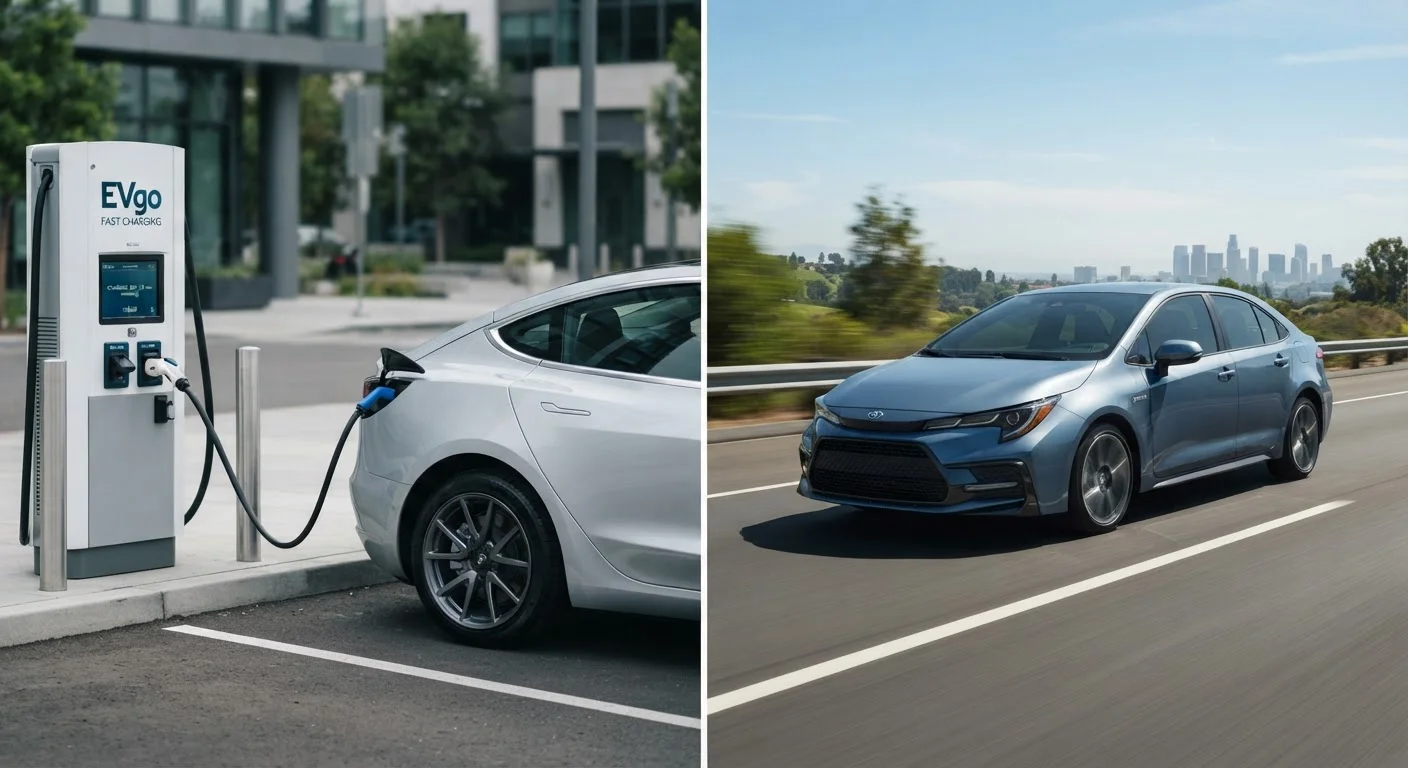
When you plug a BEV into a charging source, alternating current (AC) from the grid is converted to direct current (DC) by an onboard charger and stored in the battery. Level 2 home chargers and public DC fast-chargers accelerate this process, though charging speeds vary by vehicle and charger capability. Your home's electrical setup matters here — see our guide to home electrical systems if you're considering a home charging installation.
During driving, the battery discharges through an inverter that converts DC back to AC for the motor. One significant efficiency feature is regenerative braking: when decelerating, the electric motor acts as a generator, converting kinetic energy back into electrical energy and returning it to the battery, reducing energy waste compared to friction-only braking.
~3–4 miles/kWh
Typical BEV energy efficiency
The U.S. Department of Energy notes most BEVs achieve roughly 3 to 4 miles per kilowatt-hour under real-world driving conditions.
20–50 miles
Typical PHEV all-electric range
The EPA reports that most plug-in hybrids available in the U.S. market offer between 20 and 50 miles of all-electric driving range before the combustion engine engages.
How Hybrid Vehicles Work
Hybrid vehicles combine a conventional gasoline engine with an electric motor and a smaller battery pack. The system's control unit — often called a power split device or hybrid control module — continuously determines the most efficient balance between the two power sources based on speed, load, and battery state.
In a standard hybrid (HEV), the battery recharges entirely through regenerative braking and excess engine output; there is no external charging port. At low speeds or light loads, the electric motor may handle propulsion alone. At higher speeds or under hard acceleration, the gasoline engine takes over or both systems work together.
A plug-in hybrid (PHEV) adds a larger battery and an external charging port, enabling a meaningful all-electric driving range — commonly 20–50 miles depending on the model — before reverting to standard hybrid operation. This makes PHEVs particularly appealing for commuters whose daily mileage fits within that electric window.
For context on how combustion engines themselves differ from one another, our gasoline vs. diesel explainer covers the mechanical distinctions in depth.
| Criterion | Battery Electric Vehicle (BEV) | Hybrid (HEV/PHEV) |
|---|---|---|
| Power source | Electric motor only | Electric motor + gasoline engine |
| External charging required | Yes — always | PHEV: yes; HEV: no |
| Tailpipe emissions | None | Reduced (HEV); low/none short-range (PHEV) |
| Typical range | 150–350+ miles per charge | 400–600 miles (combined fuel + electric) |
| Regenerative braking | Yes | Yes |
| Engine oil changes needed | No | Yes |
| Battery size | Large (40–100+ kWh) | Small–medium (1–25 kWh) |
Key Differences and Practical Implications
The most immediate practical difference is infrastructure dependence. BEV drivers must plan around charging availability — at home, at work, or at public stations — while hybrid owners continue to refuel at any gas station. For long-distance travel, this distinction has real consequences.
Mechanically, BEVs are generally simpler: no oil changes, no transmission fluid, no exhaust system. Hybrids retain all of those service requirements in addition to maintaining the electric drivetrain components. Long-term ownership costs can vary significantly based on these factors, though outcomes depend on individual driving patterns and local electricity versus fuel prices.
Battery Degradation: A Shared Consideration
Both BEVs and hybrids use lithium-ion battery packs that degrade gradually over years and charge cycles. BEV battery packs are substantially larger and more expensive to replace, which is a factor worth researching before purchase. Many manufacturers offer battery warranties — typically 8 years or 100,000 miles — though terms vary. Review the specific warranty terms carefully and factor this into long-term ownership planning.
If you're also weighing how to fund a vehicle purchase, our leasing vs. financing breakdown walks through the structural differences in each payment approach, which applies equally to electric and hybrid vehicles.