
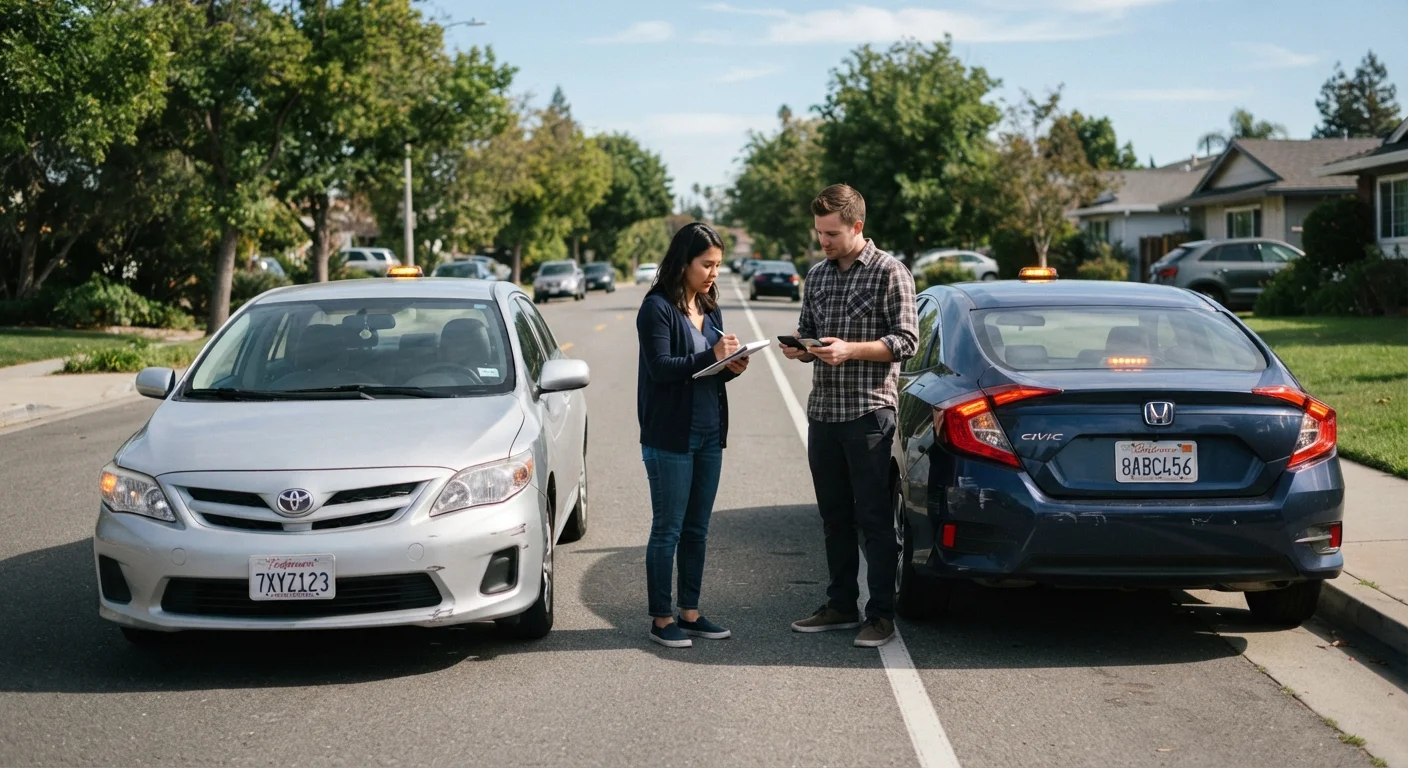
Why the First Few Minutes Matter
A fender-bender can feel chaotic, but the decisions you make in the first 10 to 20 minutes have real consequences — for your physical safety, your legal standing, and any future insurance claim. Missteps like moving vehicles before documenting damage, making informal payment agreements, or inadvertently saying something that implies fault can complicate an otherwise straightforward situation significantly.
This guide walks you through each action in order of priority. Before you begin, make sure you have the basics on hand:
What you will need
It also helps to keep a few key items in your vehicle at all times:
Smartphone camera
Photograph vehicle damage, license plates, road conditions, and the overall scene.
Pen and notepad (or notes app)
Record driver information, witness contacts, and officer badge numbers.
Reflective warning triangles or road flares
Alert oncoming traffic to your stopped vehicles, especially on busy roads.
Accident information checklist card
A pre-printed guide reminding you what details to collect under stress.
Step-by-Step: What to Do at the Scene
Follow these steps in sequence. The first two are time-critical safety priorities; the remainder can happen in parallel once the scene is secure.
Move to Safety and Activate Hazard Lights
If the vehicles are drivable and it is safe to do so, move them out of active traffic — to a shoulder, parking lot, or side street. Turn on hazard lights immediately. Leaving vehicles in a travel lane creates serious secondary-collision risk. If a car cannot be moved, stay inside with your seatbelt on until help arrives.
Check for Injuries and Call 911 if Needed
Ask everyone involved — including your own passengers — whether they are hurt. Adrenaline can mask pain, so take complaints seriously even if they seem minor. Call 911 immediately if anyone reports pain, dizziness, or visible injury. Even without obvious injuries, calling for a police officer to file a report is advisable and required in many jurisdictions.
Document the Scene Before Moving Anything
Use your phone to photograph every vehicle from multiple angles, capturing all visible damage, license plates, and the overall scene including road signs, signals, and skid marks. Also photograph the other driver's license, registration, and insurance card rather than copying information by hand — this reduces transcription errors.
Exchange Information with the Other Driver
Collect and provide the following from each driver involved:
- Full legal name and contact number
- Driver's license number and issuing state
- Vehicle license plate and state
- Insurance company name and policy number
- Vehicle make, model, and year
If the other driver is not the vehicle owner, get the owner's information as well. Do not share more personal information than necessary.
Speak with Witnesses and the Police Officer
If bystanders witnessed the accident, politely ask for their names and phone numbers. Independent witness accounts can be valuable if liability is disputed. When the responding officer arrives, give a clear, factual account of what happened. Ask for the report number and the officer's name and badge number before they leave.
Notify Your Insurance Company
Contact your insurer to report the incident as soon as possible — most policies require prompt notification even if you haven't decided whether to file a formal claim. Reporting is not the same as filing; it simply creates a record. For guidance on what to say during that initial call, see how to communicate with your insurer after a loss.
Never Admit Fault at the Scene
Saying "I'm sorry" or "I didn't see you" at the scene can be used as an admission of liability, even if you weren't legally at fault. Keep your conversation factual — exchange information, confirm everyone is okay, and let your insurer and the official report establish what happened. Fault is a legal and insurance determination, not something to negotiate on the roadside.
Don't Skip the Police Report for 'Minor' Damage
Even when damage appears cosmetic, filing a police report creates an official, timestamped record that protects you if the other party later claims greater injuries or damage. Some states require a report any time damage exceeds a certain dollar threshold. Check your state's requirements and err on the side of documentation.
Keep an Accident Info Card in Your Glove Box
Print a simple card listing what to collect at the scene — other driver's name, license number, plate, insurer, and witness contacts — and store it in your glove box. In the stress of the moment, having a checklist prevents you from forgetting critical details. Your insurer's claims number should be on the card too.
After the Scene: Deciding Whether to File a Claim
Once you've left the scene, you'll face a practical question: should you file a formal claim with your insurer? The answer depends on the severity of damage, the cost relative to your deductible, and your claims history. For minor damage that costs only slightly more than your deductible to repair, filing may not be the most financially sound move. When filing a claim may not be the right move explores this tradeoff in detail.
If you do decide to file, understanding the process in advance reduces surprises. What actually happens after you file an insurance claim walks through every stage from first notice to final settlement. And if this is your first time navigating the process, a first-timer's roadmap to the insurance claims process provides end-to-end context.
It's also worth knowing which type of coverage applies to your situation. A collision with another vehicle typically falls under collision coverage — not comprehensive. Collision vs. comprehensive auto coverage explains which situations each type handles. For broader guidance on managing coverage and claims, visit the Claims & Coverage Tips hub.
This article provides general informational guidance only and does not constitute legal, insurance, or financial advice. Coverage terms, reporting requirements, and legal obligations vary by state and insurer. Consult a licensed insurance professional or attorney for advice specific to your situation.