Why Light Conditions Matter More Than You Think
One of the most common reasons houseplants fail isn't neglect - it's a mismatch between a plant's light requirements and what a room actually delivers. Many homes, particularly apartments, north-facing rooms, or spaces with small windows, simply can't sustain sun-loving varieties. Choosing plants adapted to low or indirect light is the single most reliable way to keep greenery alive in these spaces.
It's worth clarifying what "low light" actually means. In botanical terms, it refers to areas away from windows where a room receives indirect or diffused natural light - not a completely dark room. Very few plants can survive in true darkness indefinitely. The good news is that many beloved houseplant species evolved beneath forest canopies, where dappled shade is the norm, making them genuinely well-suited to the dimmer conditions most interiors offer.
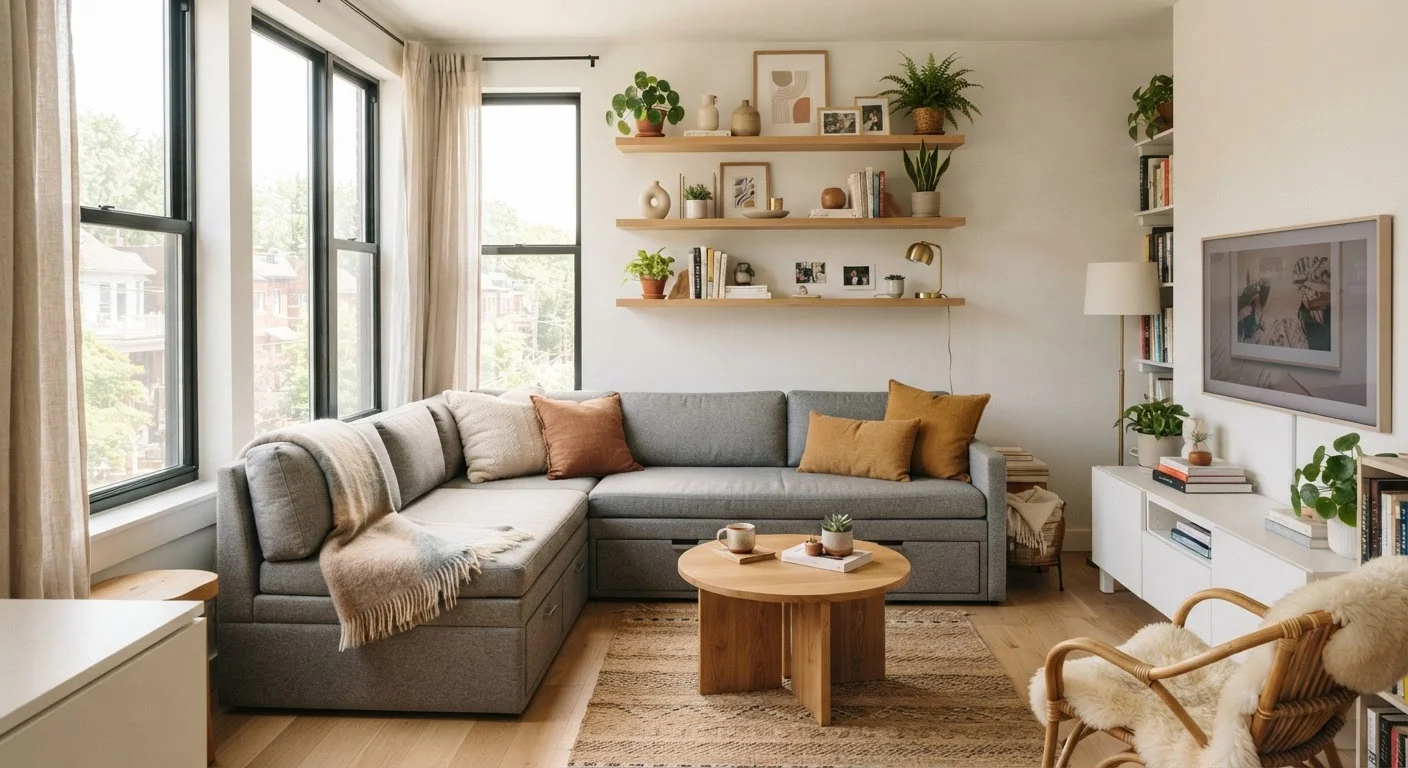
If you're working within a compact home and want greenery to do double duty as décor, our guide to small-space living covers how plants can add warmth and visual depth without crowding a room.
Pothos (Epipremnum aureum)
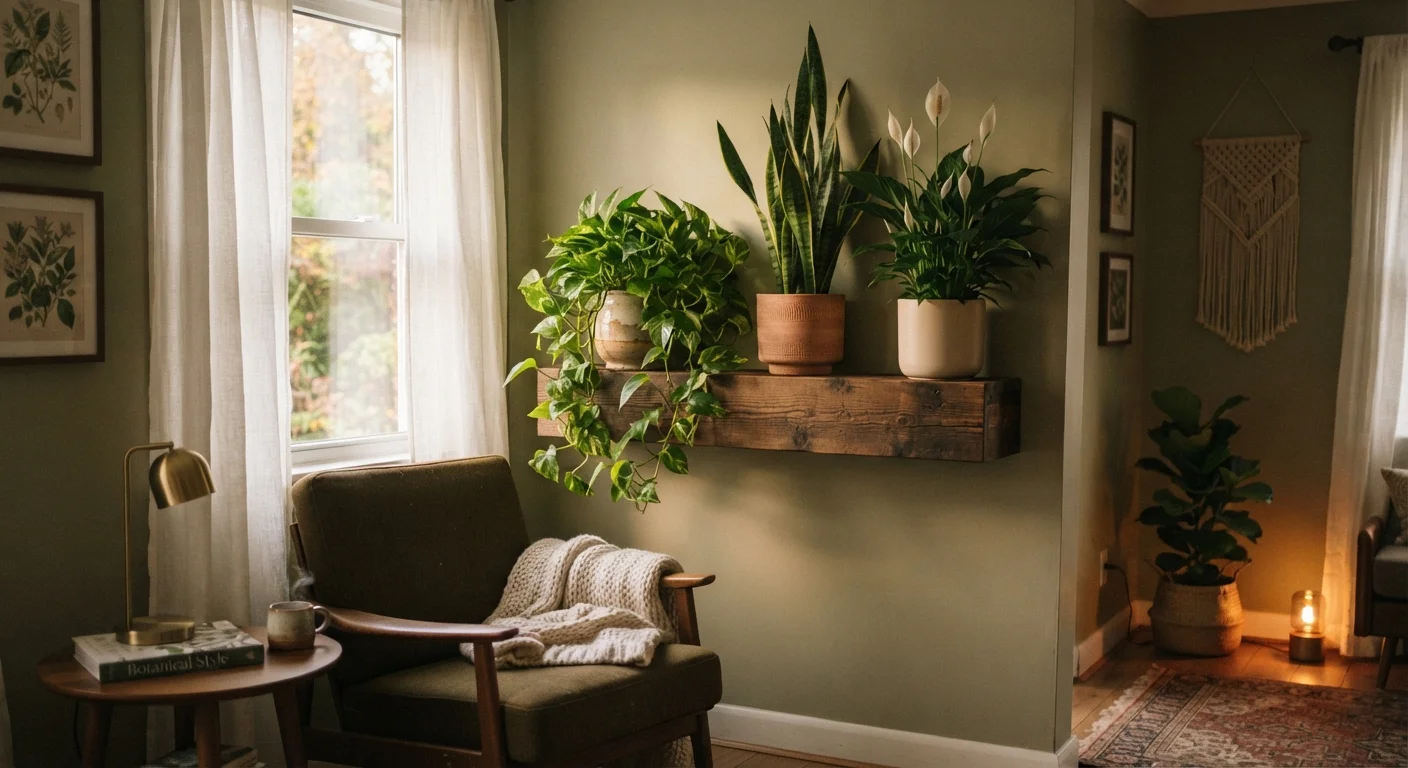
Pothos is arguably the most forgiving houseplant for low-light spaces. Its trailing vines look striking on shelves or in hanging planters, and it tolerates a wide range of neglect - irregular watering, inconsistent light, and even occasional drafts. Pothos will grow more slowly in dim conditions but will remain healthy and green. Golden, marble queen, and neon varieties each offer slightly different leaf coloring to suit different interiors.
Water when the top inch of soil feels dry, and expect to do this roughly every one to two weeks depending on your room's humidity and temperature.
Pothos thrives on neglect, making it the ideal starter plant for low-light rooms.
Snake Plant (Dracaena trifasciata)
The snake plant's upright, architectural form suits modern and minimalist interiors particularly well. It tolerates low light and infrequent watering better than almost any other common houseplant - monthly watering is often sufficient in winter. Its stiff, sword-shaped leaves with yellow margins create strong visual interest without requiring much floor space.
Avoid placing snake plants in standing water or very dense, moisture-retaining soil mixes, as the roots are susceptible to rot.
Snake plants can survive monthly watering in winter, making them exceptionally low-maintenance.
ZZ Plant (Zamioculcas zamiifolia)
The ZZ plant stores water in its thick rhizomes (underground stems), which allows it to go extended periods without watering - sometimes several weeks. Its glossy, deep-green leaves reflect available light, helping the plant look lush even in poorly lit corners. ZZ plants grow slowly, which is actually an advantage in small rooms where you don't want rapid spread.
One caution: all parts of the ZZ plant contain calcium oxalate crystals, which are irritating if ingested. Keep it out of reach of children and pets.
ZZ plants store water in underground rhizomes, surviving weeks without attention.
Peace Lily (Spathiphyllum)
Peace lilies are one of the few low-light plants that flower reliably indoors, producing elegant white blooms when conditions are right. They prefer consistently moist soil but communicate their needs clearly - leaves droop noticeably when thirsty, then recover quickly after watering. This makes them particularly useful for people still developing a watering routine.
Peace lilies are toxic to cats and dogs if ingested, so placement matters if you share your home with animals. For ideas on creating an enriching indoor environment for pets alongside plants, see our overview of indoor pet enrichment.
Peace lilies droop visibly when thirsty, giving clear watering cues even to beginners.
Cast Iron Plant (Aspidistra elatior)
True to its name, the cast iron plant tolerates conditions that would kill most other houseplants - deep shade, temperature fluctuations, drought, and poor soil. Its broad, dark-green strap leaves grow slowly but maintain their appearance for years with minimal intervention. It's a particularly good choice for hallways, stairwells, or interior rooms that receive almost no direct daylight.
Cast iron plants rarely need repotting and are largely pest-resistant, making them among the lowest-maintenance options available.
Cast iron plants endure deep shade and neglect that would defeat nearly any other houseplant.
Chinese Evergreen (Aglaonema)
Chinese evergreens are prized for their striking, patterned foliage - varieties range from deep green with silver markings to pink-edged and red-tinged leaves. They adapt readily to low-light conditions, though the more colorful varieties perform better with slightly brighter indirect light. These plants prefer to dry out slightly between waterings and are tolerant of lower humidity levels common in heated or air-conditioned homes.
Aglaonemas are also relatively slow-growing, so a single plant can fill a spot attractively for years without outgrowing its container.
Chinese evergreens offer striking leaf patterns that bring visual interest to dark corners.
Choosing and Caring for Your Low-Light Plants
Boosting Light Without Renovation
If your room's natural light is very limited, a basic grow light on a timer can supplement what windows provide, extending the range of plants you can keep healthy. Look for full-spectrum LED options designed for indoor plants - these run at low wattage and can be placed discreetly on shelves. Even a few additional hours of supplemental light each day makes a measurable difference for slower-growing varieties.
Beyond selecting the right species, a few consistent habits make a meaningful difference. Dust accumulates on broad leaves and blocks the limited light these plants receive - wiping leaves gently with a damp cloth every few weeks helps. Rotate pots a quarter-turn monthly so all sides of the plant receive equal exposure. And when in doubt about watering, err toward underwatering rather than overwatering; root rot from soggy soil is far more common than drought stress in low-light conditions, where soil dries more slowly.
If a room feels persistently unwelcoming despite thoughtful plant placement, the issue may run deeper than greenery alone. Our piece on signs a room isn't working for you can help identify layout and design factors that affect how a space feels to live in.
This article provides general plant care information for educational purposes. Individual plant health depends on specific environmental conditions. Consult a local nursery professional for guidance tailored to your home's conditions.