Why Small-Space Thinking Is a Skill, Not a Compromise
Living in a compact apartment or small home isn't a lesser version of the life you'd have in a larger one - it's a different design problem with its own solutions. The challenge isn't the square footage; it's how deliberately you use it. Most small spaces underperform not because they're too small, but because they're organized around habits suited to larger homes.
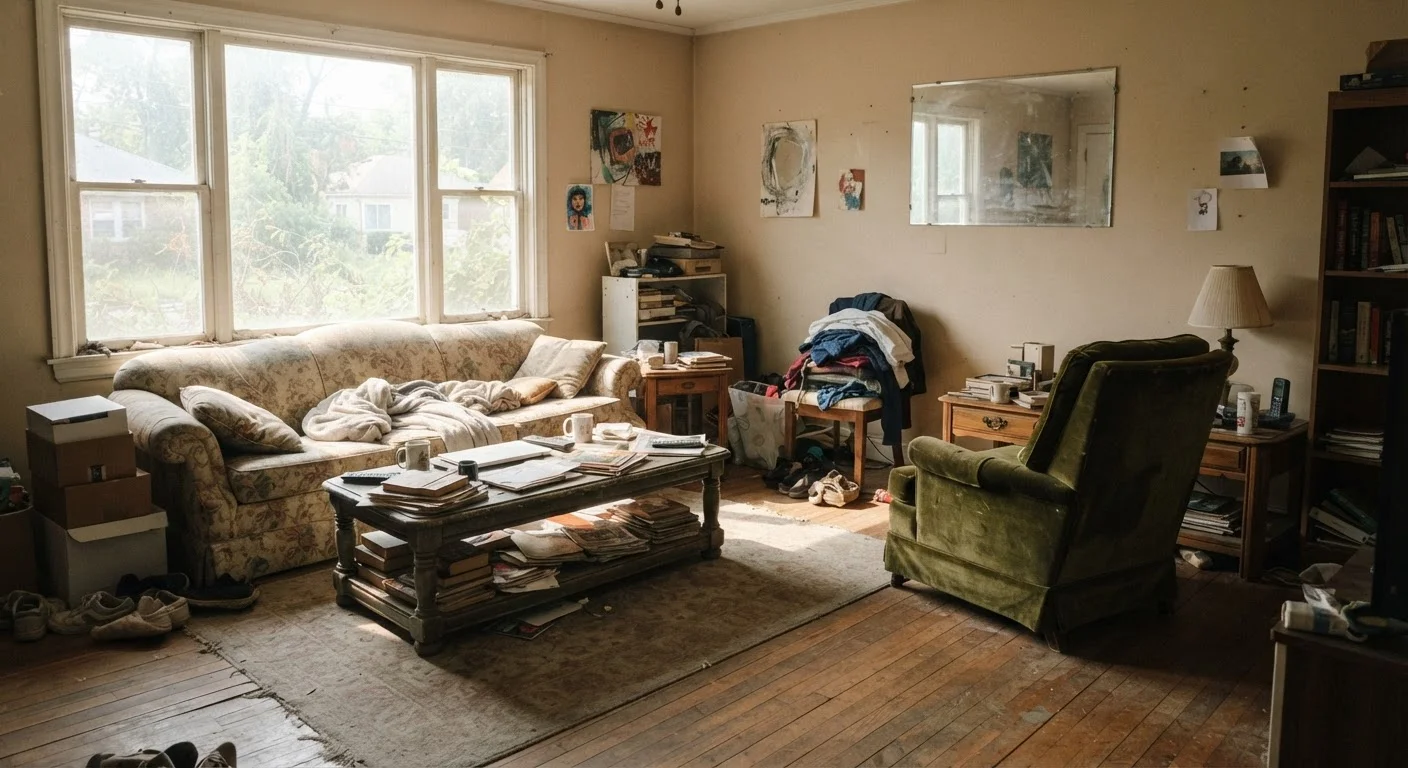
The first shift is psychological: stop thinking of storage as a problem and start thinking of it as a design element. Every surface, every wall, and every awkward corner is an opportunity. If you notice a room consistently frustrates you, that's useful data. Our guide on signs a room isn't working for you can help you identify what's actually causing friction before you start rearranging.
Multi-functional furniture
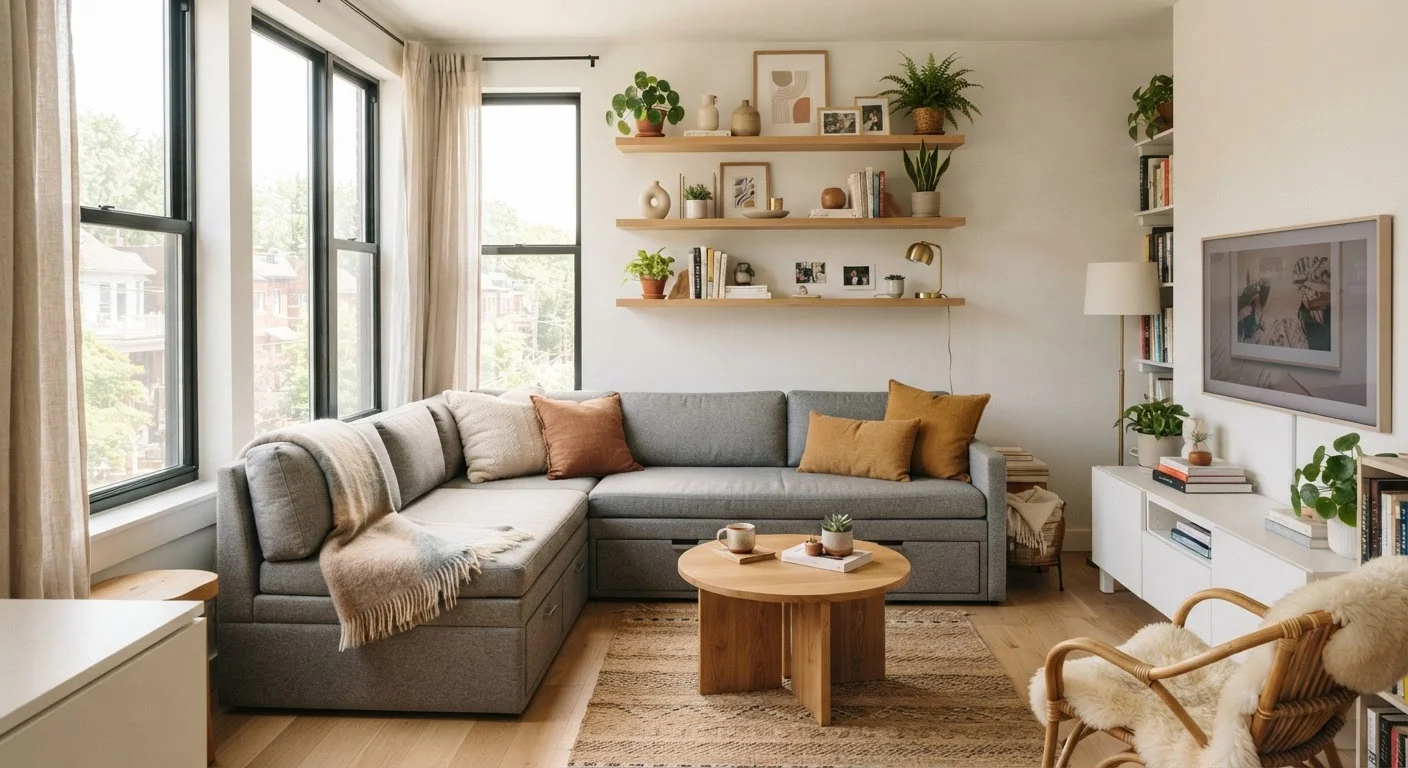
Furniture designed to serve more than one purpose, such as a storage ottoman or a sofa bed, reducing the number of individual pieces needed in a small room.
Vertical space
The usable area on walls and near ceilings above typical furniture height - often overlooked but valuable for shelving, storage, and visual effect.
Zoning
Using furniture placement, rugs, lighting, or dividers to create visually distinct areas for different activities within a single open room.
Floor plan scale
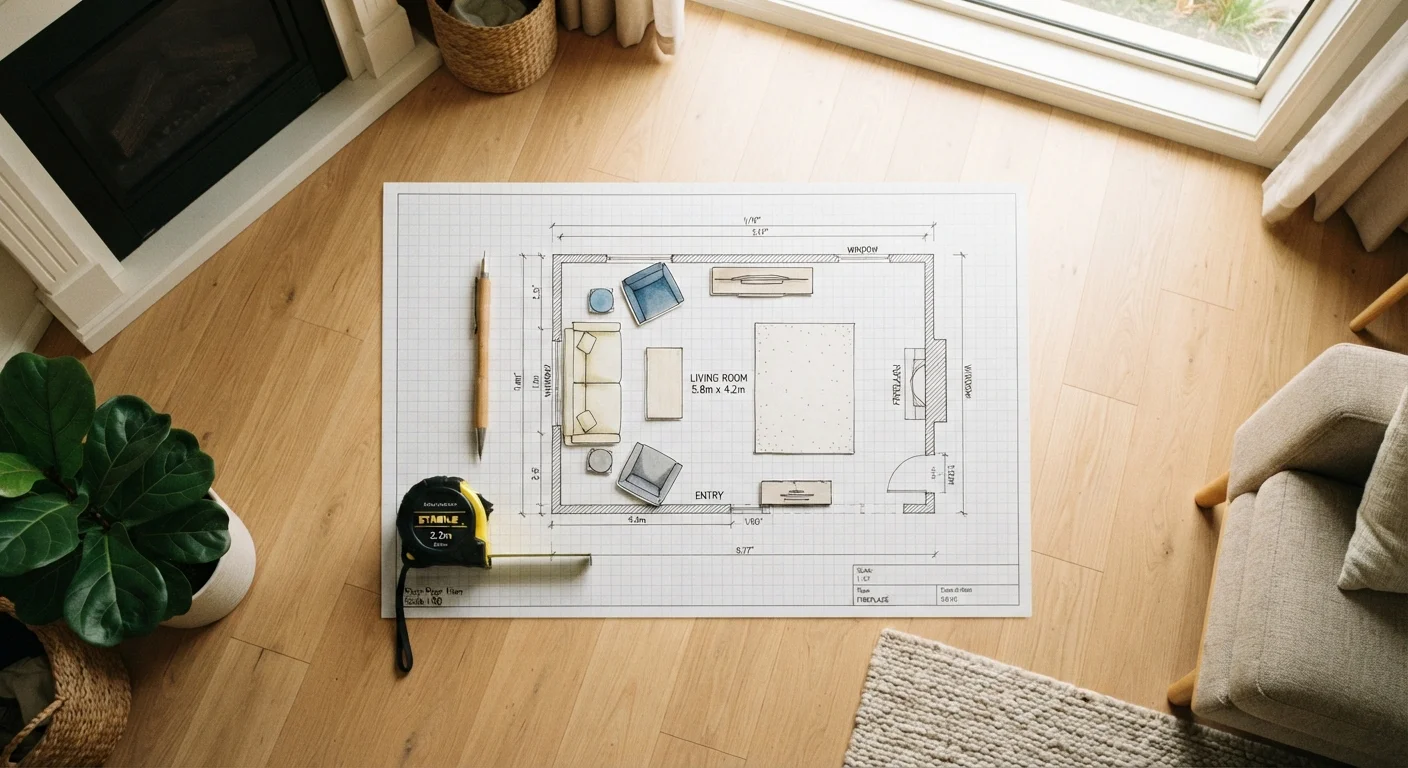
A proportional drawing or digital layout of a room's dimensions, used to plan furniture arrangements accurately before physically moving anything.
Visual weight
How heavy or bulky a piece of furniture appears, regardless of its actual mass. Furniture with high visual weight (like dark, solid pieces) can make a small room feel more crowded.
Furniture That Does More Than One Job
In a small space, furniture scale and function matter more than aesthetics. A statement piece that consumes a third of your living room floor will feel like a mistake within weeks. The guiding principle: every piece should justify its footprint by serving at least one primary and one secondary function.
- Storage ottomans replace coffee tables while hiding blankets, charging cables, or seasonal items.
- Bed frames with drawers eliminate the need for a separate dresser in a bedroom.
- Extendable dining tables seat two most days and six when needed, without permanent bulk.
- Sofa beds and daybeds convert living rooms into functional guest rooms without a dedicated guest room.
Before buying anything new, measure twice. Sketch your room to scale - or use a digital layout tool - so you know exactly what fits before committing. Our guide to planning furniture layouts before you move anything walks through exactly how to do this.
Measure Before You Buy Anything
The most common small-space mistake is purchasing furniture based on how it looks in a showroom rather than how it fits in your actual room. Measure your space, account for traffic flow (typically 30-36 inches for main walkways), and confirm dimensions against the piece's specifications before committing. A sofa that's 6 inches too wide can throw off an entire layout.
Vertical Space, Light, and Visual Tricks
Most people furnish a room from the floor up to about five feet - and ignore everything above. In a small home, the space between your tallest furniture and the ceiling is underutilized square footage. Floating shelves, tall bookcases, and wall-mounted cabinets all move storage off the floor and upward, which simultaneously frees walking space and draws the eye up, making ceilings feel higher.
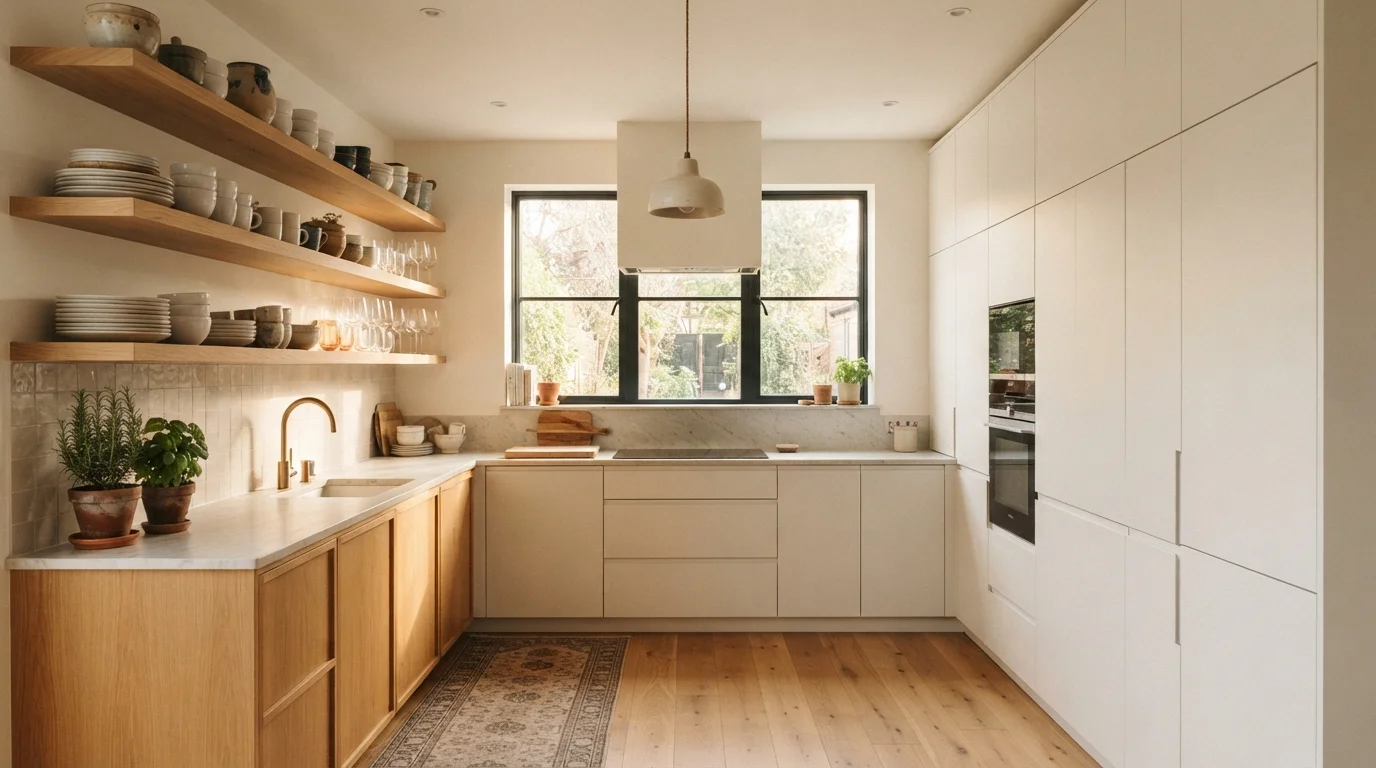
Light does the same work differently. Natural light is the most powerful space-expander available - keep window sills clear and choose lightweight window treatments over heavy drapes. Mirrors placed across from windows reflect that light into the room's darker corners. In kitchens, the choice between open shelves and closed cabinets also affects how large and airy the room feels.
Color and pattern play supporting roles. Light wall colors reflect more light; keeping walls and trim the same hue reduces visual interruption. Large-scale patterns on small walls can feel overwhelming - if you want pattern, introduce it through textiles rather than permanent surfaces.
Renters: You Have More Options Than You Think
Many vertical storage solutions - freestanding shelving, tension pole units, over-door organizers, peel-and-stick hooks - require no drilling and leave no damage. Before assuming a change isn't allowed, check your lease specifically; many only restrict permanent alterations. For more on what's genuinely off-limits versus fair game, see our guide on decorating rented walls without damage.
Zoning: Dividing a Room Without Walls
In studio apartments or open-plan layouts, one of the hardest problems is creating separation between activities - working, sleeping, cooking, relaxing - without physical boundaries. Zoning solves this through visual and spatial cues rather than construction.
A few reliable approaches:
- Area rugs define zones clearly. A rug under the sofa signals 'living room'; no rug under the desk signals 'work area.' They cost less than room dividers and are easy to change.
- Furniture placement acts as a soft wall. A sofa facing away from a sleeping area creates a psychological boundary without blocking light.
- Lighting layers reinforce zones. A pendant over the dining area and a floor lamp over the reading chair establish distinct atmospheres in the same room.
- Bookshelves or open shelving units used as dividers allow light to pass through while carving space visually.
If you work from home in a small space, intentional zoning is especially valuable. Our piece on setting up a home office that supports focus covers how to create a workspace that feels separate even when it shares a room.
Storage Habits That Keep Small Spaces Functional
Even the best-designed small space will deteriorate quickly without consistent habits. Storage systems only work if the things going into them are regularly edited. In a compact home, there's less buffer - clutter accumulates faster and disrupts the space more visibly than it would in a larger home.
A practical approach: adopt a loose 'one-in, one-out' rule for items that tend to pile up - clothing, kitchenware, paper. When something new comes in, something that no longer earns its place leaves. This isn't minimalism as a philosophy; it's just maintenance arithmetic for limited square footage.
For room-by-room organization strategies that go deeper than general tips, the room-by-room guide to functional home organization applies these principles to each specific area of the home. And if you rent, renter-friendly upgrades can help you improve your setup without lease violations.
Avoid Over-Organizing for the Wrong Life
It's tempting to invest in elaborate storage systems based on an idealized version of how you'd like to live rather than how you actually live. Highly specific organizers - a drawer insert sized for a collection you don't yet have, a filing system for paperwork you handle digitally - can waste money and space. Organize around your real habits first, then refine.