Your Home Speaks - Are You Listening?
Most people assume that if a room looks furnished and tidy, it's working. But the way a space functions - and how it makes you feel - often tells a different story. You might find yourself gravitating to one corner of the house while ignoring another, or noticing a low-level irritability that evaporates the moment you step outside. These aren't random moods. They're signals worth decoding.
Interior design isn't just about aesthetics. It's about how a space supports the activities and rhythms of the people inside it. When a room fights against those rhythms, it creates friction you feel before you can name it. Understanding what designers call 'flow' can help you articulate what's going wrong - and point you toward practical fixes.
The signs below aren't about taste. They're about function, behavior, and comfort - the observable patterns that reveal when a room isn't doing its job.
You avoid the room without a clear reason
When you consistently bypass a room - choosing to work at the kitchen counter instead of the home office, or watching TV in the bedroom rather than the living room - something about that space isn't serving you. Avoidance is rarely arbitrary. The room may lack warmth, have poor acoustics, feel isolating, or simply not support the activity it's supposed to enable.
Ask yourself: what would need to change for you to actually want to be in there? The answer is usually more specific than "I just don't like it."
Avoidance is rarely arbitrary - it's your most honest feedback about a room.
You're always losing things in it
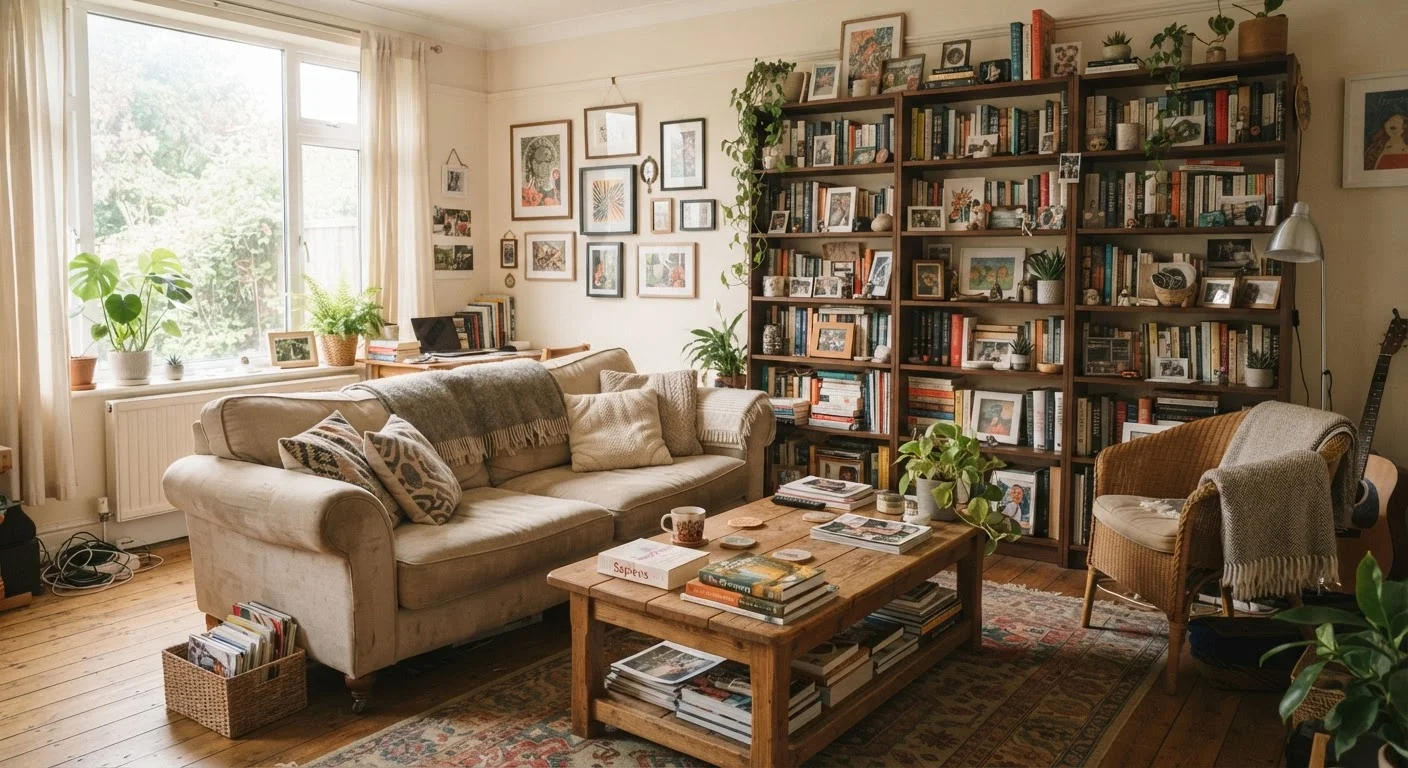
A room where items disappear - remotes, keys, reading glasses, chargers - is a room without adequate homes for everyday objects. When storage doesn't match the actual behavior that happens in a space, belongings get set down wherever there's a flat surface. The problem isn't messiness; it's a mismatch between how you use the room and how it's organized.
Observe where things naturally land. That's where intentional storage should go. Fighting natural tendencies with willpower rarely works long-term.
Things get lost where storage doesn't match how you actually use the room.
Moving through it feels like an obstacle course
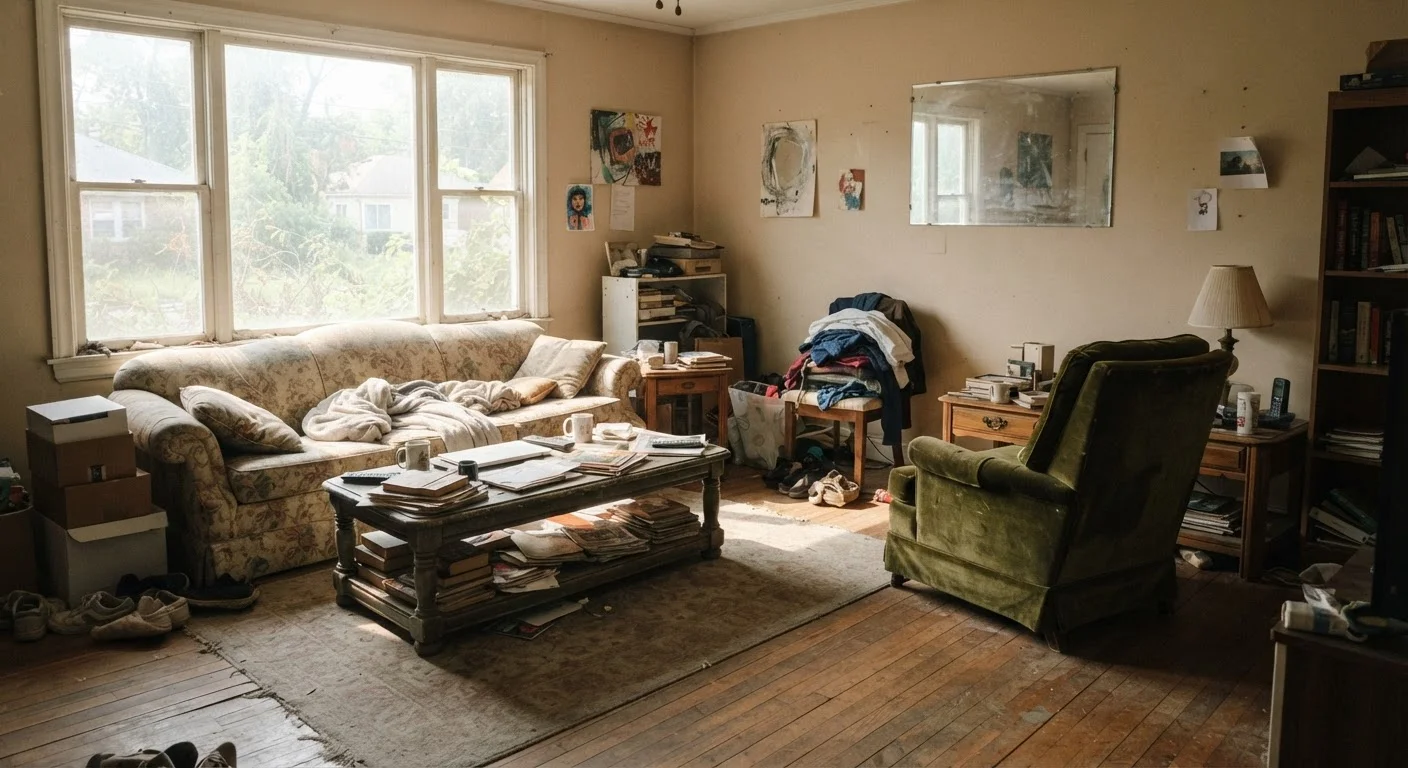
If you regularly brush past furniture, squeeze around corners, or have to move something to get to something else, the traffic flow isn't working. Good room layout accounts for movement paths - the routes people naturally take through a space - not just how furniture looks from a doorway.
Flow describes how naturally and freely people move through a space, and blocked paths are one of the most common layout failures. A general guideline: main walkways benefit from at least 36 inches of clearance; around seating, 18 inches is a useful minimum.
Blocked paths are a layout failure, not a furniture problem.
The lighting makes tasks harder than they should be
Squinting to read, turning on your phone flashlight to find something in a drawer, or feeling oddly tired in a room that gets plenty of daylight - these are lighting problems. Many rooms rely on a single overhead fixture that creates glare in some areas and deep shadow in others. Good lighting layering means combining ambient, task, and accent sources to match how the room is actually used.
Natural light compounds the issue. Common assumptions about maximizing natural light often backfire, so it's worth understanding what actually affects brightness before making changes.
Squinting, shadows, and eye strain are symptoms of poor lighting layering.
The room tries to do too many things at once
A bedroom with a work desk, exercise equipment, and a TV, or a dining room doubling as a homework station and craft space, often ends up serving none of those purposes well. When a room lacks a primary identity, it creates visual noise and mental tension - you sit down to relax and can't stop seeing the unfinished work, or vice versa.
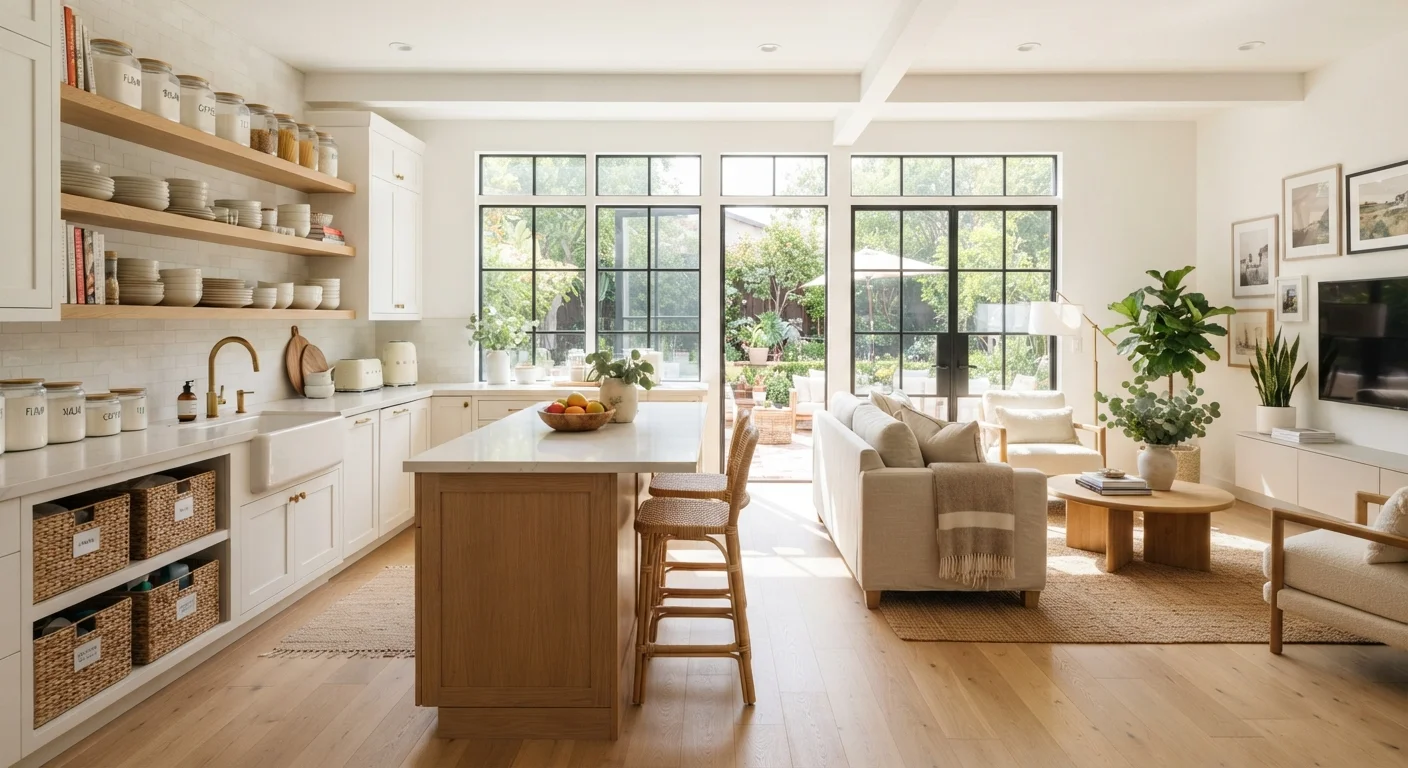
This is particularly relevant in smaller homes. Making a compact space function well usually means defining distinct zones rather than stacking uses randomly. Even a low bookshelf or a change in rug can visually separate a space into purposeful areas.
A room without a primary identity creates mental tension even at rest.
Conversation feels awkward or effortful
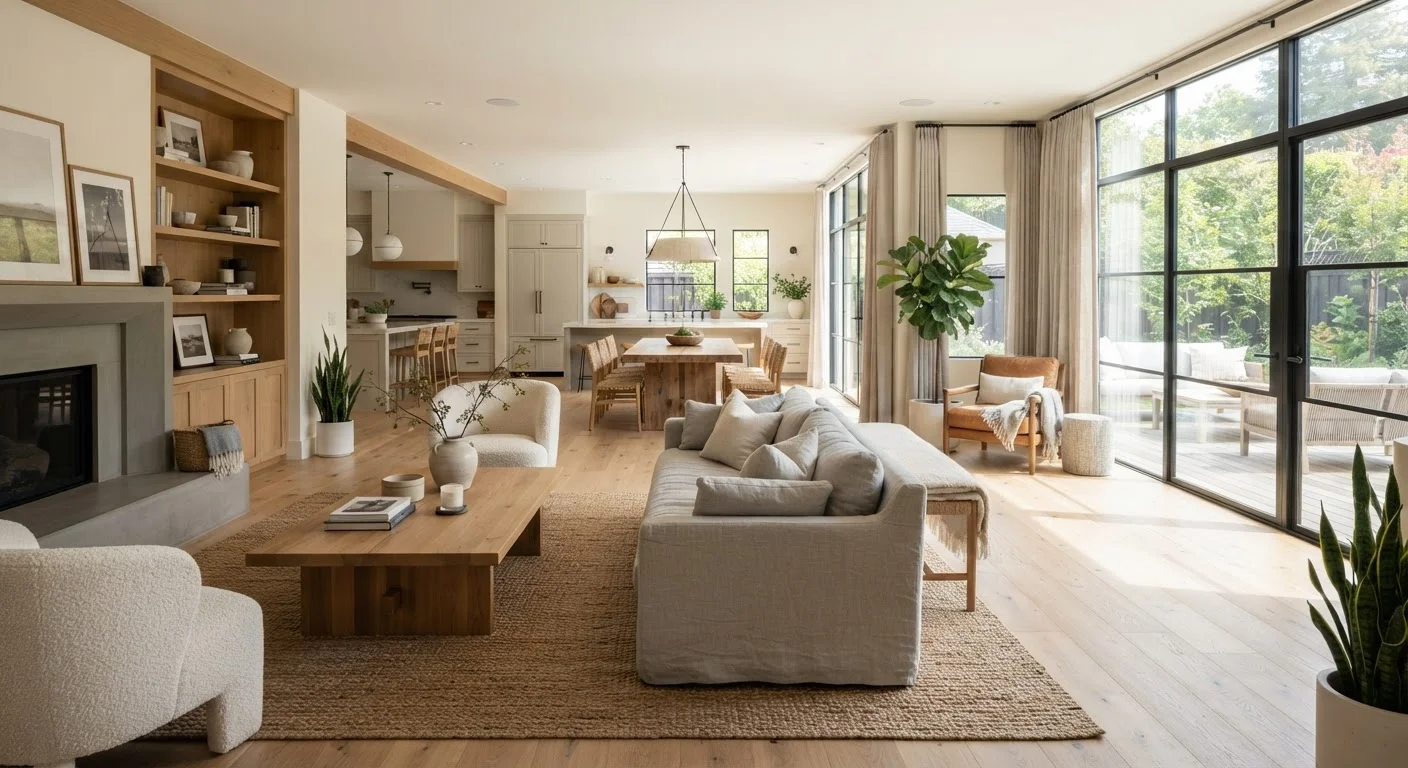
In seating areas, furniture placement directly affects how easy it is to talk and make eye contact. Chairs arranged in a row, seating pushed against all four walls, or a sofa positioned so guests must crane their necks - these arrangements work against natural conversation. Furniture should generally face inward, creating a loose circle or L-shape that encourages engagement.
Acoustics matter too. Hard surfaces - bare floors, uncurtained windows, no soft furnishings - create echo and background noise that makes conversation genuinely tiring. A rug, curtains, or upholstered furniture can absorb enough sound to make a real difference. See how to size rugs correctly for any room to ensure yours is actually doing its job.
Furniture arranged against walls often makes conversation more effortful, not less.
You feel tense or unsettled inside it
A persistent sense of unease in a room - hard to name but hard to ignore - is worth taking seriously. Environmental psychology research suggests that factors like ceiling height perception, clutter density, color temperature, and even the proportions of furniture relative to the room can affect mood and stress levels. This doesn't mean rooms cause clinical anxiety, but they can contribute to a baseline of low-level tension.
If a room consistently makes you feel on edge, consider whether it's overcrowded, poorly lit, or lacking any visual resting point - a clear, uncluttered surface or view. Persistent stress from your environment can quietly compound other pressures; learning to recognize when everyday stress has become something more is a useful broader skill.
Clutter density, poor lighting, and cramped proportions can quietly elevate baseline tension.
Turning Observations Into Action
Diagnosing a room is the first step. The good news is that most of these problems don't require renovation - they require rethinking. Furniture rearrangement, better storage placement, a lighting upgrade, or simply deciding what a room is actually for can resolve issues that have bothered you for years.
Try a Fresh-Eyes Walkthrough
Stand at the entrance to each room and ask: what is this room for, and does everything in it serve that purpose? Note what you step around, where your eye has nowhere comfortable to rest, and which activities you've stopped doing in the space. This simple audit often surfaces problems that familiarity has made invisible.
For a structured approach to tackling each space in your home, the room-by-room guide to functional home organization offers a practical framework you can apply immediately. And if clutter feels persistent even after cleaning, the reasons go deeper than you might expect.
Your home should work for the life you actually live - not the one it was staged to suggest.