The Real Reason 'Cleaning' Doesn't Fix the Feeling
You've straightened the cushions, put things away, and wiped down the surfaces - yet the room still feels restless. That disconnect is more common than most people realize, and it has a straightforward explanation: cleanliness and visual calm are not the same thing.
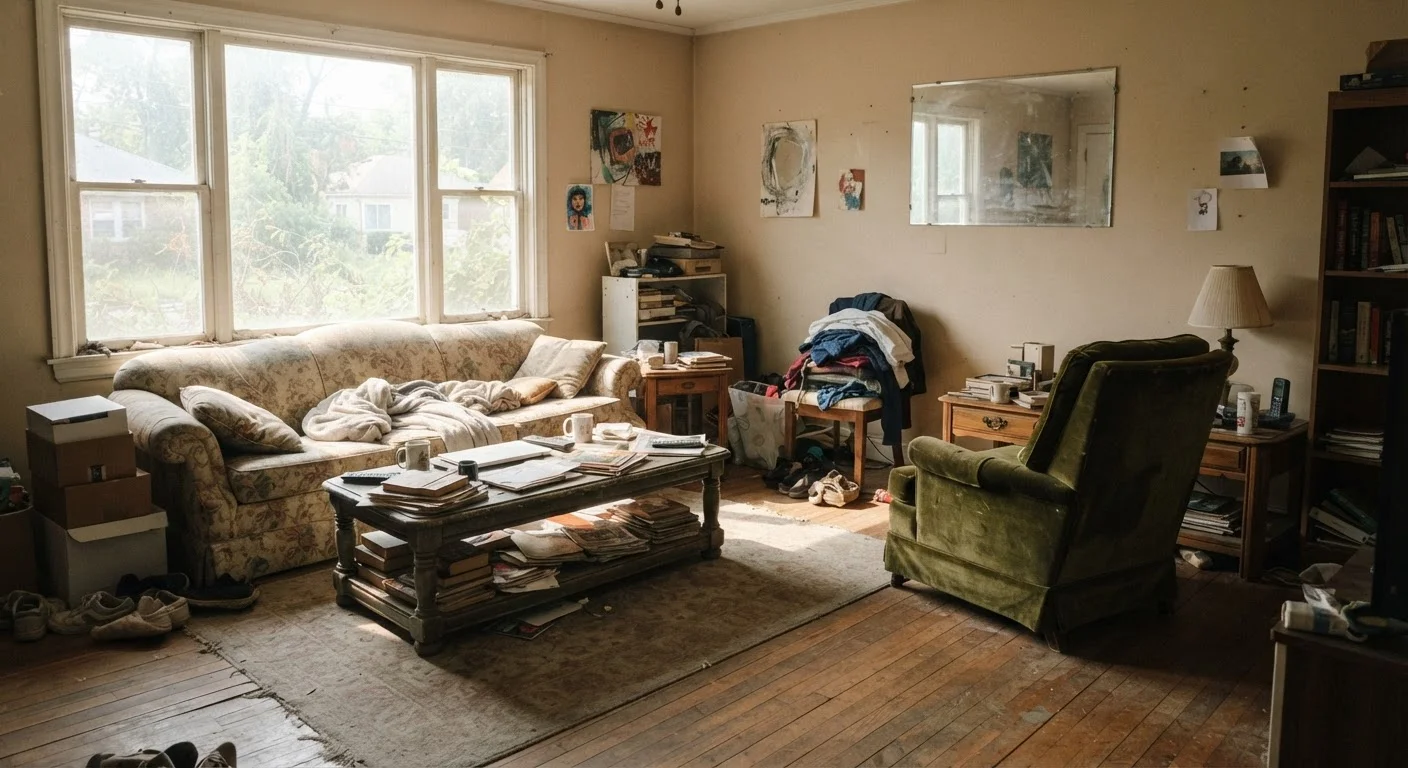
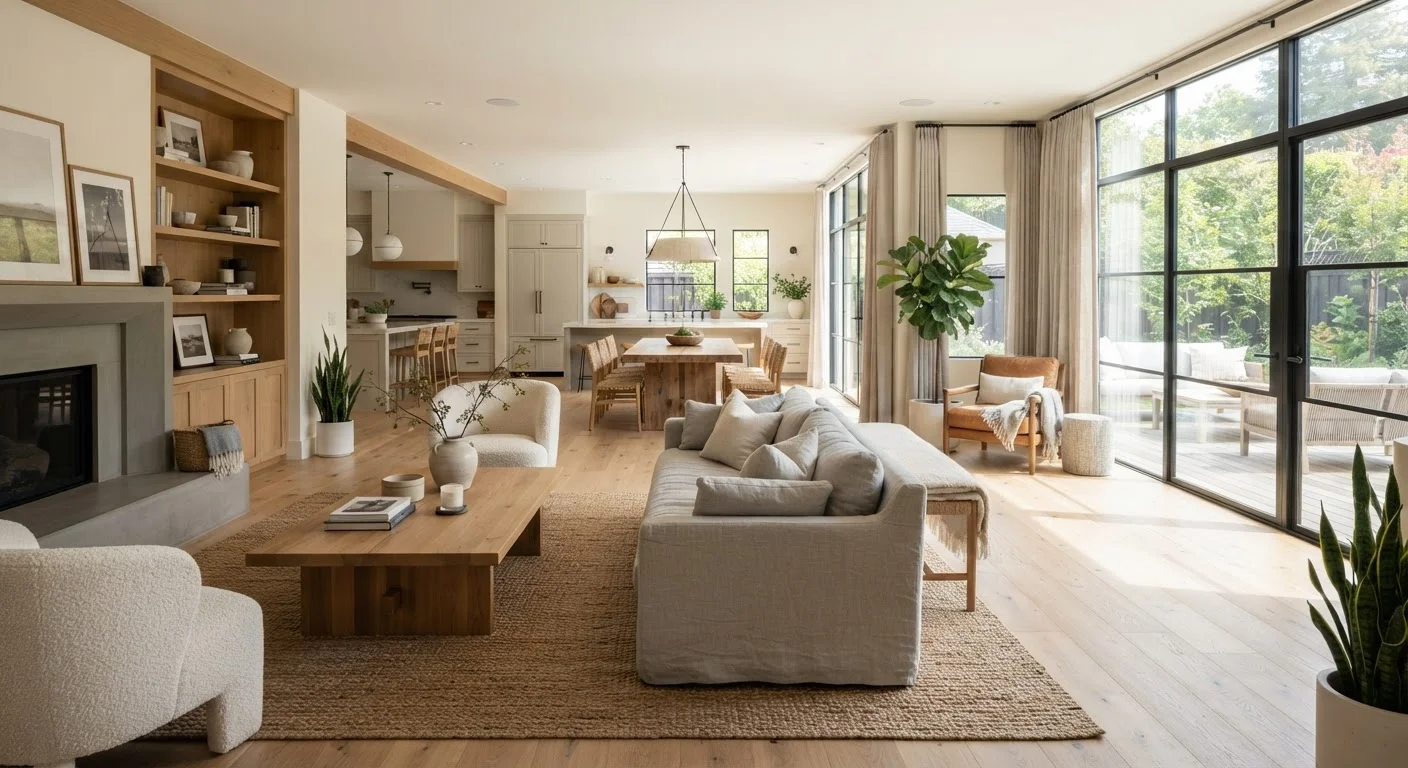
A room can be genuinely tidy and still feel cluttered if the underlying layout, lighting, or storage structure works against the eye. The brain reads spatial organization through cues like clear sightlines, defined zones, and surface breathing room - none of which are restored by surface tidying alone.
Cleaning and Organizing Are Not the Same
Tidying up removes surface mess, but it doesn't address the structural reasons a room feels chaotic. If the layout, storage system, or decor density is the problem, no amount of straightening will produce lasting calm. As explored in decluttering vs. organizing, understanding the distinction is where lasting improvement begins.
Understanding why a space feels chaotic is the starting point. The mistakes below are the most common structural reasons a living room stays visually busy, no matter how often it gets cleaned.
Common Mistakes That Keep Living Rooms Feeling Cluttered
Most of these errors happen gradually and without intention. A furniture arrangement that made sense when you moved in, a rug you've had for years, decor that accumulated piece by piece - none of these feel like problems in isolation. Collectively, though, they create a room that resists calm.
Pushing all furniture against the walls to 'open up' the room.
Why it happens: It feels intuitive that moving furniture to the perimeter creates more floor space, but this actually makes a room feel empty in the center and chaotic overall.
Using a rug that's too small for the seating area.
Why it happens: Smaller rugs are less expensive and easier to manage, so people default to them - but an undersized rug visually fragments the room and makes furniture groupings look unintentional.
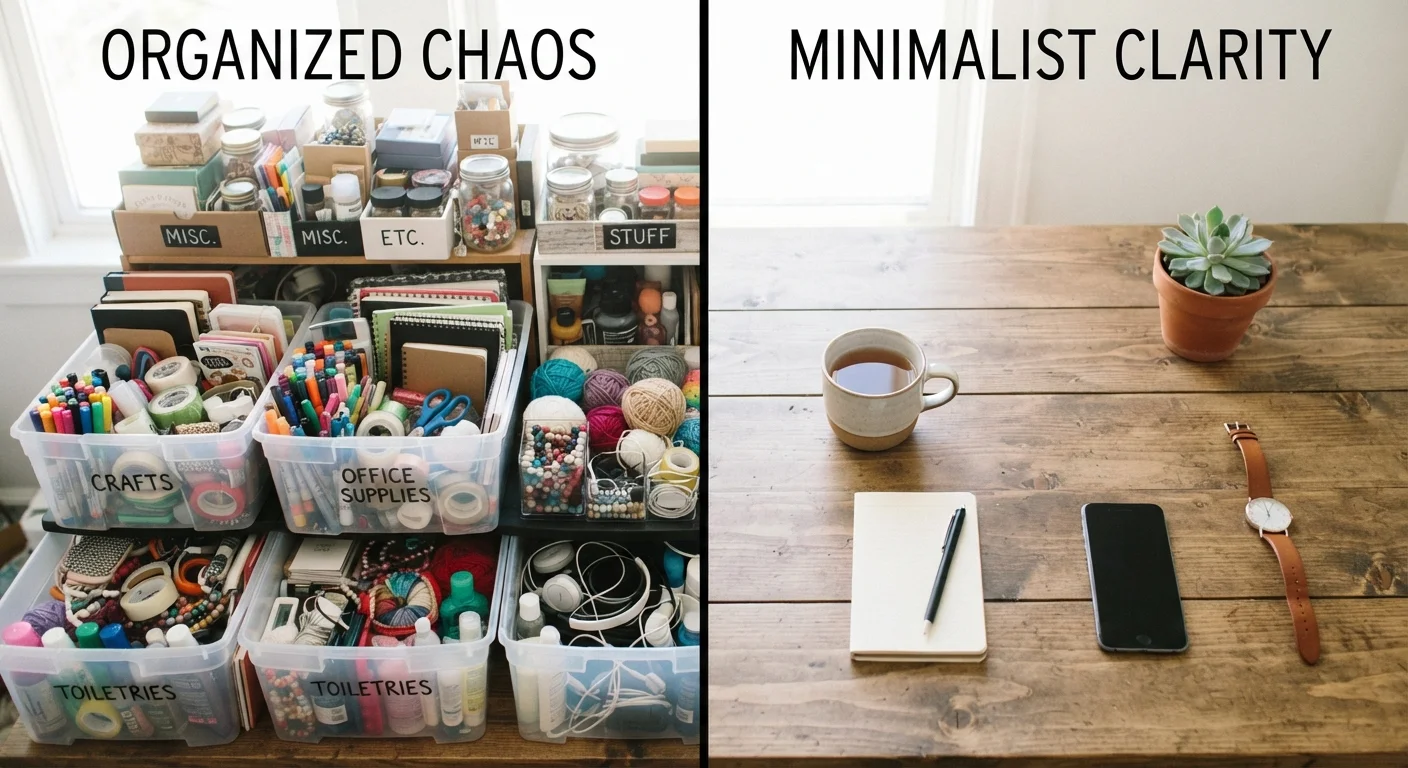
Displaying too many small decorative items across multiple surfaces.
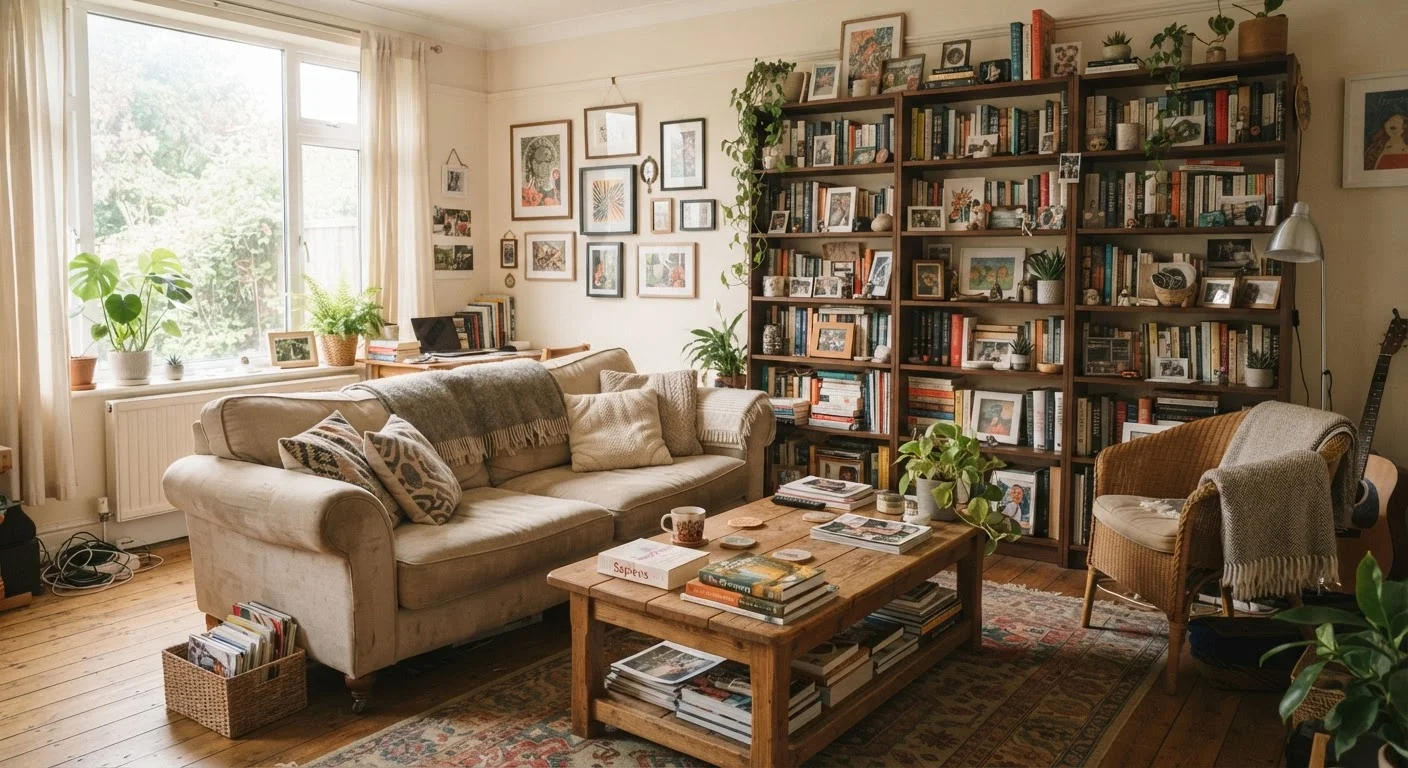
Why it happens: Collected items, gifts, and impulse decor purchases accumulate gradually. Each piece seemed worth displaying, but together they generate visual noise the brain processes as disorder.
Relying entirely on overhead lighting for the whole room.
Why it happens: Overhead fixtures are the default, and many renters or homeowners don't think to supplement them. But a single harsh overhead light flattens the space and casts unflattering shadows that emphasize disorder.
Storing items without designated zones or categories.
Why it happens: Things get put away wherever there's space - blankets on a shelf, remotes in a drawer, books stacked on the floor. The items are technically 'away,' but the room still feels confused.
If you're ready to rethink the arrangement before moving a single item, planning furniture layouts without heavy lifting walks through practical tools for doing exactly that.
Visual Clutter Affects More Than Aesthetics
Research in environmental psychology suggests that chronically cluttered environments can contribute to elevated stress and reduced ability to focus. If a room consistently makes you feel tense or scattered, that's a signal worth acting on - not just a matter of preference. You can find more signals in Reading Your Home: Signs That a Room Isn't Working for You.
Where to Start When the Whole Room Feels Like the Problem
When every corner seems to contribute to the chaos, it helps to triage by category rather than trying to fix everything at once.
- Start with layout. Walk through the room and note where movement feels blocked or awkward. Poor flow is often the loudest contributor to a sense of disorder. Understanding flow clarifies what to look for.
- Address surface density next. Count how many items sit on each horizontal surface. If any surface holds more than four or five objects, it's likely generating visual noise.
- Then look at storage. Ask whether items have assigned homes or just approximate ones. Approximate storage creates slow drift back into clutter.
The feeling of a room that works - one you want to spend time in - usually comes from solving these structural issues rather than from more frequent cleaning. Just as a packed wardrobe can feel like nothing to wear (why a full wardrobe can still feel wrong), a cleaned room with the wrong bones will consistently feel like it needs more work.
54%
Adults who say clutter causes stress at home
According to a survey by the American Psychological Association, more than half of adults report that household disorganization negatively affects their stress levels.
3x
Visual impact of open vs. closed storage
Interior design research suggests open shelving with varied item sizes can appear up to three times busier to the eye than equivalent closed cabinet storage.