What Each Approach Actually Means for Daily Life
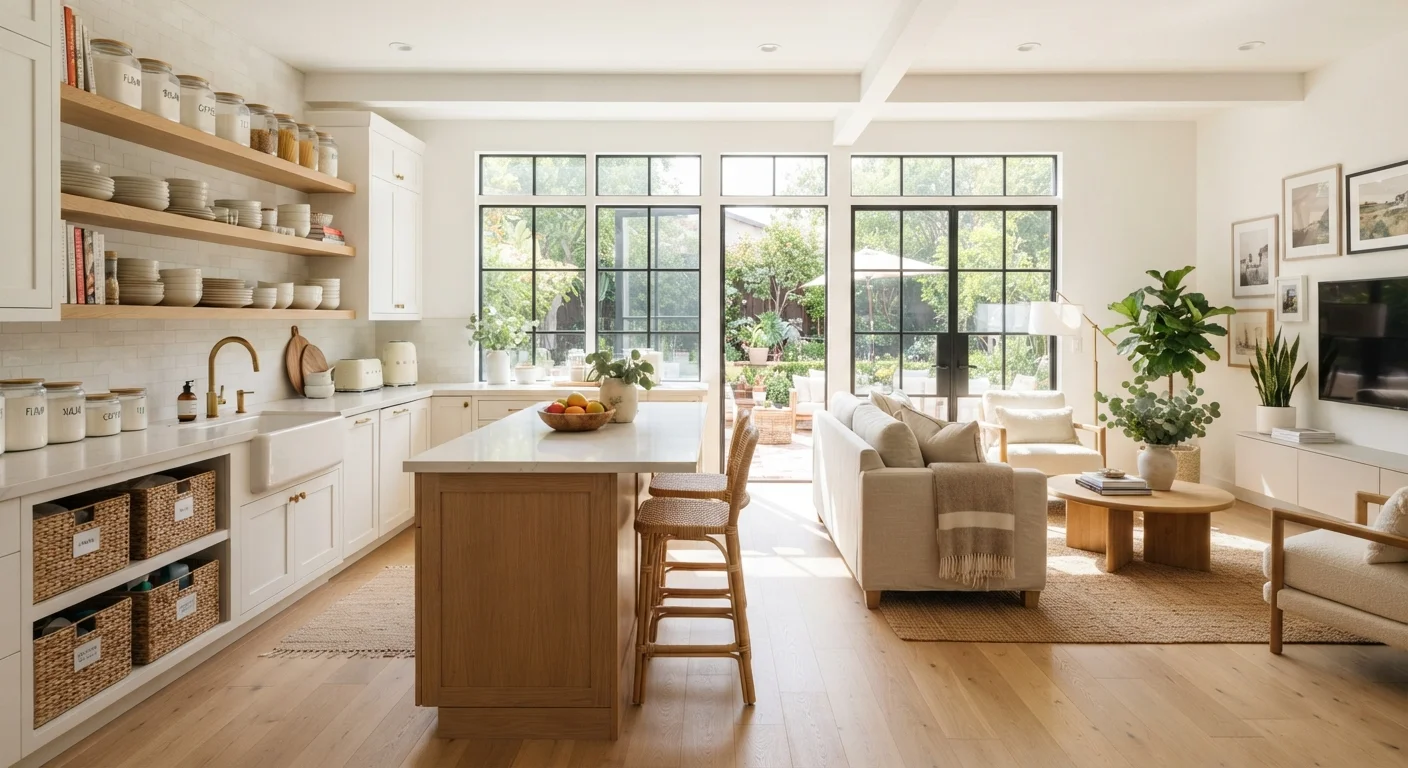
The open-shelving trend gained momentum alongside minimalist and Scandinavian-influenced design, but its real-world implications go far beyond aesthetics. Open shelves remove the barrier between your storage and your kitchen environment - which is both a feature and a challenge.
In a working kitchen, airborne grease from cooking settles on every exposed surface, including your dishes and glassware. Dust accumulates between uses. This means items on open shelves require more frequent washing than those stored behind doors. How often you cook, and what you cook, matters here. A household that sautés and fries daily will notice buildup much faster than one that leans toward lighter meal prep.
Closed cabinets, by contrast, act as a protective envelope. Whatever you store inside stays cleaner longer, and the visual effect is one of uniform calm - a blank-canvas wall that doesn't demand daily attention. The trade-off is accessibility: you interact through doors and hinges rather than reaching directly for what you need.
For a broader look at how storage decisions ripple through an entire home, the room-by-room organization guide explores how different spaces call for different approaches.
| Criterion | Open Shelving | Closed Cabinets |
|---|---|---|
| Visual effect | Airy, spacious feel | Clean, uniform backdrop |
| Dust & grease exposure | High - items exposed | Low - items protected |
| Tidiness required | High - always visible | Low - hidden behind doors |
| Typical installation complexity | Lower - brackets and studs | Higher - boxes, doors, hardware |
| Design flexibility | Limited by what's displayed | High - door style, color, hardware |
| Accessibility | Immediate, open reach | Requires opening doors |
| Best kitchen size | Small to medium | Any size |
Aesthetics, Space Perception, and Design Flexibility
Open shelving can genuinely make a kitchen feel larger. Without the visual mass of upper cabinet boxes, walls appear to recede, and sightlines extend further - a meaningful advantage in smaller kitchens or galley layouts. The catch is that this effect only holds when shelves are well-organized. Crowded, mismatched, or cluttered shelves reverse the benefit entirely, making a space feel noisier than closed cabinets would.
Closed cabinets offer design consistency with less effort. Uniform door fronts create a cohesive backdrop regardless of what's stored inside. They also provide a surface for hardware, color, and texture choices that significantly shape the kitchen's character - from sleek handleless fronts to traditional raised-panel doors.
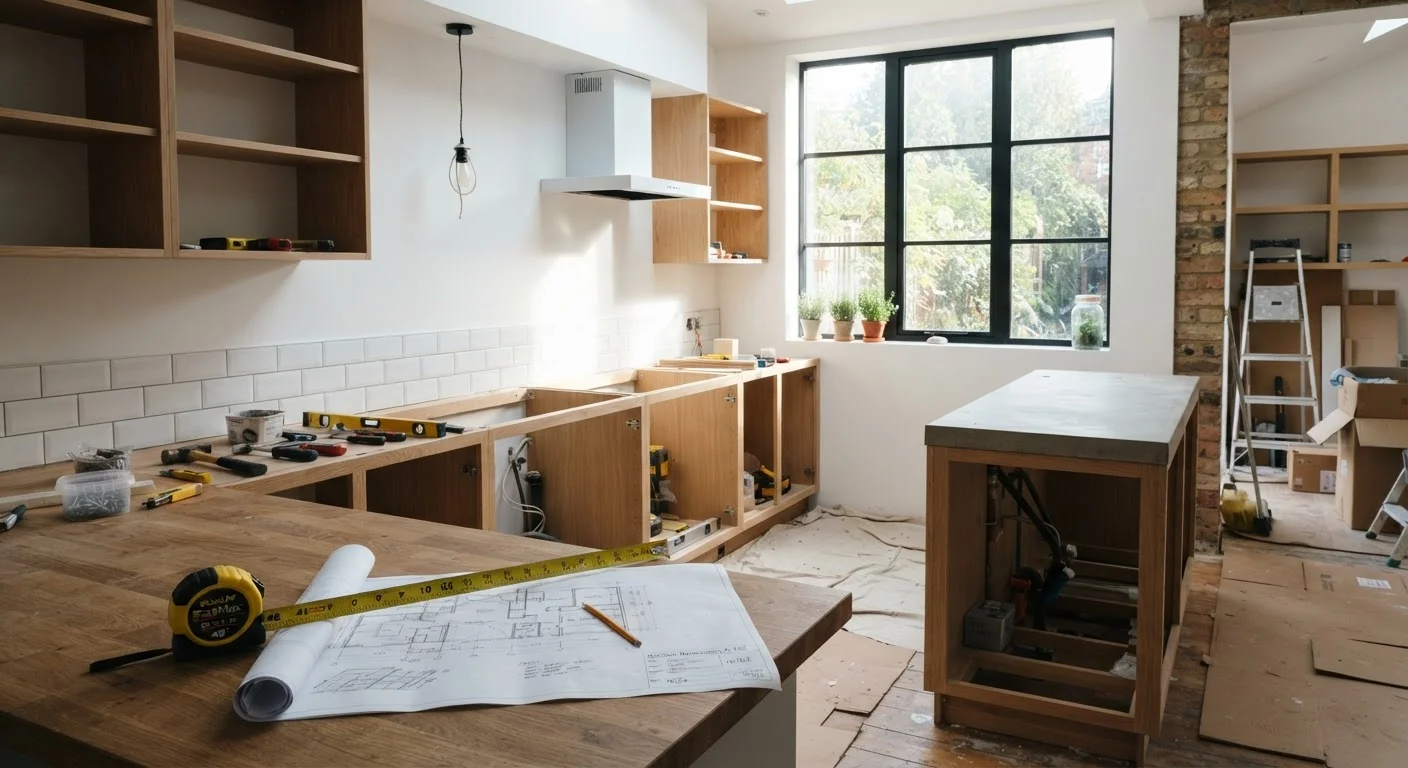
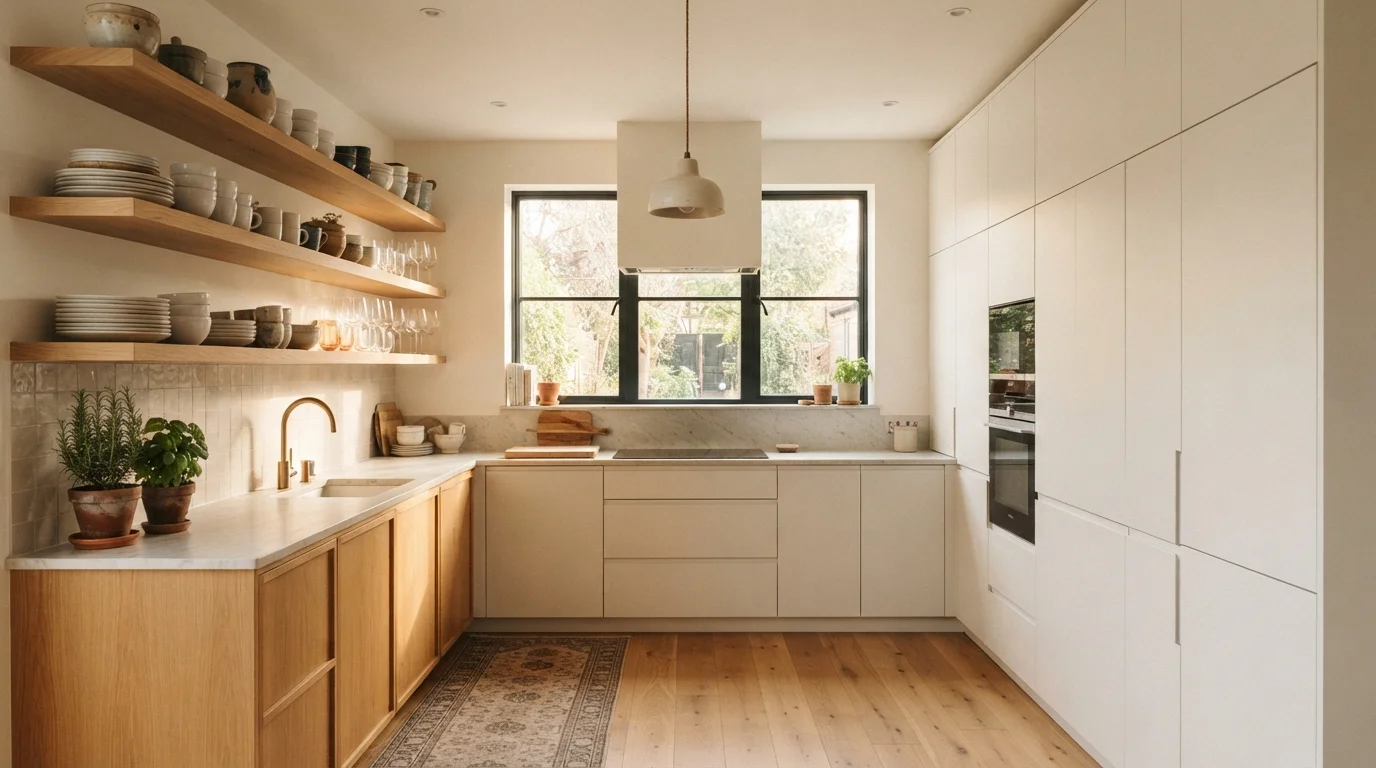
A hybrid approach is increasingly common in kitchen design: open shelves in a few strategic zones (flanking a window, above a coffee station) balanced by closed storage elsewhere. This lets homeowners enjoy display opportunities without surrendering the practicality of concealed storage. If you're rethinking an entire kitchen layout, the kitchen renovation planning framework can help you map scope and sequence before making structural decisions.
~30%
Of kitchens use open shelving in some form
Design industry surveys consistently show open shelving is most often used selectively rather than as a full replacement for closed storage.
2-3×
More frequent cleaning needed for open shelves
Interior design professionals generally estimate exposed dishware in active kitchens needs washing significantly more often than cabinet-stored items due to grease and dust.
Installation, Cost, and Long-Term Considerations
From a construction standpoint, open shelving is often simpler to install than full cabinetry. Floating shelves typically require only wall anchoring into studs - a manageable project for experienced DIYers - though structural considerations, wall material, and load capacity should always be verified before installation. Heavy items like cast-iron cookware demand appropriately rated hardware and solid backing.
Full cabinet installation involves more components: boxes, face frames or frameless construction, doors, hinges, drawer slides, and hardware. This complexity generally means higher material and labor costs, and for a full kitchen, the difference can be substantial. That said, cabinets typically offer more durable, weather-resistant storage over the long term and are less susceptible to the warping or staining that can affect exposed shelving in humid kitchen environments.
It's also worth thinking about resale context. Kitchen storage is a top consideration for homebuyers, and while open shelving photographs beautifully, some buyers prefer the flexibility of traditional cabinetry. Neither choice guarantees a particular outcome in resale value - local market preferences vary.
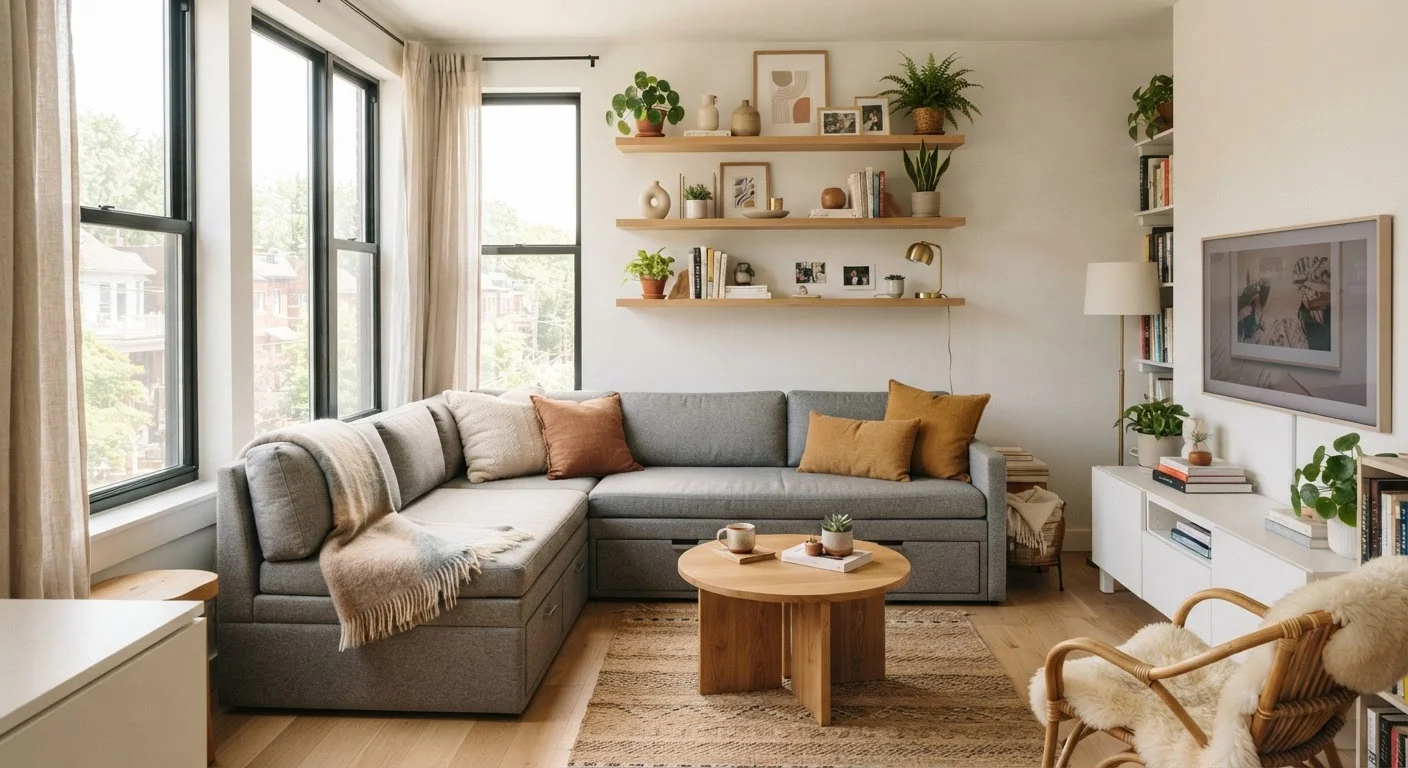
For small-space kitchens specifically, both approaches have distinct roles to play. The small-space living guide covers strategies for maximizing function in compact kitchens, including how vertical storage - whether open or closed - can dramatically change a room's capacity.
Ultimately, the right choice depends on your household's habits, your tolerance for visible organization, and the specific character of your kitchen. Neither open shelving nor closed cabinets is objectively superior - each rewards the household whose routines and priorities align with what it offers.