What Each Term Actually Means
When you file a property insurance claim, your insurer doesn't simply hand you a check for whatever the repair costs. The amount you receive depends on a key policy term: the valuation method. Two methods dominate most homeowners, renters, and auto policies — Actual Cash Value (ACV) and Replacement Cost Value (RCV). Understanding the difference before a loss occurs can save you from a costly surprise.
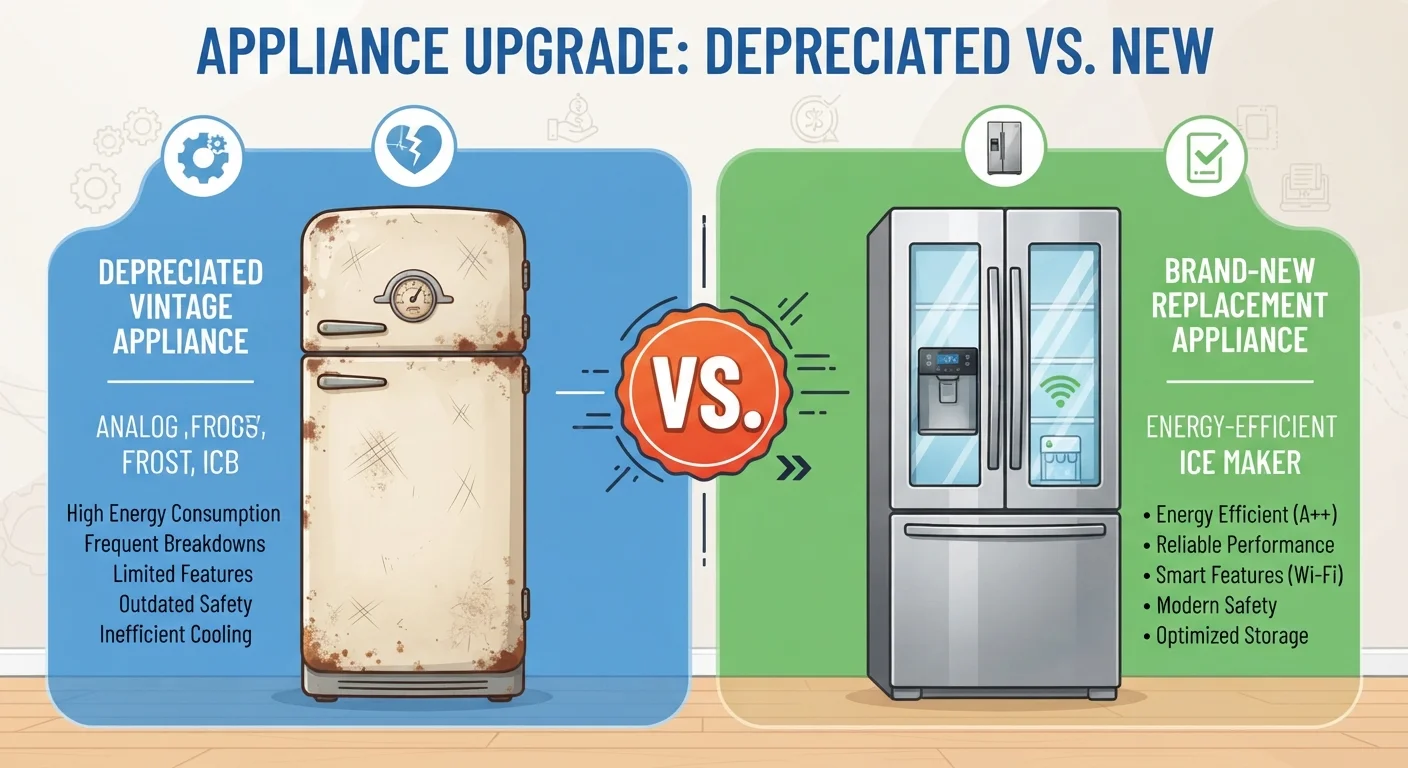
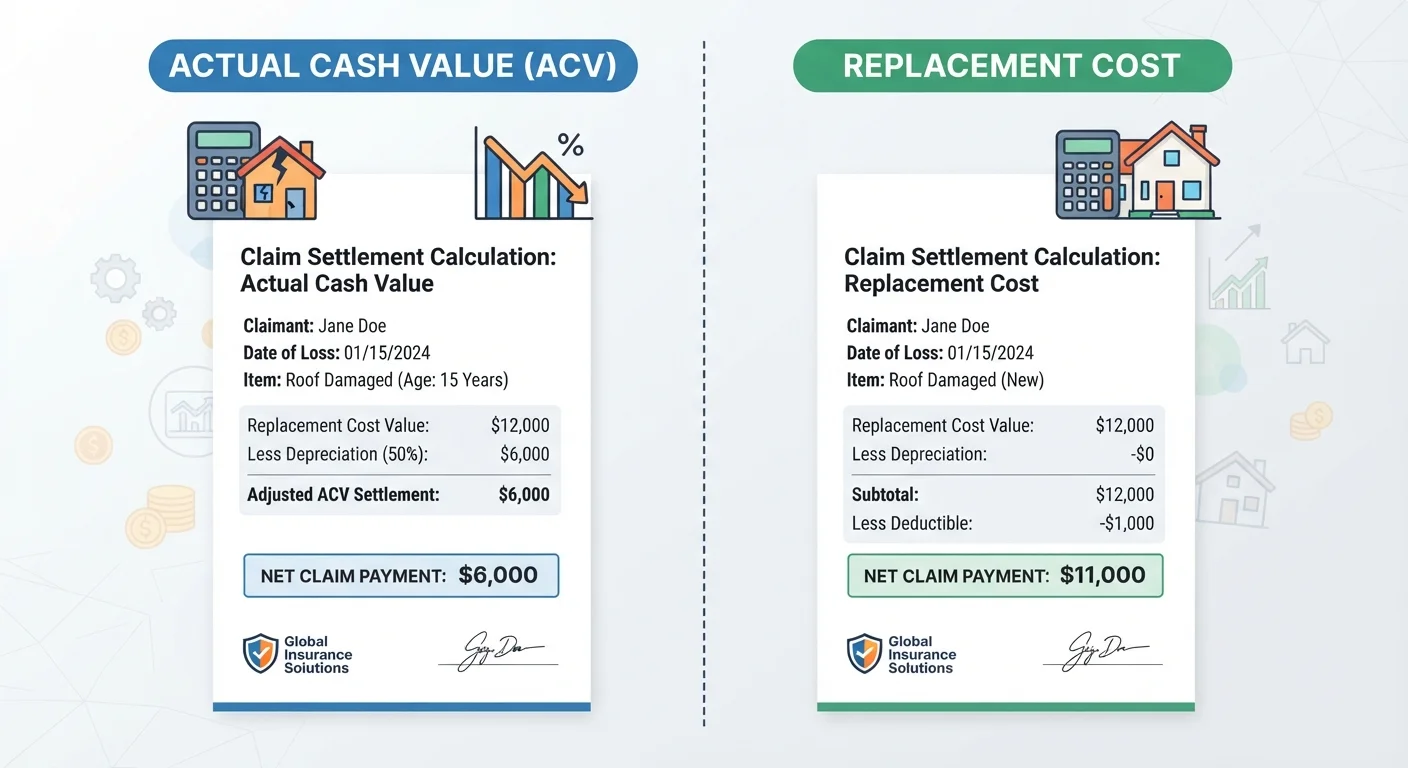
Actual Cash Value is calculated by taking the cost to replace or repair an item and then subtracting depreciation — the reduction in value due to age, wear, and obsolescence. If your five-year-old roof is damaged in a storm, the insurer estimates what a brand-new roof costs and then deducts a percentage based on the roof's expected lifespan and current condition. The result is what they pay you.
Replacement Cost Value, by contrast, covers what it actually costs to repair or replace the damaged property with a comparable item at today's prices — no depreciation subtracted. Using the same storm-damaged roof example, an RCV policy would pay the full cost of a new roof of similar quality, not a depreciation-adjusted fraction of it.
For a deeper look at how this distinction shows up in your policy documents, see how ACV and RCV appear in policy language.
| Criterion | Actual Cash Value (ACV) | Replacement Cost Value (RCV) |
|---|---|---|
| How payout is calculated | Replacement cost minus depreciation | Full cost to repair or replace at today's prices |
| Depreciation impact | Directly reduces your payout | Withheld until repairs completed, then released |
| Premium cost | Generally lower | Generally higher |
| Out-of-pocket gap after a claim | Potentially significant on older property | Minimal if repairs are completed |
| Common in auto insurance | Yes — standard for total-loss payouts | Rarely available for vehicles |
| Common in homeowners insurance | Often the default for personal property | Often the default for the dwelling structure |
| Best suited for | Lower premiums, newer property, savings buffer | Full restoration, older property, lower risk tolerance |
How Depreciation Works in Practice
Depreciation is where ACV claims can feel jarring. Insurers typically use a depreciation schedule — a formula based on an item's expected useful life — to calculate how much value has already been consumed. A television that cost $800 five years ago, with an expected lifespan of ten years, might be valued at roughly $400 under ACV. That gap is yours to cover.
Depreciation applies to most property categories: roofing materials, HVAC systems, appliances, furniture, electronics, and in some cases even structural components of a home. Each category carries its own depreciation rate, and insurers don't always disclose those schedules upfront. If you believe the depreciation calculation is incorrect, you generally have the right to dispute it — and that's worth knowing before you sign a settlement agreement.
10–20%
Typical ACV discount vs. RCV premiums
Industry estimates suggest ACV policies commonly cost 10–20% less in annual premiums than comparable RCV policies, though the difference varies by insurer and property type.
~80%
Homeowners with some RCV dwelling coverage
Most standard homeowners policies include replacement cost coverage for the home structure itself, though personal property coverage often defaults to ACV unless upgraded.
Under an RCV policy, depreciation is still calculated internally, but it's often held back rather than simply removed. This withheld amount — sometimes called the recoverable depreciation — is released to you once you complete the repairs and submit documentation proving the work was done. If you choose not to repair or replace the property, many insurers will only pay the ACV amount.
Which Policies Use Which Method
Not all policies default to the same valuation method, and the type of coverage you have matters.
- Standard homeowners policies often include RCV coverage for the dwelling structure itself but ACV coverage for personal property — unless you specifically add a personal property RCV endorsement.
- Renters insurance frequently defaults to ACV for belongings, though RCV upgrades are commonly available at an added cost.
- Auto insurance almost always uses ACV for total-loss settlements, meaning the insurer pays what your vehicle was worth just before the accident — not what it costs to buy a comparable new one.
- Commercial property policies vary widely; always verify the valuation method in the policy declarations and endorsements.
The clearest way to confirm your method: look at your policy's declarations page or the property coverage section. Terms like "replacement cost," "agreed value," or "actual cash value" will typically appear there. If you're uncertain, ask your agent to clarify in writing. Understanding what qualifies as a covered peril is equally important — valuation only matters once coverage is confirmed.
RCV Payments Are Often Released in Two Steps
Many RCV policies issue an initial payment at the ACV amount and then release the withheld depreciation (called recoverable depreciation) after you submit proof of completed repairs or replacement. This two-step process is normal but can catch policyholders off guard. Make sure you understand your policy's documentation requirements before repairs begin, and keep all receipts and contractor invoices.
Making the Right Choice for Your Situation
Choosing between ACV and RCV coverage comes down to your financial cushion, the age of your property, and your premium tolerance. Neither option is universally better — they involve real trade-offs.
ACV policies carry lower premiums, which can be a reasonable choice if your belongings are relatively new (and therefore minimally depreciated) or if you have savings to fill any gap. RCV coverage costs more each month but reduces the financial shock of a significant loss, particularly on older homes, roofs, or high-value contents.
One practical step: run a rough home inventory and estimate how much depreciation would reduce your payout on major items — appliances, electronics, furniture, roofing. If that number is uncomfortably large, the premium difference for RCV may be worth it.
If you're weighing whether a loss is even worth claiming, situations where filing a claim may not be the right move walks through the key factors. And if you do file, filing a claim yourself vs. using a public adjuster can help you decide whether professional representation makes sense.
This article is for general informational purposes only and does not constitute insurance, financial, or legal advice. Coverage terms, valuation methods, and claims processes vary by insurer, policy, and state. Always read your policy documents carefully and consult a licensed insurance professional for guidance specific to your situation.