Why This Distinction Can Make or Break a Claim
When you file an insurance claim for a damaged or destroyed item, the amount your insurer pays doesn't come from thin air — it's calculated using a specific valuation method written into your policy. Two methods dominate most home, renters, and personal property policies: Actual Cash Value (ACV) and Replacement Cost Value (RCV). They can produce dramatically different payouts for the exact same loss.
Most people don't discover which method their policy uses until they're already in the middle of a claim. At that point, it's too late to change the outcome. Understanding these terms before you need them is one of the most practical steps you can take as a policyholder.
For a broader look at how valuation fits into claims outcomes, see how each method is calculated and which policies use them. And if you're sorting through policy terminology more generally, understanding what qualifies as a covered peril is an equally important starting point.
This article provides general insurance education and is not personalized advice. Coverage terms vary by provider and policy. Always read your policy documents and consult a licensed insurance professional for guidance specific to your situation.
How Each Valuation Method Works
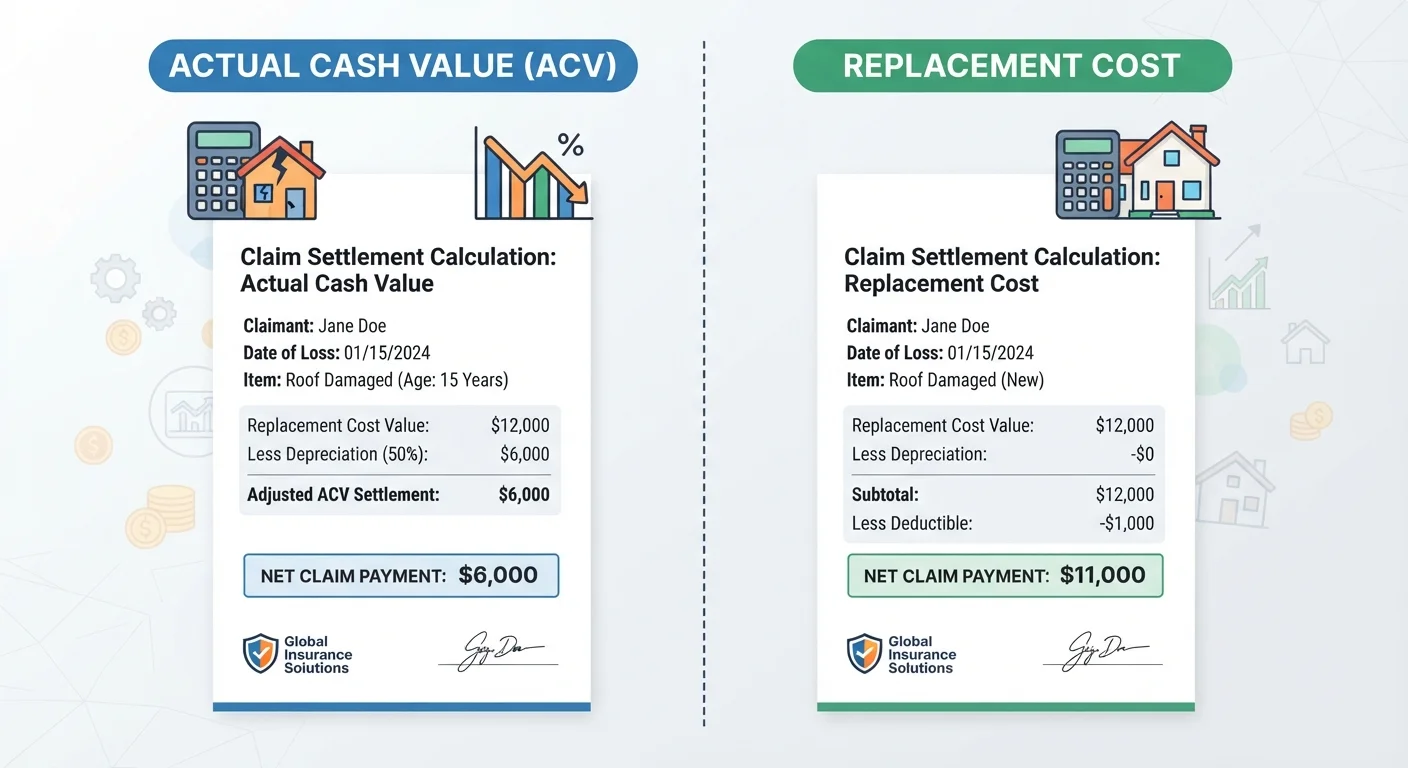
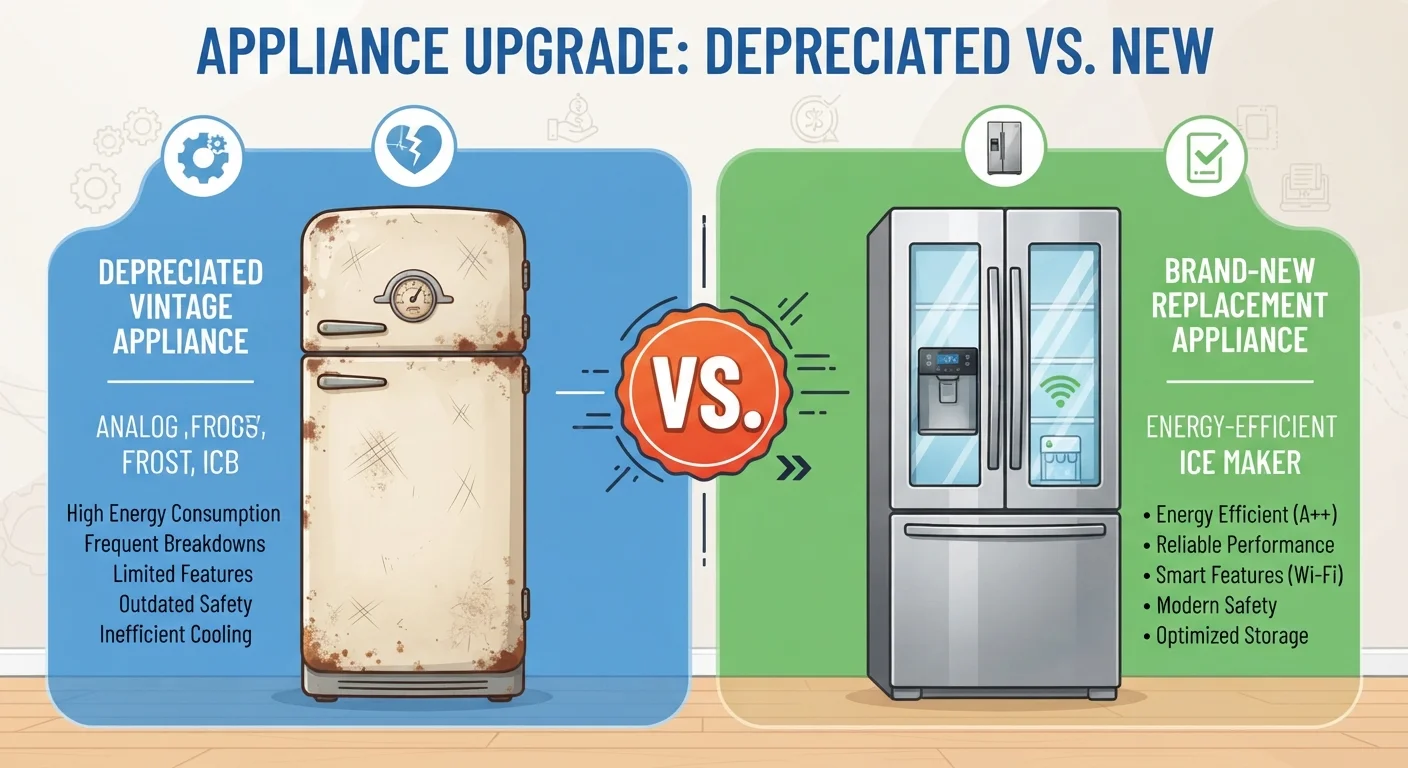
Actual Cash Value is calculated by taking the replacement cost of an item and subtracting depreciation — the reduction in value that reflects wear, age, and obsolescence. A five-year-old washing machine that costs $900 to replace new might have depreciated to an ACV of $400 or $500, depending on how the insurer calculates useful life. That's the number that appears on your settlement check.
Replacement Cost Value, by contrast, pays what it actually costs to buy a comparable new item at today's prices — without deducting for age or wear. For that same washing machine, RCV would pay closer to the $900 figure. The practical difference can be significant, and for larger items like a roof or HVAC system, it can run into thousands of dollars.
| Criterion | Actual Cash Value (ACV) | Replacement Cost Value (RCV) |
|---|---|---|
| How payout is calculated | Replacement cost minus depreciation | Full cost to replace with comparable new item |
| Effect of age and wear | Reduces your payout directly | Not deducted from settlement |
| Premium cost | Generally lower | Generally higher |
| Out-of-pocket gap after a claim | Can be substantial for older items | Minimal, if coverage limits are adequate |
| Common in auto insurance | Yes — standard for comp and collision | Rarely available for vehicles |
| Available as policy upgrade | Default in many basic policies | Often available via endorsement or upgrade |
Some RCV policies also use a holdback structure: the insurer initially pays the ACV, then releases the remaining depreciation amount (called the "recoverable depreciation") once you submit proof that repairs or replacement were actually completed. This is worth asking about when reviewing any RCV policy.
~40%
Depreciation on a 10-year-old roof
Insurance industry depreciation schedules commonly reduce a roof's value by 3–5% per year, meaning a decade-old roof may be valued at 60% of its replacement cost under an ACV policy.
$15,000+
Potential ACV vs. RCV gap on roof claims
For homeowners with aging roofs, the difference between an ACV payout and the actual cost of roof replacement can easily reach five figures, according to general insurer depreciation examples.
Where These Terms Show Up Across Policy Types
The ACV vs. RCV distinction appears across several insurance categories, not just homeowners policies.
- Homeowners insurance: Dwelling coverage (the structure itself) and personal property coverage can each carry different valuation methods. Some policies cover the structure at RCV but default personal property to ACV unless you add an endorsement.
- Renters insurance: ACV is common in basic renters policies; RCV is usually available as an upgrade. Because personal property depreciates quickly, the difference matters more than many renters expect.
- Auto insurance: Comprehensive and collision claims are almost always settled at ACV — the market value of your vehicle at the time of the loss, not the price you paid. Gap insurance exists specifically to address the difference between ACV and what you still owe on a loan.
Understanding how these terms interact with policy limits and coverage limits gives you a clearer picture of the actual ceiling on any payout — both what the insurer values your property at and the maximum your policy will pay.
For context on when filing a claim is worthwhile at all, situations where filing may not be the right move walks through key factors to weigh before you call your insurer.
Depreciation Methods Vary by Insurer
Insurance companies use different depreciation schedules and formulas, which means two policyholders with identical items may receive different ACV payouts from different insurers. Some states regulate how depreciation can be applied — particularly for labor costs. If you're uncertain how your insurer calculates depreciation, ask for a written explanation before you need to file a claim.