What an EOB Actually Is
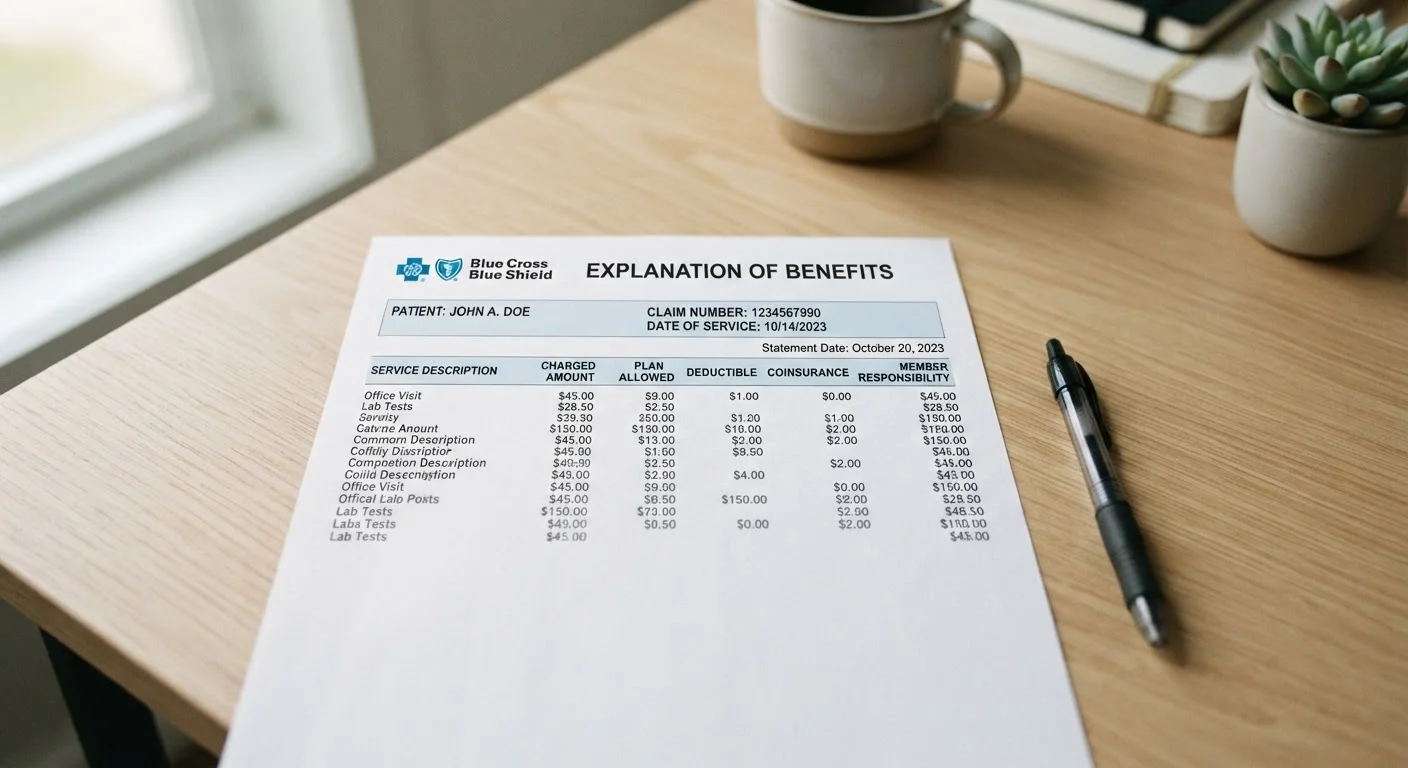
After you receive medical care and your provider submits a claim to your insurance company, your insurer sends you an Explanation of Benefits (EOB) — sometimes called a claims summary. This document is not a bill. It is a record of how your insurer processed the claim: what the provider charged, what the insurer agreed to pay, and what portion remains your responsibility.
Think of the EOB as a receipt for the financial transaction between your doctor and your insurance company. It shows up by mail or, increasingly, through your insurer's online portal, usually within a few weeks of your appointment or procedure.
Understanding what you're looking at matters because EOBs contain the information you need to verify that charges were applied correctly — and to catch mistakes before you pay a bill that may be wrong. For a broader look at what your health plan covers in the first place, see our overview of what health insurance actually covers.
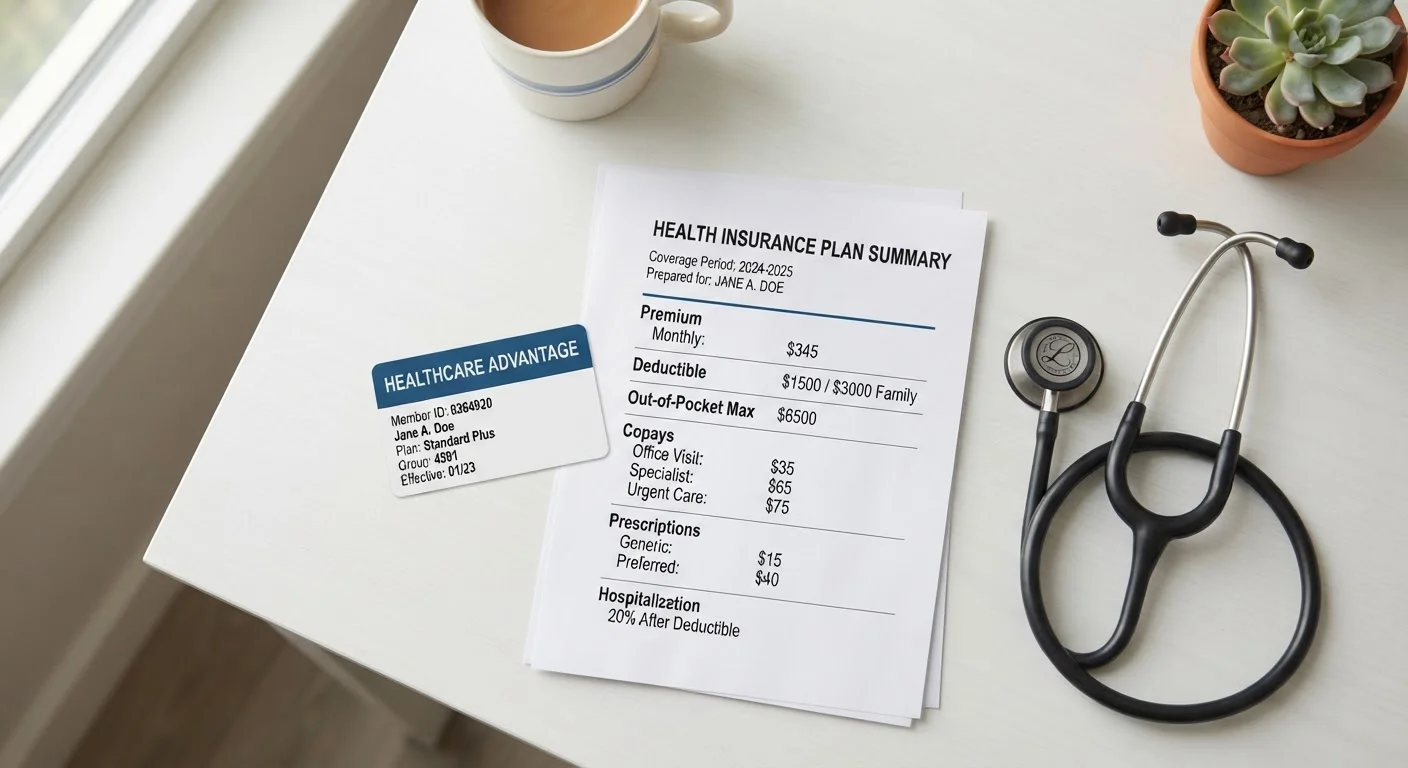
What you will need
How to Read the Key Fields
Every EOB is formatted slightly differently depending on the insurer, but the core fields appear across nearly all of them. Here is what each one means:
- Billed amount: The full charge your provider submitted to the insurer before any adjustments.
- Allowed amount (or contracted rate): The negotiated price your insurer has agreed to pay for that service. If your provider is in-network, the billed amount is usually reduced to this figure.
- Plan paid: What your insurer actually paid after applying your deductible, coinsurance, and any other cost-sharing rules.
- Your responsibility: What remains for you to pay, including any deductible amounts, copays, or coinsurance.
- Adjustment codes / remark codes: Short codes that explain why a charge was reduced, denied, or modified. Your insurer's EOB will include a legend or key to decode these.
If terms like deductible and coinsurance are still fuzzy, our article on how deductibles, premiums, and coverage limits work together explains how these cost-sharing pieces interact. You can also find plain-language definitions in our guide to confusing insurance terms.
Track Your Deductible Progress
Your EOB usually shows a running total of how much you've paid toward your annual deductible and out-of-pocket maximum. Checking this figure regularly helps you anticipate upcoming costs and plan for larger expenses later in the year. Keep in mind that these totals reset at the start of each plan year, which may not align with the calendar year.
Step-by-Step: Reviewing Your EOB
Follow these steps each time an EOB arrives to make sure everything looks right and you aren't overpaying.
Confirm the basics: patient, provider, and date of service
Start at the top of the EOB and verify that the patient name, provider name, and date of service all match the actual visit. An EOB for the wrong patient or a date you don't recognize could indicate a billing mix-up or, in rare cases, a sign of identity fraud.
Check the billed amount against your provider's bill
Pull out the itemized bill from your provider and compare it line by line to the EOB. The services listed and the billed amounts should match. Discrepancies here — such as a service appearing on the provider bill but not the EOB — suggest that something may not have been submitted or processed correctly.
Review the allowed amount and any adjustments
Look at the difference between the billed amount and the allowed (contracted) amount. For in-network providers, this reduction reflects your insurer's negotiated rate — you are not responsible for the difference. Look up any adjustment or remark codes using the legend on the EOB to understand why each line was reduced or modified.
Verify your plan paid correctly based on your cost-sharing
Check that the deductible, coinsurance, or copay amounts applied match what your plan documents say they should be. For example, if your plan has a $500 deductible that you've already met, any deductible amount appearing on the EOB should reflect that remaining balance — not the full $500.
Note what you owe and keep records
Once you've confirmed all the figures are correct, make note of the amount listed as your responsibility. File the EOB with your provider bill and any payment receipts. Keeping organized records for each claim makes it much easier to dispute errors, track your progress toward your annual deductible, and prepare documents if you ever need to file an appeal.
When Something Looks Wrong
Billing errors in healthcare are more common than most people realize. Duplicate charges, incorrect procedure codes, and services billed at out-of-network rates when the provider is in-network are among the most frequently reported problems.
If your EOB doesn't match your provider's bill, or if a charge was denied that you believe should be covered, you have options. Start by calling the member services number on your insurance card and asking for a detailed explanation of any code or denial reason you don't understand. If you still believe an error was made, you can file a formal appeal with your insurer — your EOB will typically include instructions for doing so.
For a deeper look at why claims get denied and how to push back effectively, see our article on why claims get denied and what the fine print says.
Don't Miss Your Appeal Deadline
Most insurers impose strict deadlines for filing an appeal after a claim denial — often 30 to 180 days from the date of the EOB. Missing this window can forfeit your right to challenge the decision. Check your EOB and plan documents for the specific timeframe that applies to your policy.
This article provides general information about insurance documents and is not a substitute for advice from a licensed insurance professional. Coverage terms, EOB formats, and appeals processes vary by insurer, plan type, and state. Always review your actual policy documents and consult a licensed agent or adviser for guidance specific to your situation.