Two Different Needs, Often Confused as One
Many pet owners assume that a long walk or vigorous play session covers everything their pet needs. While physical activity is undeniably important, it addresses a fundamentally different set of needs than mental stimulation does. Conflating the two can leave a significant gap in a pet's daily care — one that often shows up as destructive behavior, anxiety, or restlessness even in pets who get plenty of outdoor time.
Physical exercise primarily benefits the body: it maintains a healthy weight, supports cardiovascular function, builds muscle, and releases pent-up physical energy. Mental enrichment, by contrast, targets the nervous system and cognitive needs. It engages problem-solving instincts, satisfies species-typical behaviors like foraging or sniffing, and reduces the kind of boredom that veterinary behaviorists often link to compulsive or destructive habits.
Think of it this way: a marathon runner can still feel mentally restless or anxious if their day offers no intellectual engagement. The same principle applies to dogs, cats, and other companion animals. As the enrichment activities guide explores, bored pets often act out in ways that are misread as disobedience rather than unmet cognitive need.
| Criterion | Physical Exercise | Mental Enrichment |
|---|---|---|
| Primary benefit | Body health, energy release | Cognitive satisfaction, stress reduction |
| Typical activities | Walks, fetch, swimming, agility | Puzzle feeders, scent work, training |
| Addresses anxiety | Partially — reduces physical tension | Directly — targets cognitive boredom |
| Suitable for mobility-limited pets | Limited — depends on condition | Yes — low-impact, adaptable |
| Time required daily | 30–60+ minutes (breed-dependent) | 10–30 minutes, spread through day |
| Helps with destructive behavior | Sometimes — if energy-driven | Often — if boredom-driven |
| Builds human-pet bond | Yes — shared activity | Yes — especially in training |
What the Research Suggests About Mental Stimulation
Animal behaviorists and veterinary researchers have documented that cognitive engagement is not a luxury add-on — it is a welfare requirement. Studies in applied animal behavior have shown that environmental enrichment can lower cortisol levels (a primary stress hormone) in dogs housed in kennels, and that puzzle-based feeding reduces anxiety-related behaviors in domestic cats. The Association of American Veterinary Medical Colleges and organizations such as the American Veterinary Society of Animal Behavior have incorporated enrichment into formal welfare guidelines.
For dogs in particular, scent work — allowing them to use their nose to search and problem-solve — has been associated with positive emotional states in peer-reviewed behavioral studies. Because dogs process the world primarily through smell, nose-based enrichment taps directly into how their brains are wired, producing calm focus rather than frantic over-excitement.
14%
Reduction in kennel stress behaviors
A study published in Applied Animal Behaviour Science found environmental enrichment meaningfully reduced stress indicators in shelter dogs.
~30 min
Recommended daily enrichment for dogs
Veterinary behaviorists generally suggest at least 30 minutes of cognitively engaging activity per day, separate from physical exercise.
Top 3
Cause of relinquishment: behavior problems
Behavioral issues — many linked to under-stimulation — consistently rank among the leading reasons pets are surrendered to shelters, per shelter intake surveys.
It's worth noting that enrichment doesn't replace exercise — it complements it. Pets who receive both tend to show better behavioral stability than those receiving only one or the other. Understanding this balance is part of why common habits that quietly undermine pet health include skipping mental stimulation even when physical needs are met.
Practical Enrichment for Everyday Pet Owners
Mental enrichment doesn't require expensive equipment or hours of preparation. The goal is to give your pet's brain something genuine to work on. Below are approaches supported by veterinary behaviorists for dogs, cats, and small animals:
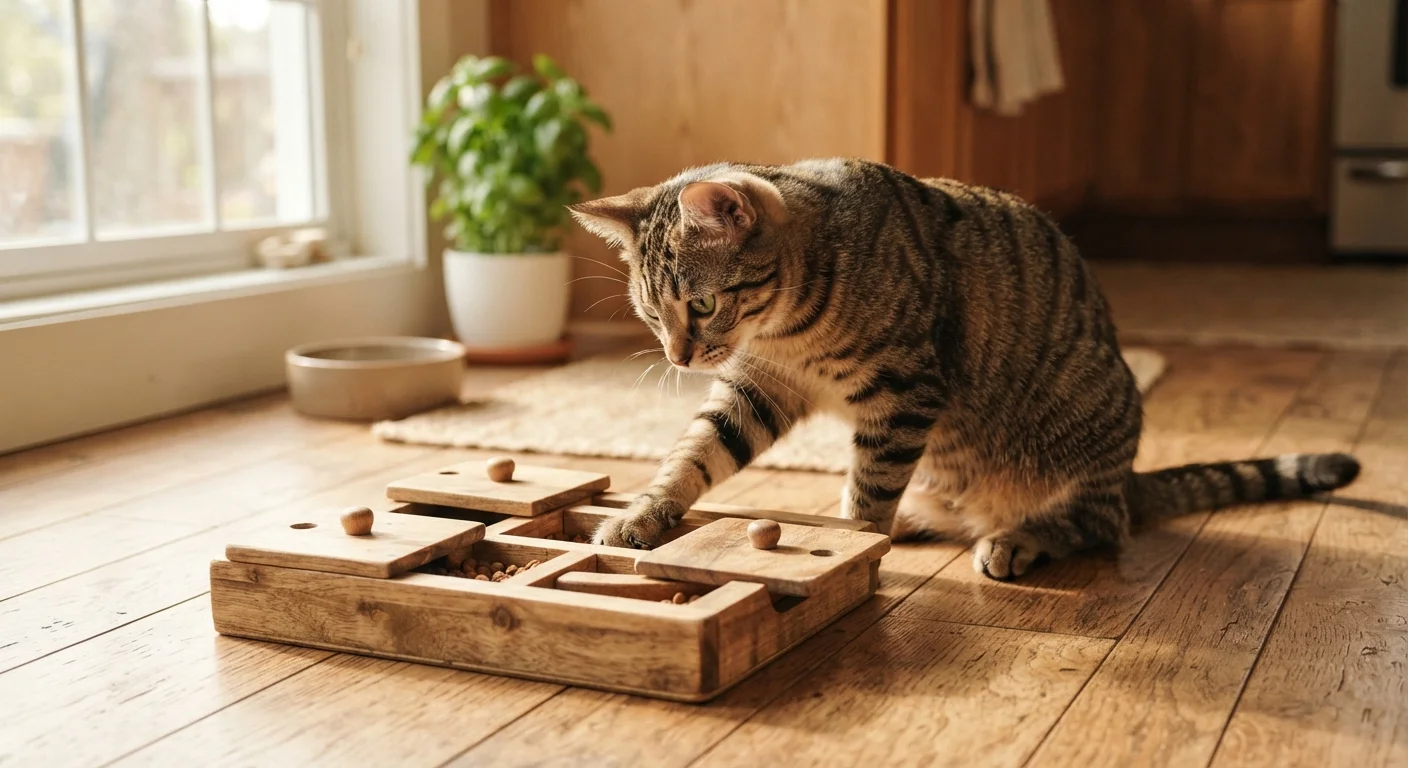
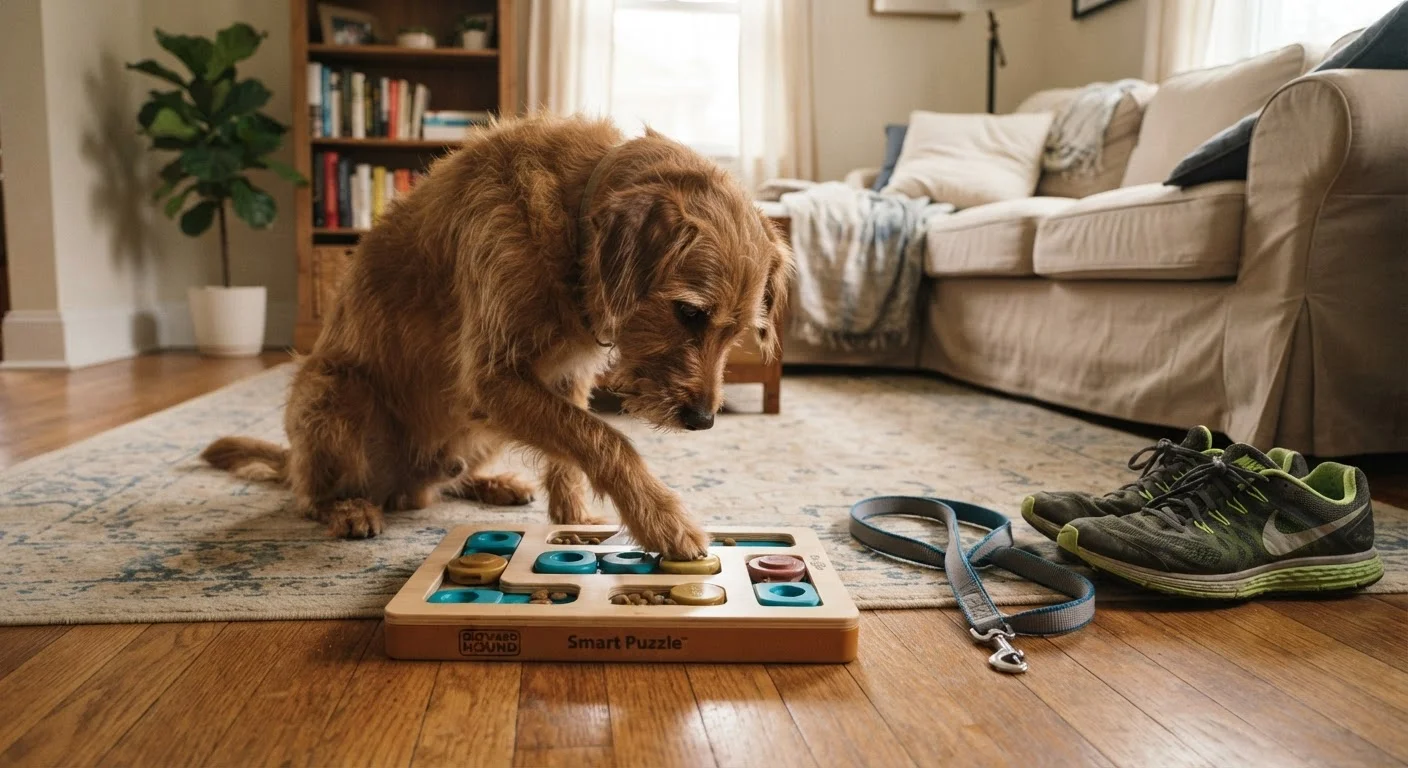
- Puzzle feeders and food-dispensing toys: Replace the standard food bowl with a device that requires the pet to manipulate, roll, or solve to access meals. This mimics foraging behavior and slows eating simultaneously.
- Scent work and nose games: Hiding small amounts of food or a favorite toy around the home engages olfactory problem-solving. Even ten minutes of sniff-based searching can produce significant calming effects in dogs.
- Short training sessions: Learning new cues or tricks requires concentration and builds communication between pet and owner. Positive reinforcement training is particularly effective because it pairs cognitive effort with a rewarding outcome.
- Environmental novelty: Rotating toys, introducing new textures, or rearranging furniture slightly gives pets new sensory input to explore — especially valuable for indoor cats.
- Species-specific outlets: Cats benefit from vertical space and window perches; rabbits from tunnels and digging boxes; birds from foraging challenges. Matching the enrichment to the animal's natural history matters.
Owners who notice persistent behavioral problems — compulsive licking, repetitive pacing, or chronic anxiety — should consult a veterinarian or certified veterinary behaviorist rather than relying solely on enrichment adjustments.
When Enrichment Alone Isn't Enough
Mental enrichment is a powerful tool, but it is not a treatment for clinical anxiety, compulsive disorders, or fear-based conditions. If your pet shows signs of severe distress — such as self-directed harm, extreme reactivity, or inability to settle despite enrichment — consult a licensed veterinarian. In some cases, a referral to a board-certified veterinary behaviorist or a behavior modification program may be appropriate. Enrichment supports overall well-being but does not replace professional evaluation.
Finding the Right Balance for Your Pet
The ideal ratio of exercise to enrichment isn't fixed — it shifts based on species, breed, age, health status, and individual personality. A young Border Collie needs substantial physical activity and intensive mental challenge; a senior Basset Hound with joint issues may benefit far more from enrichment than from long walks. Indoor cats across all life stages tend to be under-stimulated cognitively, regardless of whether they have access to toys.
A useful starting point is to assess your pet's current behavior. Signs of insufficient physical exercise often include hyperactivity, jumping, and destructive chewing driven by restless energy. Signs of insufficient mental stimulation can look similar on the surface — but tend to manifest as repetitive behaviors, anxiety in predictable situations, or pronounced boredom during low-activity periods.
If you're uncertain where your pet's needs fall, a veterinarian or certified applied animal behaviorist can help map out an appropriate daily routine. And as common pet behavior myths remind us, assuming a tired pet is automatically a happy one is among the most persistent misconceptions in everyday pet ownership.
The bottom line: treat physical exercise and mental enrichment as two non-negotiable pillars of care, not competing alternatives. Together, they address the full spectrum of what your pet needs to feel physically healthy, emotionally balanced, and genuinely engaged with the world around them.
This article is intended for general educational purposes only and does not constitute veterinary advice. Always consult a licensed veterinarian or certified veterinary behaviorist for guidance tailored to your individual pet's needs.